A photograph of Turin can start from the Mole Antonelliana, from Palazzo Reale or from the great squares, piazza San Carlo and piazza Vittorio Veneto. But you only have to change street or look up to find decorated doorways, buildings with unusual shapes, contemporary installations on the façades and murals. This is the Turin we invite you to seek out in this itinerary, with a camera or simply with your phone.
It starts from the precollina, the foothill area near our B&B, among the gardens and the vineyard of Villa della Regina, and then passes through the historic centre. There are also the Parco del Valentino, examples of contemporary architecture, panoramic views and the urban art works of Borgo Campidoglio. The stops are rather far apart: much of the route can be done on foot, but to see them all it is best to allow a whole day. Alternatively you can split them into two walks and use public transport, especially to reach Borgo Campidoglio.
One thing to keep an eye on as you walk are the toret, the green drinking fountains with a bull's head that you will come across around the city. And before setting out, check the visiting conditions of the places you are interested in.
On foot Walking: 32.9 km, 8 h 13 min
-
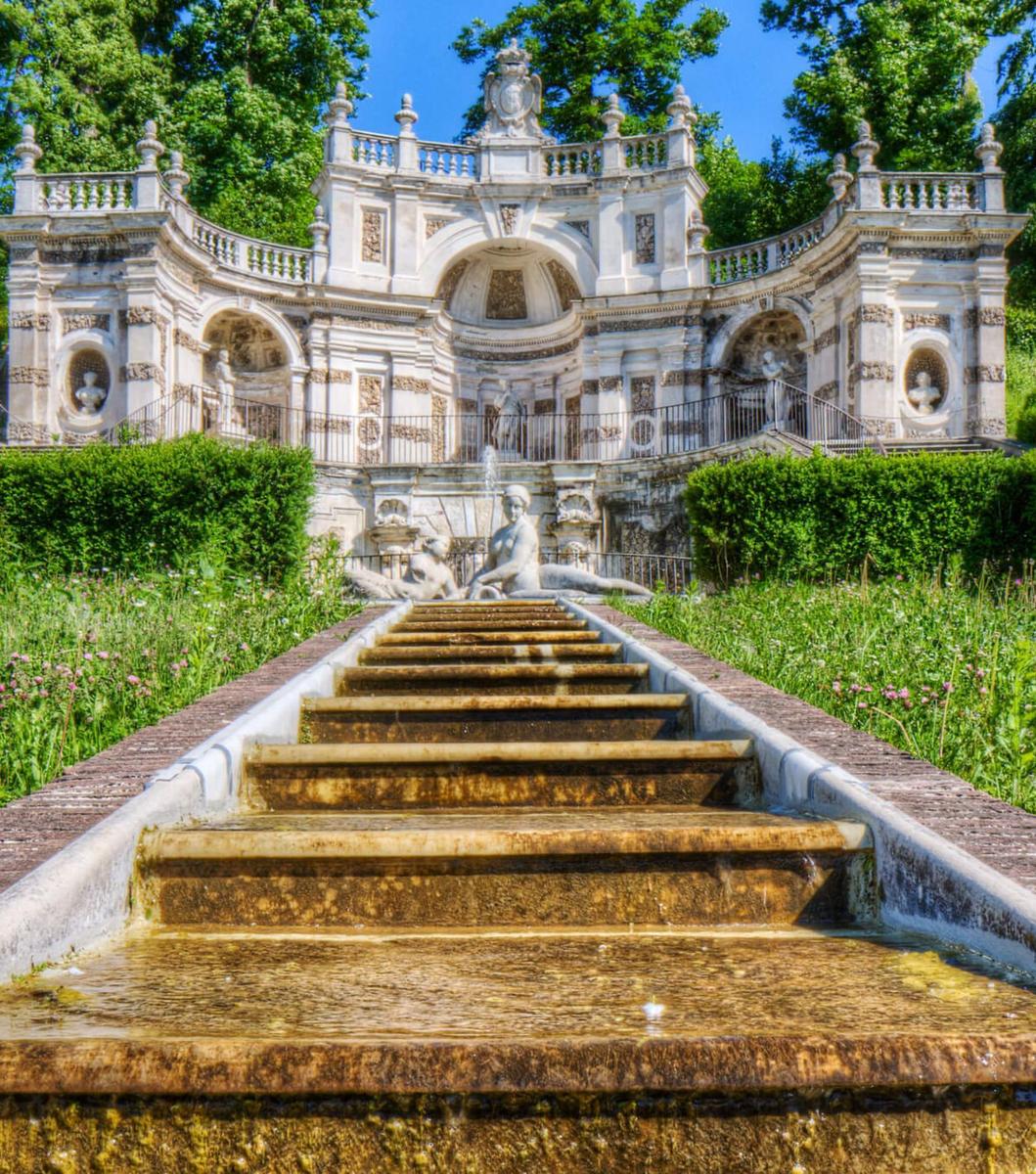
Villa della Regina
Why it is Instagrammable: Villa della Regina is a Savoy Baroque villa set on the hillside, with a terraced vineyard running down towards the city. The view over Turin, the Alps in the background, the neat rows of vines and the façade of the villa create postcard-worthy photographic compositions.
-
Fetta di polenta
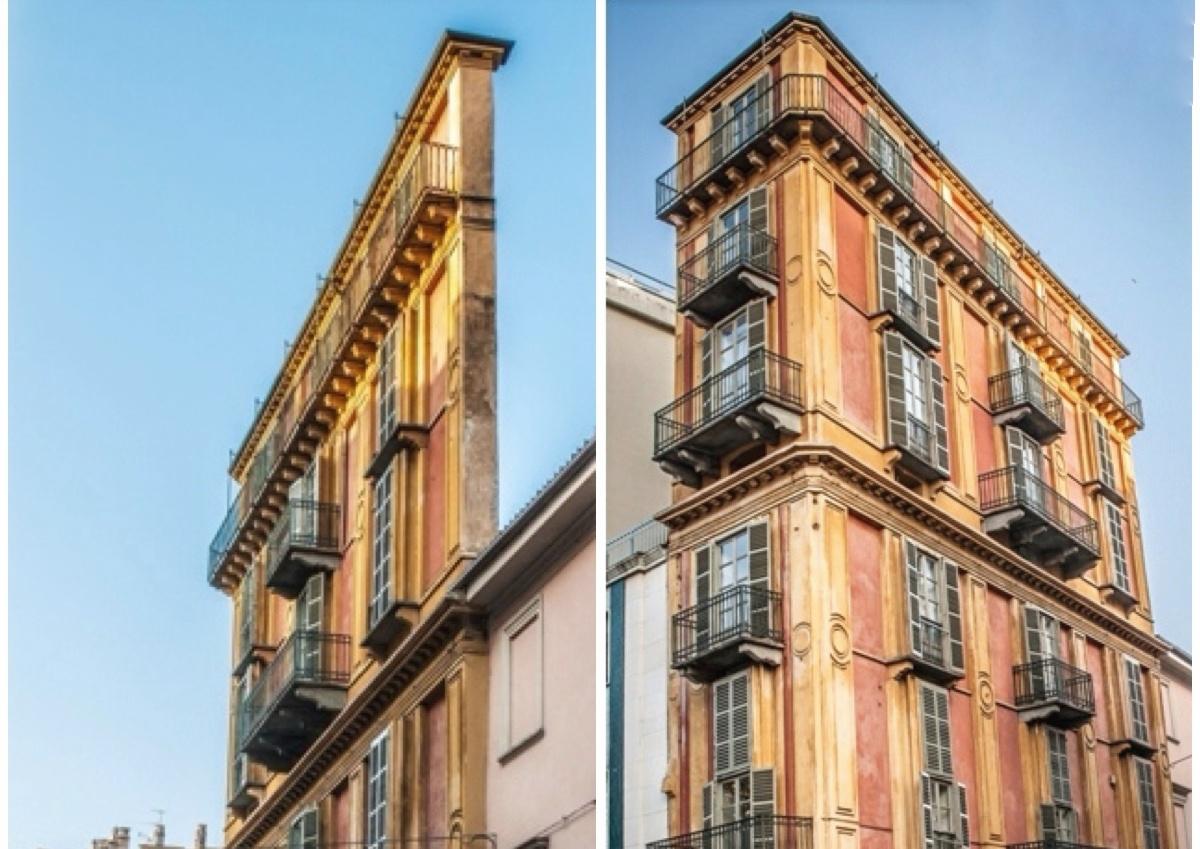
On the corner of via Giulia di Barolo and corso San Maurizio, in the Vanchiglia district, there is a house that seems to change shape as you walk around it. It is Casa Scaccabarozzi, known to the people of Turin as Fetta di Polenta (slice of polenta): the nickname comes from the yellow of the façades and above all from the incredibly thin plan, which on one side narrows to just 54 centimetres.
Read more
Alessandro Antonelli designed it starting in 1840; the building was later raised, with works continuing until 1881. The contrast between the height and the extremely narrow width of one end creates an unusual perspective effect.
Photograph it both from corso San Maurizio and from via Giulia di Barolo: the proportions will look very different. The house is private and is viewed from the outside.
Why it is Instagrammable: It is an impossible building. Seen from the front it looks normal, but walking around it you discover that it is extremely thin. It is perfect for perspective photos, optical illusions and shots
-
Baci Rubati
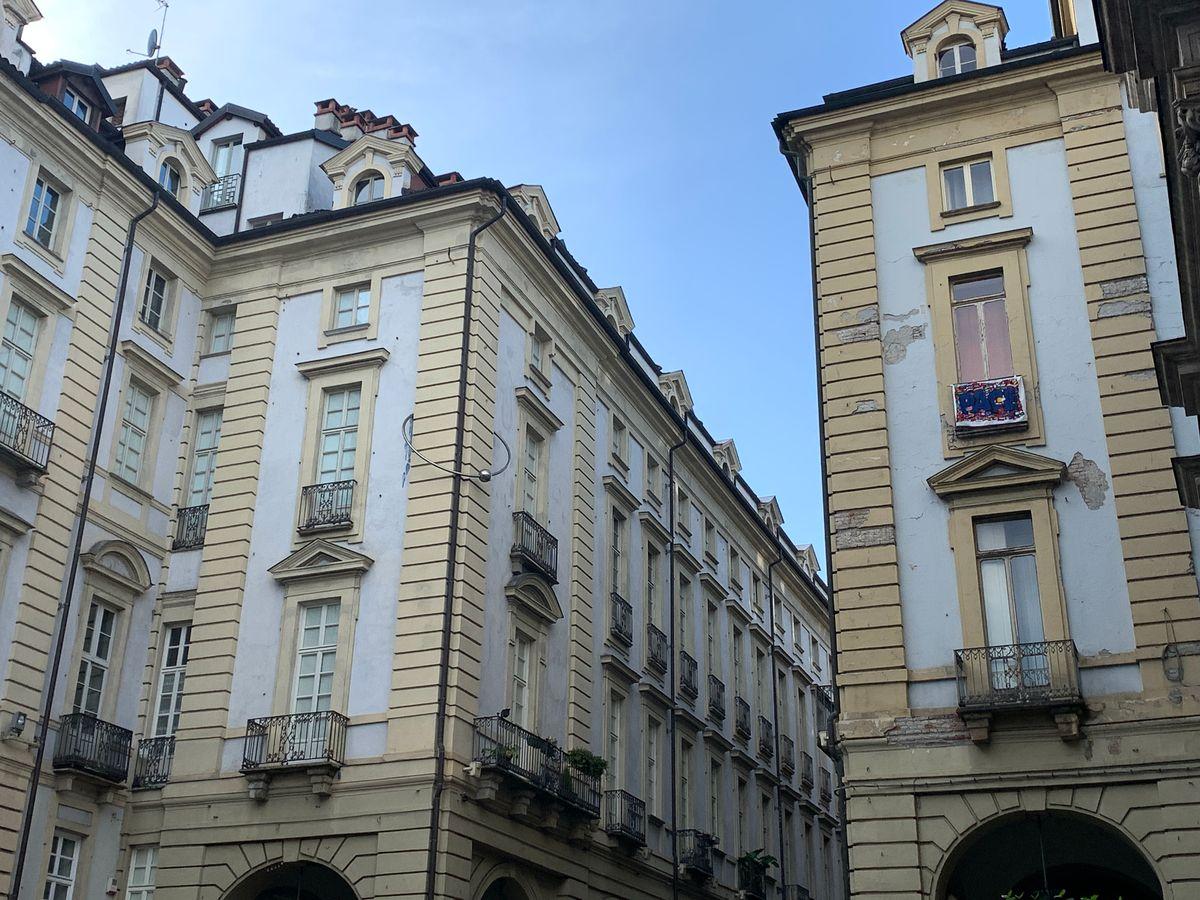
A large metal ring passes, at least in appearance, through the corner of an eighteenth-century building in piazza Corpus Domini. It looks like a piercing applied to the building, and that is precisely the provocative character of Baci Rubati, an installation also known as Baci Urbani.
Read more
The work was created in 1996 by Corrado Levi together with the group of artists and architects Cliostraat, as part of the Biennale Giovani in Turin. It is set fairly high up, at the corner of the building at via Palazzo di Città 19. On either side of the ring run two drips, one red and one blue, interpreted as a reference to the popular and noble components of the city.
To photograph it, it is worth including both façades in the frame: the effect comes precisely from the meeting between historic architecture and the contemporary intervention.
Why it is Instagrammable: It is the ironic and surreal photo par excellence. A historic building “pierced” by a modern installation. It is the symbol of the complicated (and amusing) relationship between old and new in Turin.
-
The palace of shadows
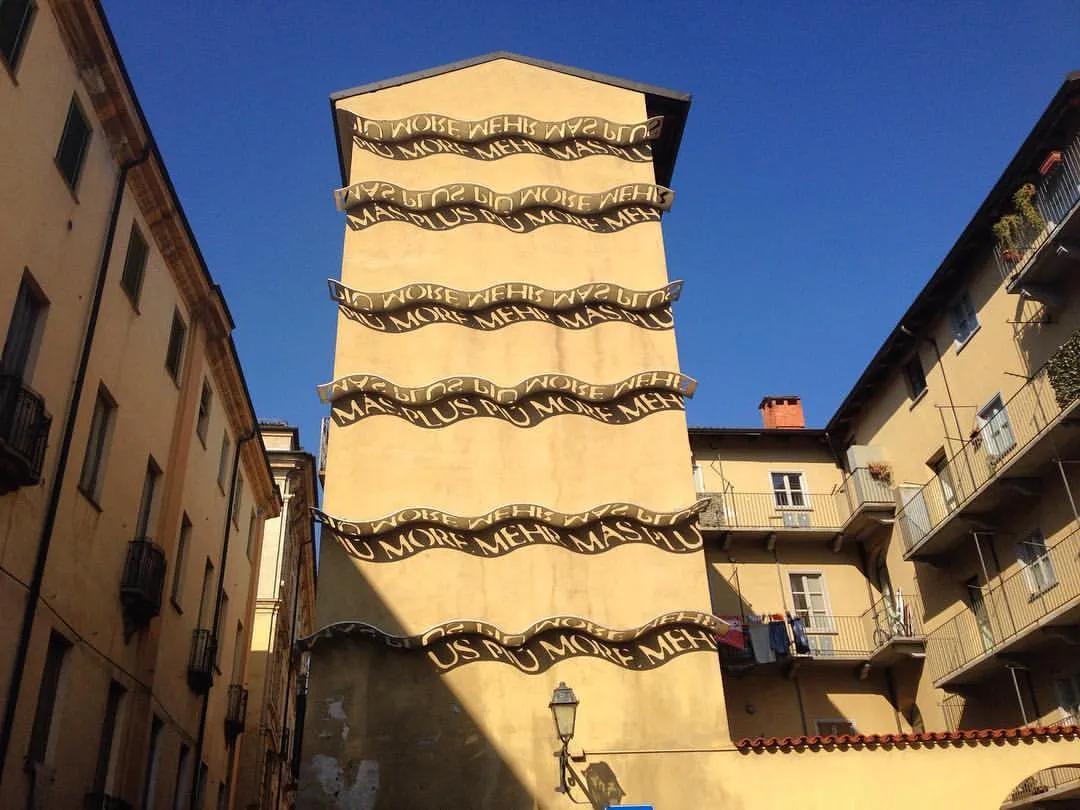
In piazzetta Andrea Viglongo, in the historic centre, there is a façade that changes with the movement of the sun. It is not paintings that transform it, but the shadows cast by a series of wavy metal elements: together they form the word "more" ("più") in five languages, Italian, French, Spanish, English and German.
Read more
The installation is called Waves of Wanting and is the work of the American artist Nancy Dwyer, winner of the "Pareti ad Arte" competition in 1998. It was installed in 2001.
The words are not always equally legible: they depend on the angle and intensity of the light. If you want to photograph them, choose a sunny day if possible. It is curious to see how an otherwise ordinary façade can change its appearance without anything, apart from the shadows, moving on the wall.
Why it is Instagrammable: the play of light and shadow on the facade creates optical illusions that are perfect for artistic photos. At the right time of day, the shadows draw triangles, trapezoids and shapes that look three-dimensional.
-
Street Art
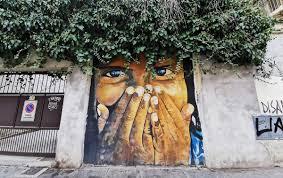
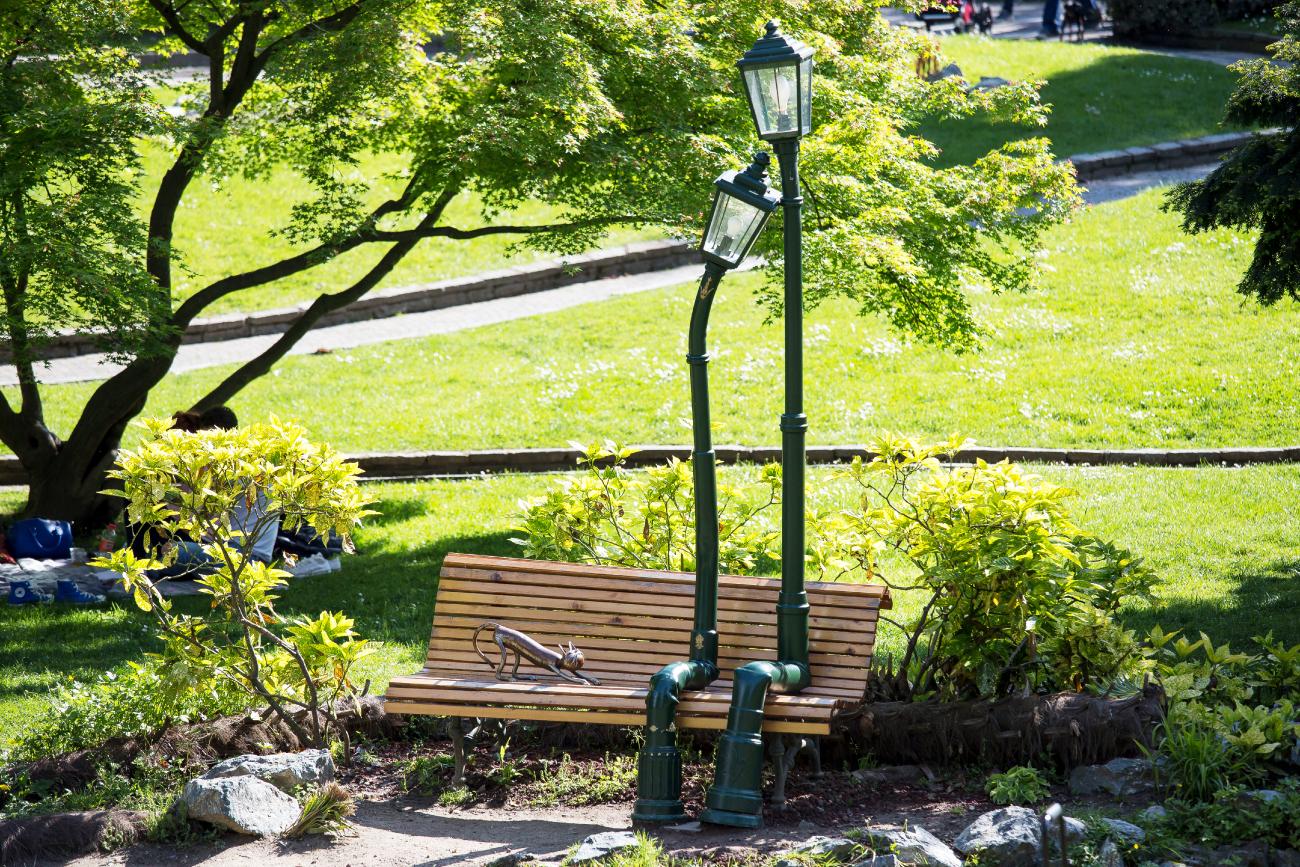
In Borgo Vecchio Campidoglio, art is not gathered in a single building: it is on the façades of the houses, along the streets, on the benches. This is the MAU, Museo d'Arte Urbana di Torino, created in 1995 through the collaboration of artists, residents and local associations.
Read more
The district, working-class in origin and developed at the end of the nineteenth century, has gradually become an open-air museum, with murals, installations and works set into the spaces of everyday life. In piazza Moncenisio you will find the Panchine d'Autore, benches decorated with references to famous twentieth-century artists; along the streets there are also the works of the Galleria Campidoglio, kept in protective cases.
Here there is no need to follow a rigid route. Besides the larger murals, even a small decoration or a bench next to the houses can make a good photographic subject.
Why it is Instagrammable: It is the most colourful stop on the tour. Huge murals, hypnotic faces, pop colours, poetic inscriptions. Every corner is an artistic composition ready for Instagram.
-
The big testone
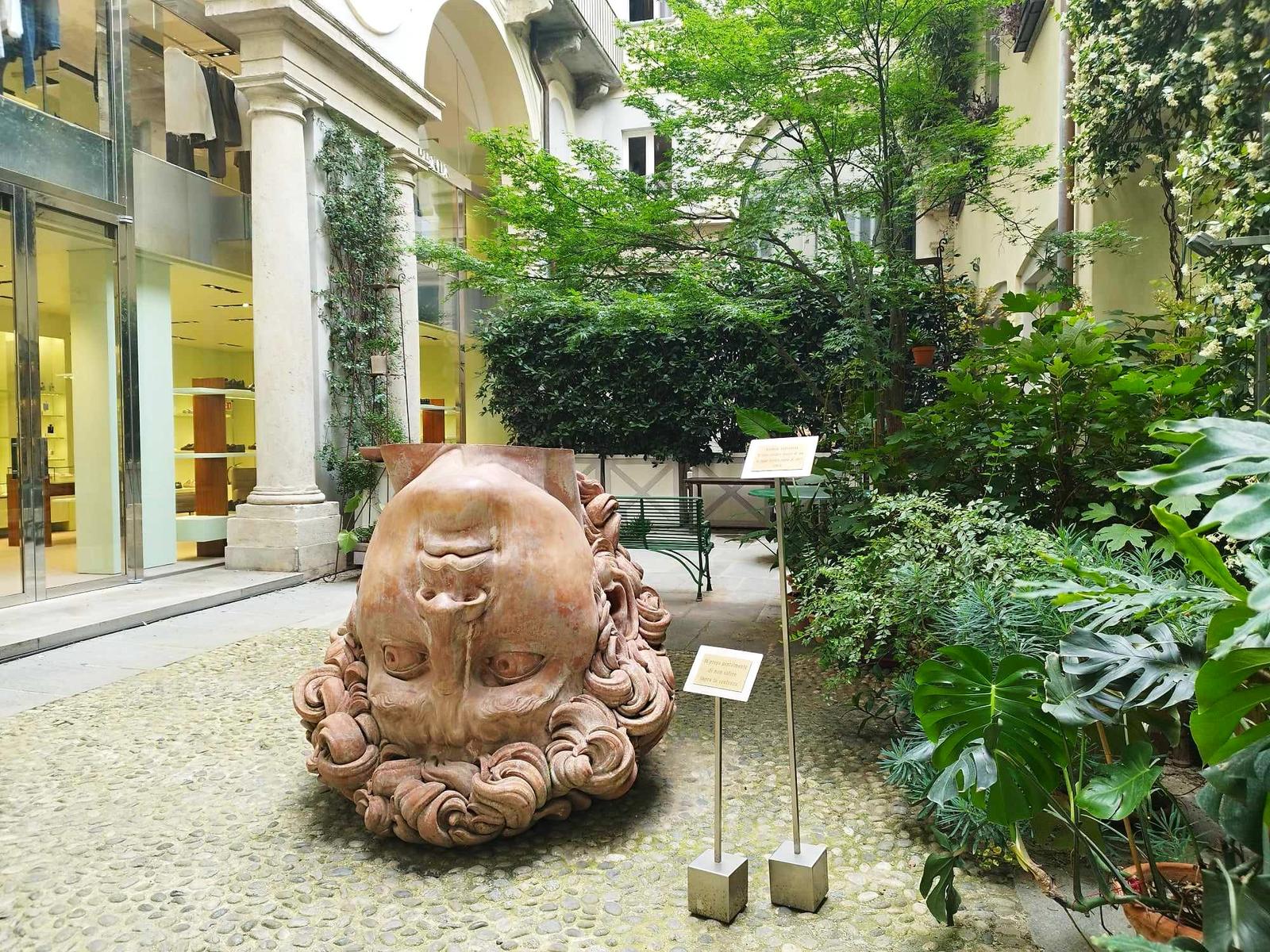
Walking through the passage that links via Lagrange to piazza San Carlo, in the courtyard of Palazzo Villa you find yourselves in front of an upside-down head. It is that of Michelangelo's David, reinterpreted by the artist Andrea Salvatori in the sculpture The Big Testone, unveiled on 12 September 2019.
Read more
The work reproduces the outer volumes of the famous head, but it is hollow. Inside you can see stars, a recurring motif in the artist's work, and the coins left by passers-by. Salvatori accompanied the sculpture with a sentence that turns Kant's thought on its head: "The starry sky within me, the moral law outside me".
The upside-down position and the contrast between the outer surface and the hollow interior make the sculpture interesting to photograph from several angles.
Why it is Instagrammable: It is surreal, imposing, photogenic. The giant head among the greenery and the industrial pillars creates a perfect contrast: nature, industry and art coexist. It feels like being on a futuristic film set.
-
The pomegranate door
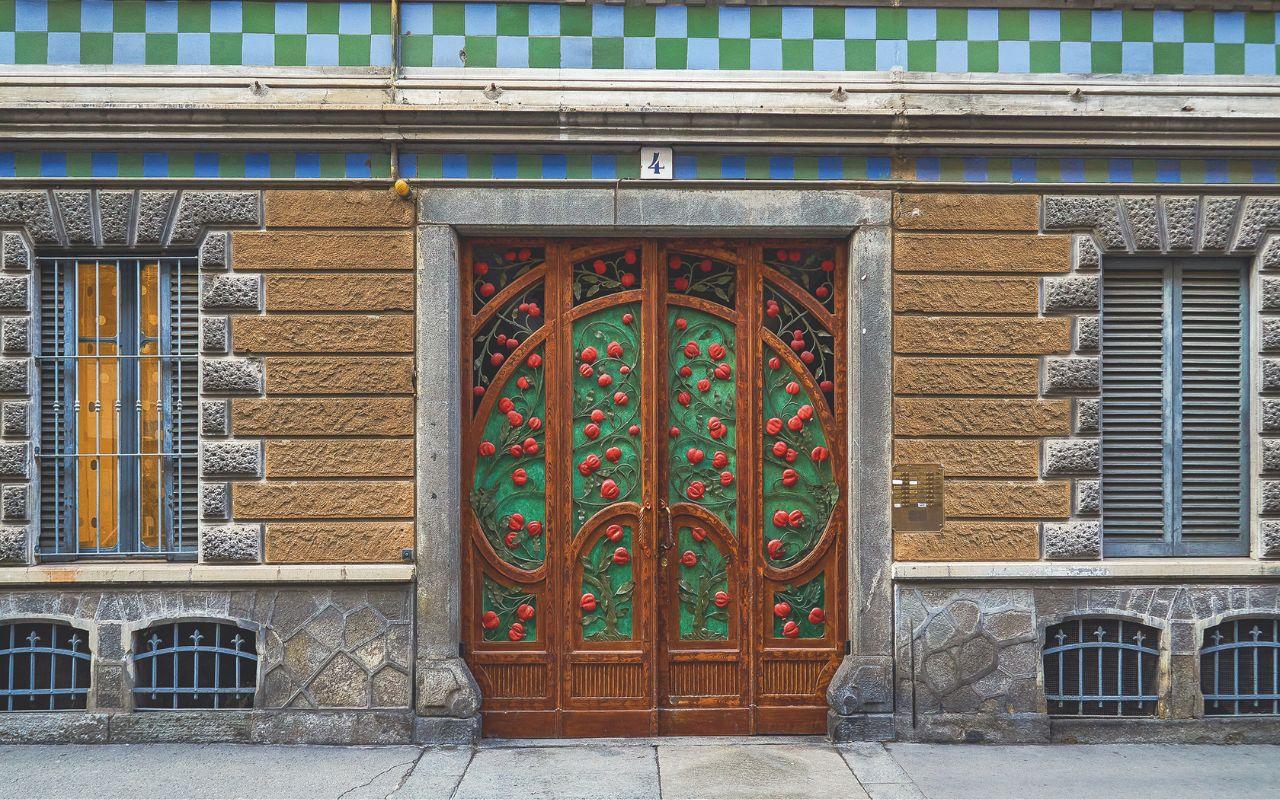
It is the green of the leaves and the red of the fruit that catch the eye in front of this door in via Argentero, in the San Salvario district. Then you make out the two wrought-iron pomegranate trees, laden with fruit, enclosed in a frame reminiscent of a peacock's tail.
Read more
The building was designed in 1907 by Pietro Fenoglio, one of the leading exponents of Turin's Art Nouveau. The bright colours you see today, however, are not the original ones: they come from a later restoration and repainting.
A frontal photograph highlights the symmetry of the composition; as you move closer, on the other hand, the details of the branches and fruit emerge. The door is the entrance to a private building, so the visit is limited to the outside.
Why it is Instagrammable: The door is pure Art Nouveau beauty: sinuous lines, warm colours, precious details. It is perfect for elegant, romantic, vintage photos. The wrought-iron pomegranates are so detailed that they look real.
-
Condominio 25 Verde
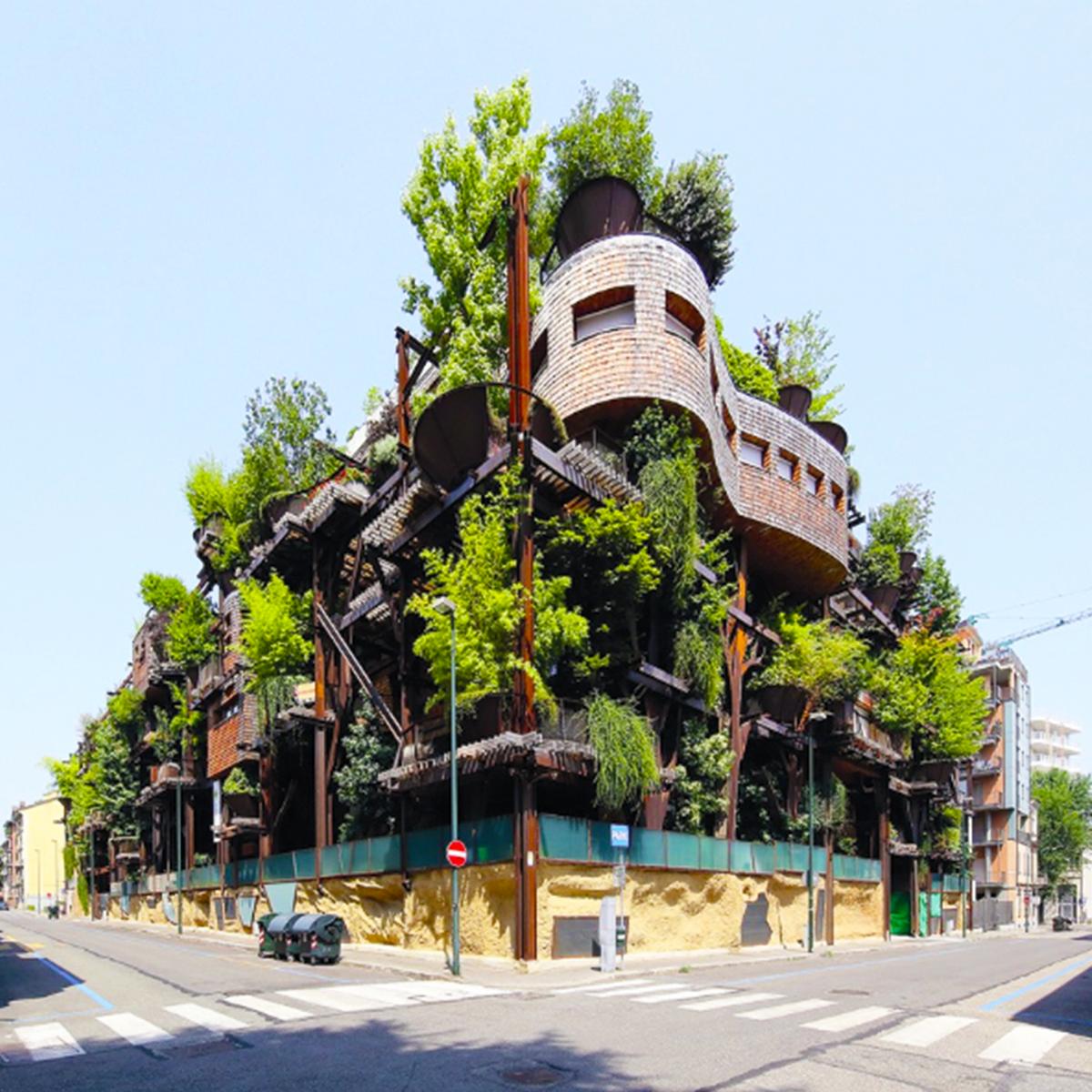
Trees grow on the terraces, while the steel structures look like trunks and branches: the Condominio 25 Verde, in Via Chiabrera, a short distance from Parco del Valentino, is a house where architecture and vegetation truly intertwine.
Read more
The architect Luciano Pia designed it and the building was completed in the early 2010s, with irregular terraces, wooden cladding and about 150 trees integrated into the steel and wood structures, in addition to the greenery of the inner gardens and the roofs. It is an experiment in bioclimatic architecture: the plants are not merely decorative, they shade the flats and help create a natural microclimate for those who live there. The result is a kind of inhabitable forest, where the boundary between building and vegetation becomes less clear.
Its appearance changes with the seasons. In spring and summer the vegetation dominates; in winter the metal structures stand out more clearly. It is a private building, but you can photograph it from the street: even without going in, the relationship between trees and structures is the main reason to stop and look.
Why it is Instagrammable: it is one of the most photographed and shared buildings in Turin on Instagram. The visual impact is very strong: lush greenery, wood and steel structures, windows hidden among the leaves. It looks like something out of an ecological science-fiction film.
-
Parco del Valentino
At the Valentino you can walk a good stretch with the Po beside you. The park follows the left bank of the river, in the San Salvario district, among tree-lined avenues, lawns and some of Turin's best-known monuments. The Fontana dei Dodici Mesi has statues and water features; the Borgo Medievale was built for the Esposizione generale italiana of 1884, recreating a fifteenth-century Piedmontese village. Then there is the Castello del Valentino, a former Savoy residence overlooking the Po, today used by the Politecnico di Torino for activities related to architecture. The park can be walked freely, while access to the individual buildings follows their respective opening arrangements. Even without going in, the walk deserves the time you give it.
Read more
Why it is Instagrammable: The Valentino offers many photographic settings: the Borgo Medievale, the Fontana dei Mesi, the tree-lined avenues, the Castello del Valentino, the banks of the Po. It is green, romantic, historic.
-
Mausoleo della Bela Rosin
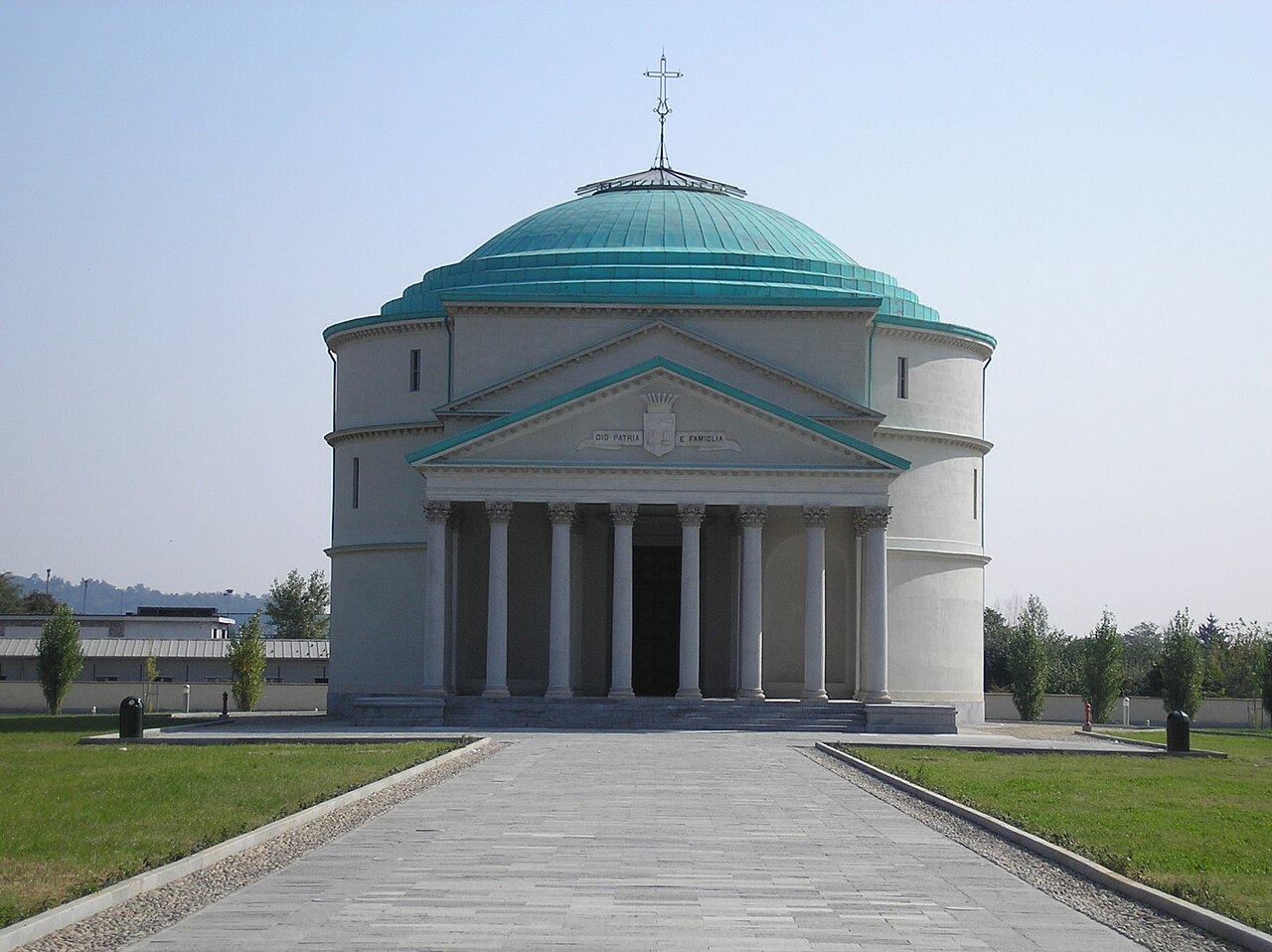
Located in the Mirafiori Sud district, the Mausoleo della Bela Rosin is a neoclassical building, an exact copy of the Pantheon in Rome, but far less famous: a splendid work designed by the architect Angelo Demezzi, yet little known even in Turin itself, perfect for an itinerary of unusual Turin. It was commissioned as a family tomb by the children of Rosa Vercellana, nicknamed la Bela Rosin - eight columns, an imposing dome. The Bela Rosin was to be buried here, with her husband Vittorio Emanuele II. Rosa Vercellana was in fact the mistress and later also the wife of the first King of Italy. Her remains, together with those of her children, were buried here, but were later moved to the Cimitero Monumentale following several lootings
Read more
Why it is Instagrammable: it is the most symmetrical and Instagrammable spot in Turin. The perfect symmetry of the neoclassical architecture, the pure white of the columns and the green of the surrounding park create dreamlike photographic compositions. It is a favourite of wedding photographers and influencers.
-
Il t'oro
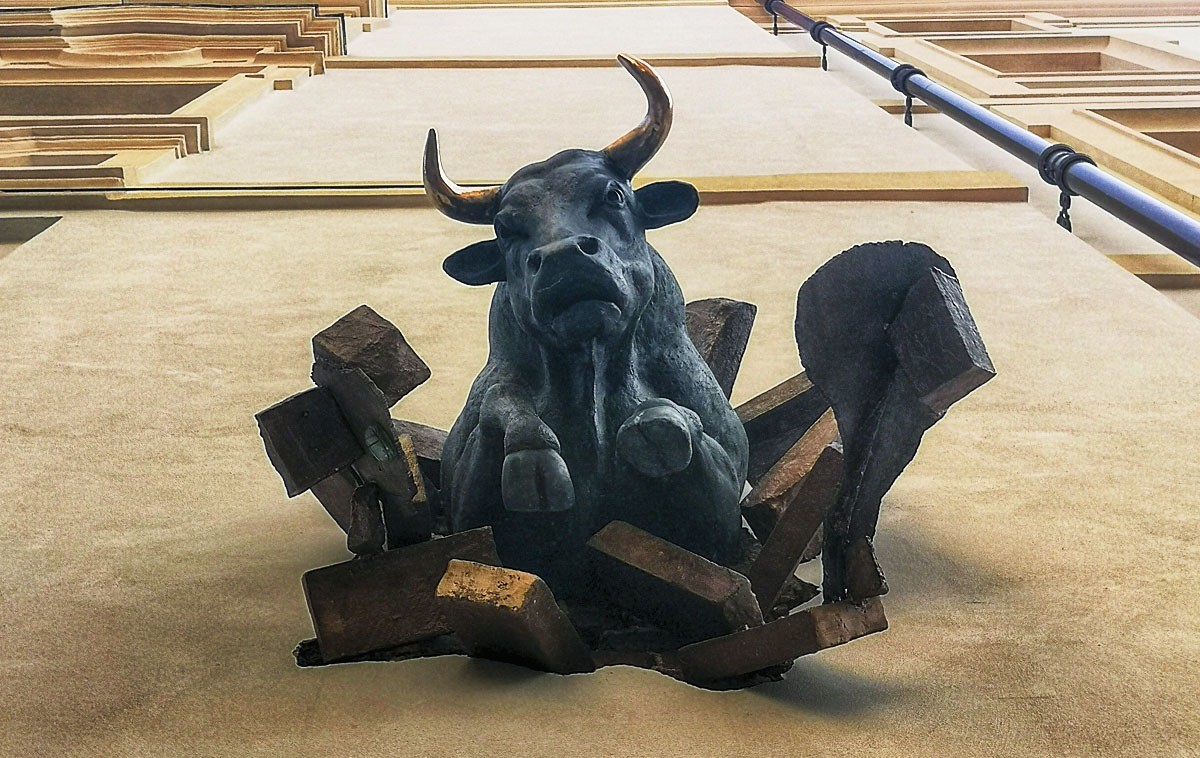
A bronze bull with gilded horns seems to break through the wall of the Quadrato residential complex, at via delle Orfane 20. The bricks open at its passage, while the rest of its body remains hidden inside the building: you see it at the very instant it appears to burst onto the street.
Read more
This is T'oro, a work created in 2018 by the Turin artist Richi Ferrero. The sculpture looks onto piazzetta della Visitazione, in the Quadrilatero Romano, and represents the symbol of the city as an image of strength, transformation and renewal. The artist described it as a vision of what Turin has been and what it will be.
Next to the bull there is also a small scarab, a symbol of good fortune already in ancient Egypt. It deserves a photograph all of its own.
The route
The map loads after consent to third-party content (OpenStreetMap).
These are the essential stops, but there is much more
When you book your stay with us you receive the complete step-by-step itinerary, a practical box with directions to get there and back, tips on what to see and a final treat to round off the themed day.