From the B&B cross the ponte Vittorio Emanuele I and you are already in cinematic Turin: in Fast X the bridge stands in for a crossing of the Tiber. Regular squares and arcades have often allowed the city to stand in for others. In 1969 the Minis of The Italian Job, with Michael Caine, drove through Turin up to the test track on the roof of the Lingotto; more recently The King's Man was shot between the centre and the Reggia di Venaria.
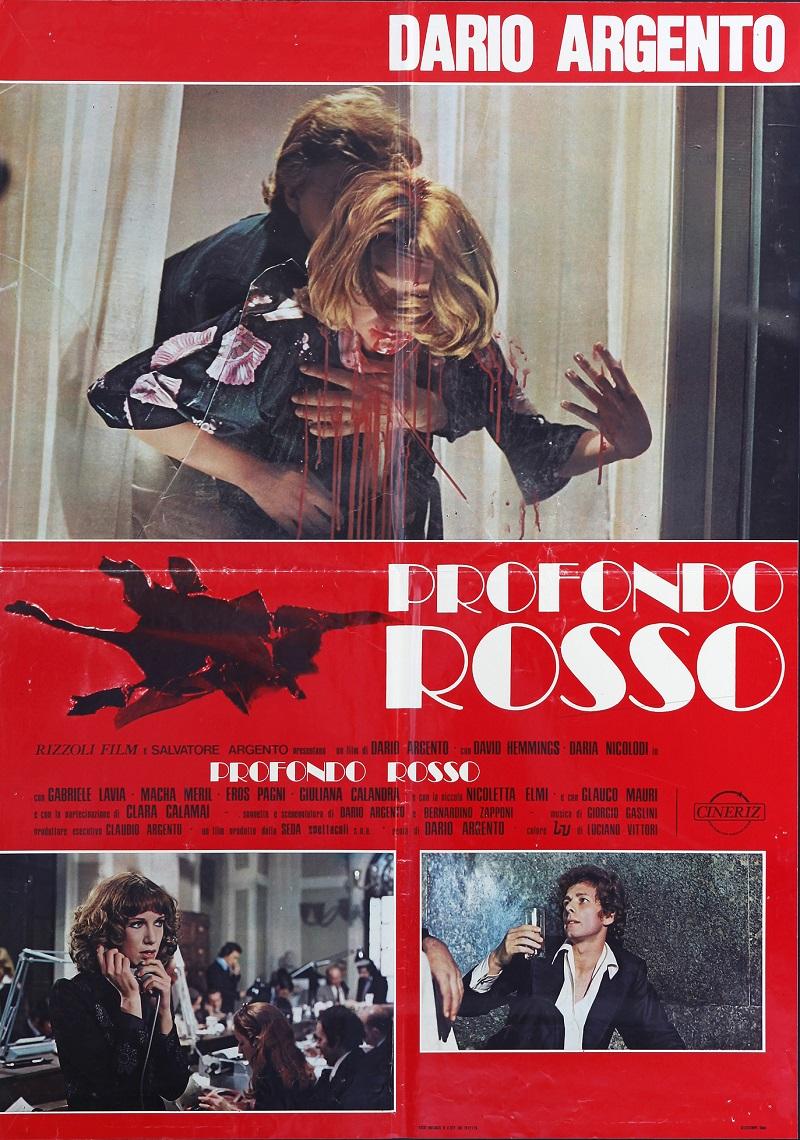
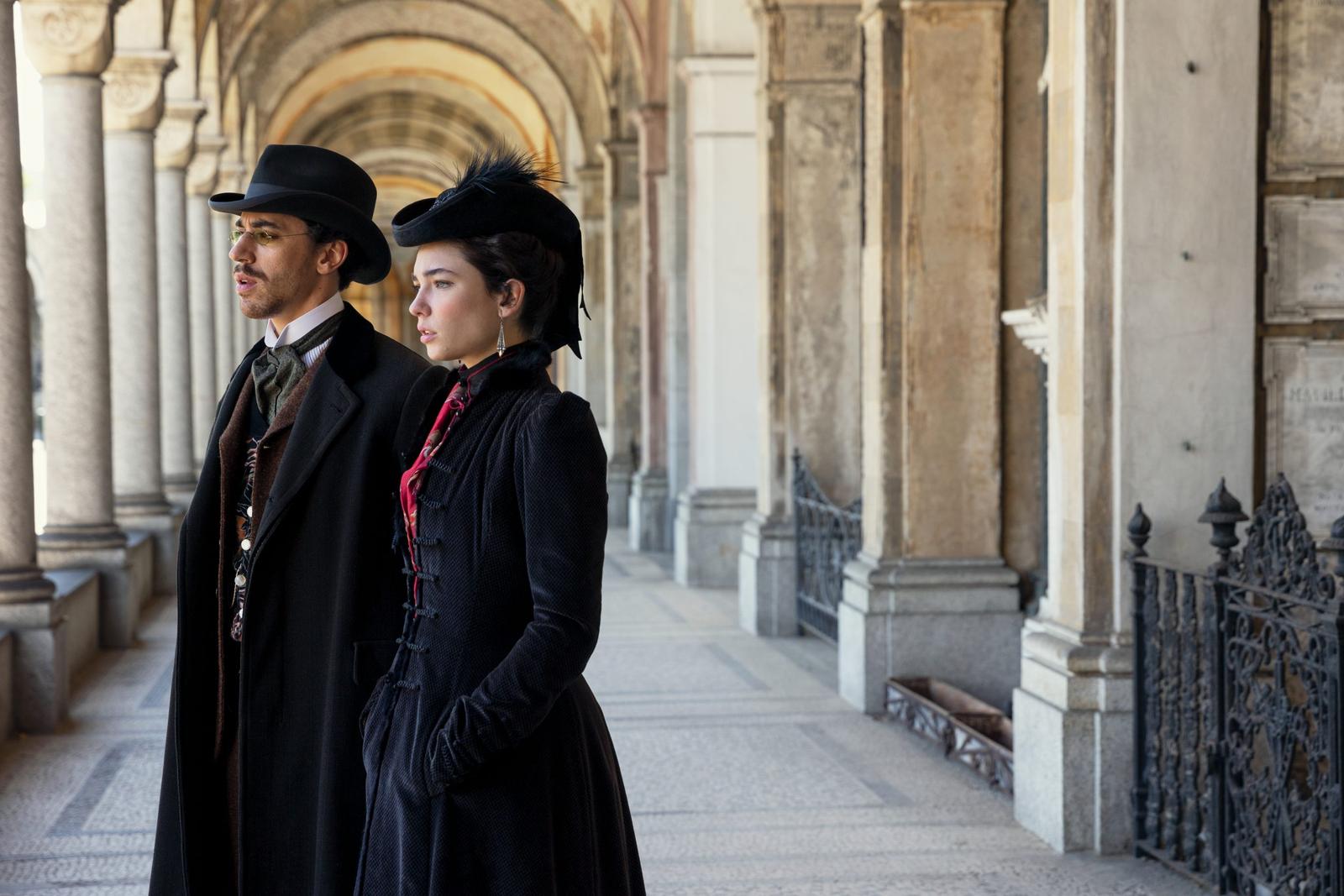
In the early twentieth century Turin was one of the main centres of Italian film production; today that tradition continues in the Museo Nazionale del Cinema, in the festivals and in the productions that choose its streets and palaces as settings. You will find the square from Dario Argento's Deep Red, the nineteenth-century buildings of The Law According to Lidia Poët and the locations of An Astrological Guide for Broken Hearts.
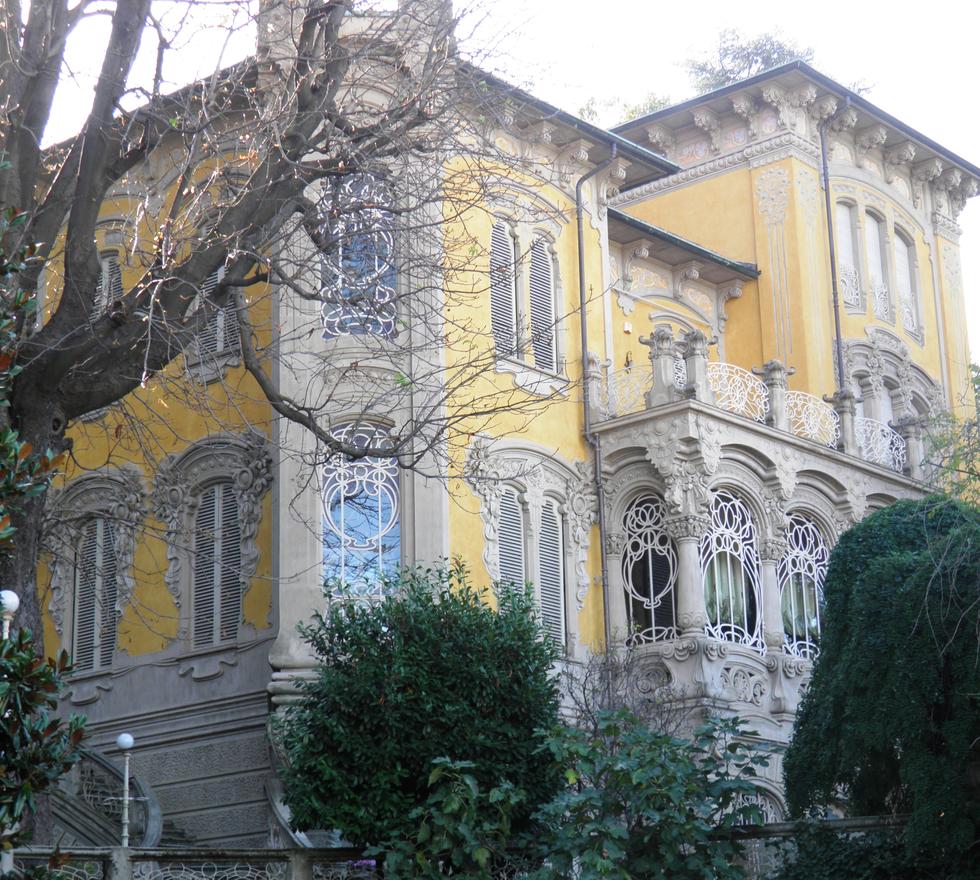
From the bridge the route passes through the Murazzi, reaches the Mole Antonelliana and continues through the squares of the centre as far as the Quadrilatero Romano. Allow three or four hours on foot, not counting the museum, to which it is worth devoting more time. For Dario Argento fans there is also Villa Scott, in the lower hills and not far from the B&B, used for some of the best-known scenes of Deep Red: better to visit it separately. First check the access arrangements of the places you want to visit.
On foot
-
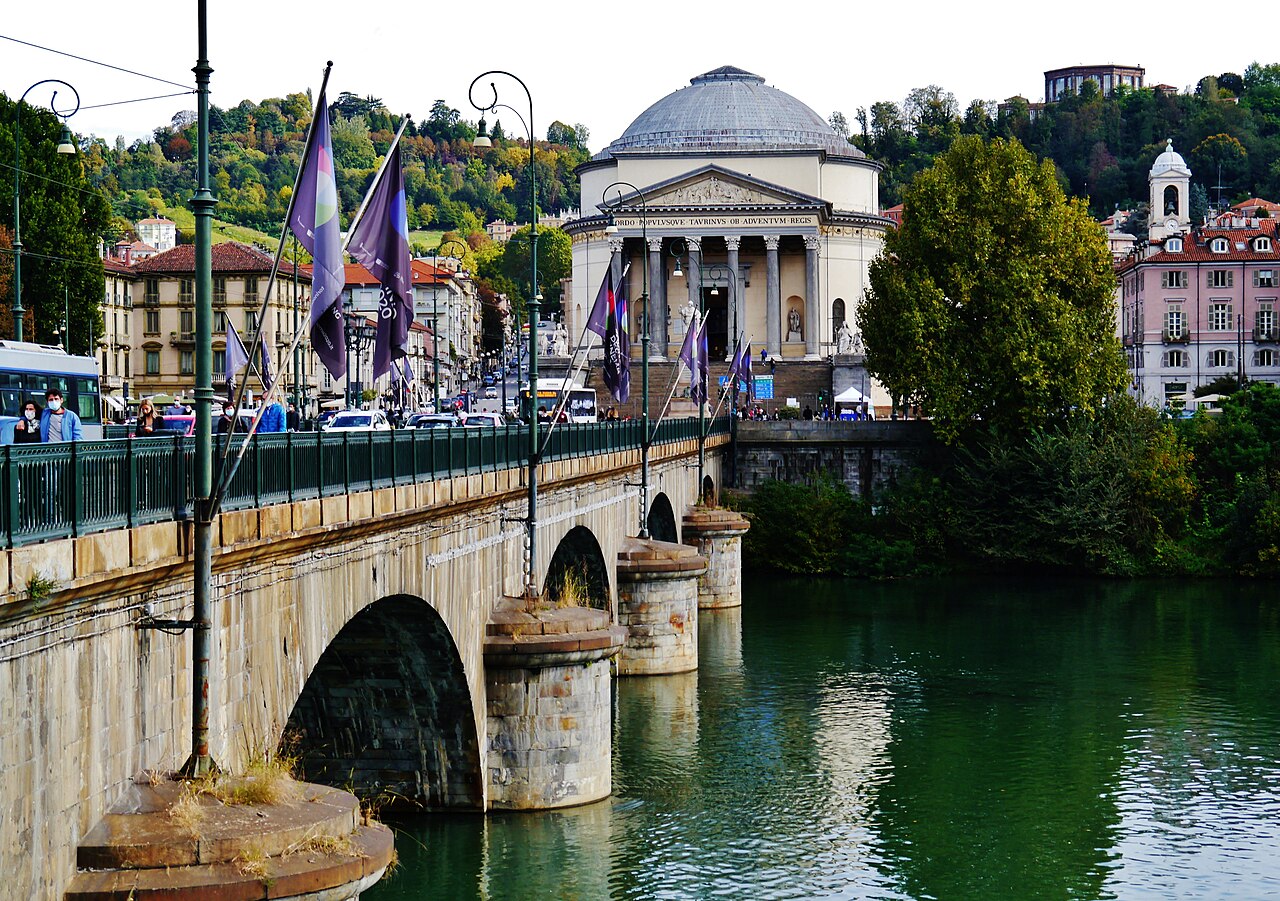 Ponte Vittorio Emanuele I
From the Vittorio Emanuele I bridge you have the Po beneath you, Piazza Vittorio Veneto ahead and the hill behind. It is a few minutes from the B&B and links the square of the Gran Madre with the centre. Built in the Napoleonic era, between 1810 and 1813, it is the oldest bridge still standing in Turin.
Read more
Its history is less peaceful than the view. A year after the end of the French occupation it was proposed to demolish it, because many saw it as the symbol of the rule that had just ended. It was King Vittorio Emanuele I himself who objected, and the bridge and the square took his name. Today it is one of the most photographed spots in Turin: from the Piazza Vittorio bank the Gran Madre enters the frame together with the bridge.
In Fast X, the tenth chapter of Fast & Furious released in 2023, it even changes river: during the chase with the spherical bomb it stands in for a crossing of the Tiber near the Vatican. The production alternated shooting in Rome and in Turin, exploiting the similarity of some urban settings.
Walking across the bridge you see the river from another perspective. Once you reach Piazza Vittorio, you can go down to the Murazzi.
-
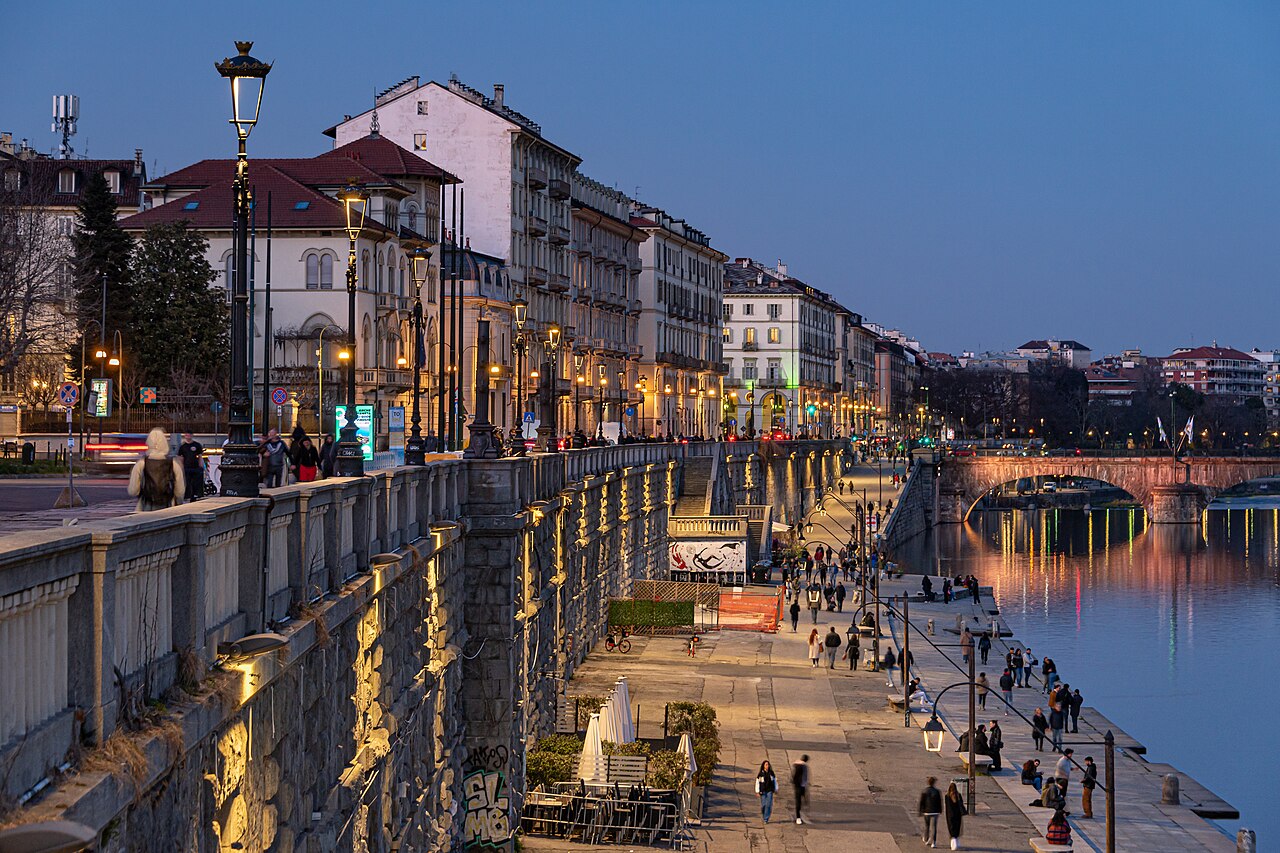 Murazzi del Po
From piazza Vittorio Veneto you go down towards the river and the centre changes face. At the Murazzi you have the Po on one side and the city's high walls on the other, broken by the great stone arches. Built in the nineteenth century to contain the river's waters, the arches also served as shelter for boats. Over time they became meeting places, bars and venues for music.
Read more
The Murazzi appear in Fast X, which used several stretches of the Po banks for the action sequences. This riverside is also among the settings of Guida astrologica per cuori infranti, the Netflix series based on Silvia Zucca's novel and shot largely in Turin. A walk here shows a city quite different from that of the great squares.
-
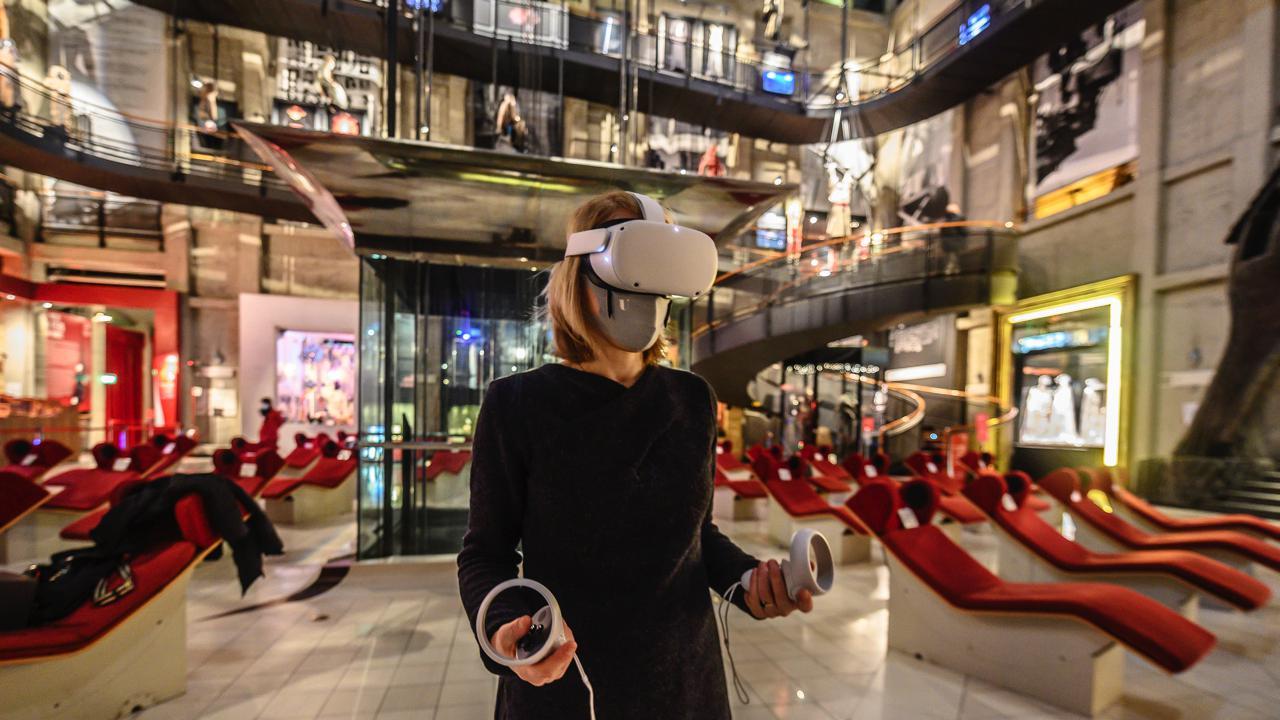 Museo del Cinema
Museo Nazionale del Cinema - Mole Antonelliana
Inside the Mole Antonelliana, the first thing that strikes you is the space above your head: the great central hall lets you see how far the building rises. The Museo Nazionale del Cinema occupies several levels, with a route that starts from the magic lanterns and the optical shows that preceded cinema and goes on to filming techniques, set design and special effects.
Read more
And yet the Mole had not been designed to house a museum. Alessandro Antonelli designed it in 1862 as a synagogue; after various construction vicissitudes, it was completed at the end of the nineteenth century. Since 2000 it has housed the Museo Nazionale del Cinema, which also appeared among the locations of Guida astrologica per cuori infranti. If you want to see the collections, give the visit the time it deserves: it is not a simple stop during the walk.
-
Museo del Cinema
Cinema Massimo
At the Cinema Massimo, a few steps from the Mole, cinema is not only recounted: it is watched. The design is by the architect Ottorino Aloisio and, when it opened in 1934, it had a single large auditorium. After the damage of the Second World War and several transformations, it was renovated and divided into three screens.
Read more
Today it is part of the activities of the Museo Nazionale del Cinema and hosts contemporary films, retrospectives, talks and festivals, including the Torino Film Festival, CinemAmbiente and the Lovers Film Festival. It is a stop unlike the others: here you do not come to recognise a scene shot in the street, but to find a place where cinema continues to be screened and discussed. If the programme intrigues you, you can stay for a screening.
-
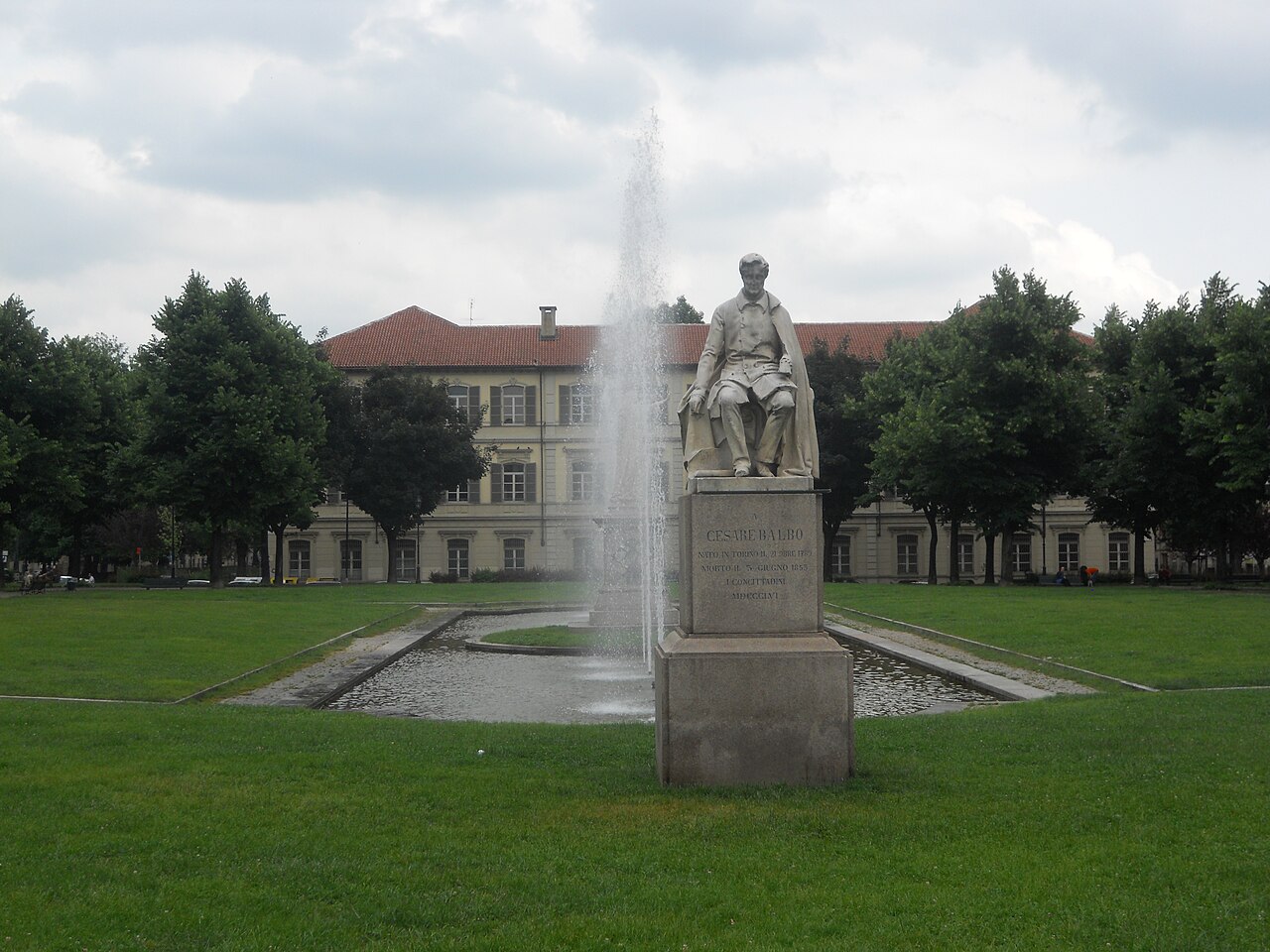 Piazza Cavour
Among the trees of piazza Cavour, with the nineteenth-century façades all around, you understand why the production of La legge di Lidia Poët chose this place to portray the Turin of the late nineteenth century. In the Netflix series, starring Matilda De Angelis, the exteriors of the Poët family home, called Villa Barberis, were shot here. The interiors, on the other hand, are those of Villa San Lorenzo, in Racconigi: on screen the two places become a single house.
Read more
The gardens preserve part of the layout of the old Giardino dei Ripari, developed in the nineteenth century on the site of the earlier fortifications. It is above all the façades of the buildings around the square, one beside the other, that made it possible to recreate the period without rebuilding the streets entirely in the studio.
-
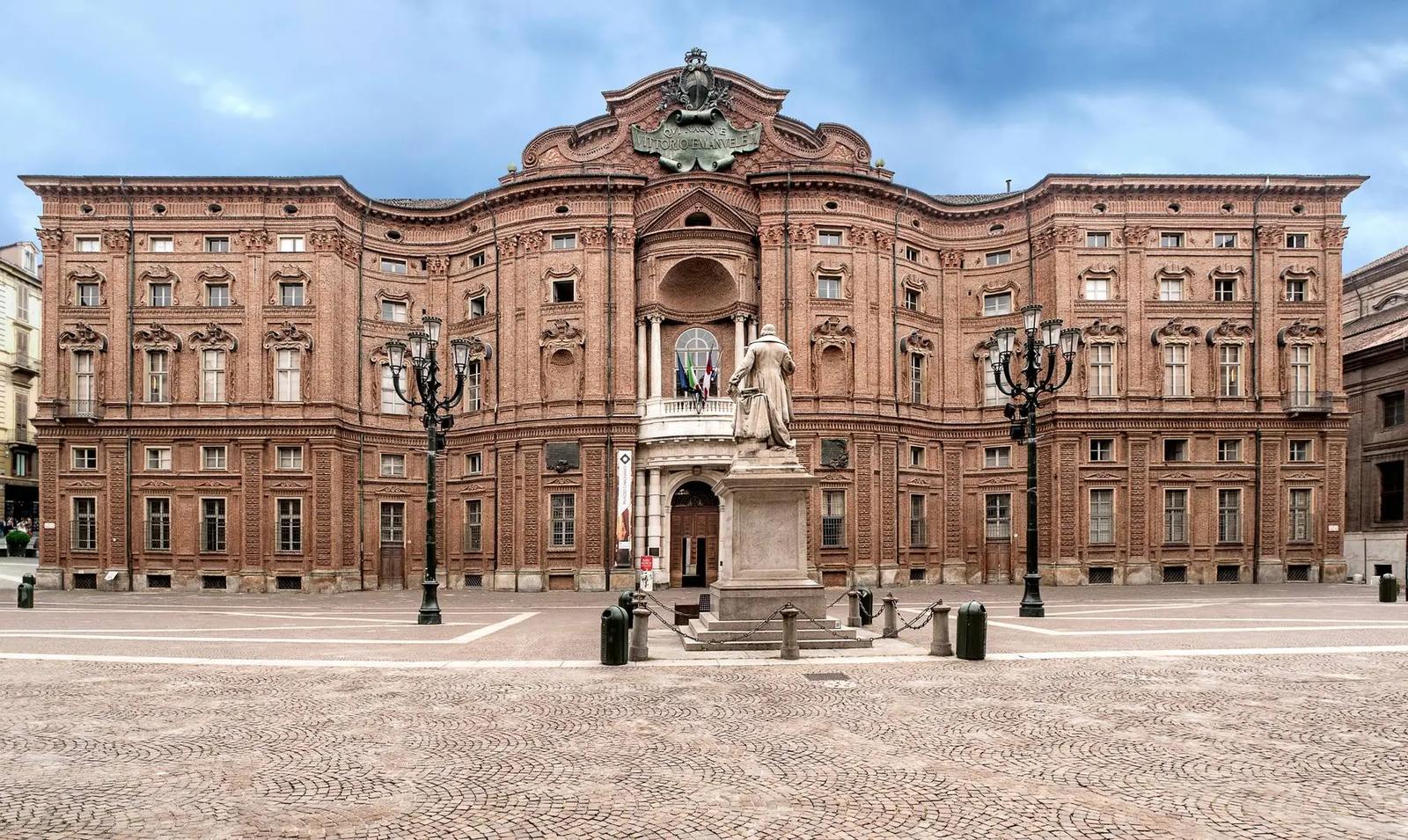 Palazzo Carignano
The façade of Palazzo Carignano seems to move: it advances and recedes in a succession of concave and convex curves, all built in worked brick. The cornices and decorative motifs are also made of brick.
Read more
It was Emmanuel Philibert of Savoy-Carignano who commissioned the palace from Guarino Guarini in 1679. Among the external decorations are stylised figures with feathered headdresses, referring to Native Americans. Inside, the rooms are arranged around an oval atrium.
The palace later housed the Subalpine Parliament. Today it is home to the Museo Nazionale del Risorgimento Italiano, which preserves the hall of the Chamber of Deputies inaugurated in 1848.
On the opposite side, towards piazza Carlo Alberto, the façade changes completely: it belongs to the nineteenth-century extension.
If you have seen The Law According to Lidia Poët, you will probably recognise this façade: in the television series it represents the exterior of the Turin courthouse.
The courthouse, however, was built for television using different places. The interior scenes were shot in other buildings, including the former Curia Maxima and Palazzo Barolo. Palazzo Carignano lent only its exterior, though it was never really the seat of the court.
From the square you can find the shot from the series again, this time without the need for a camera.
-
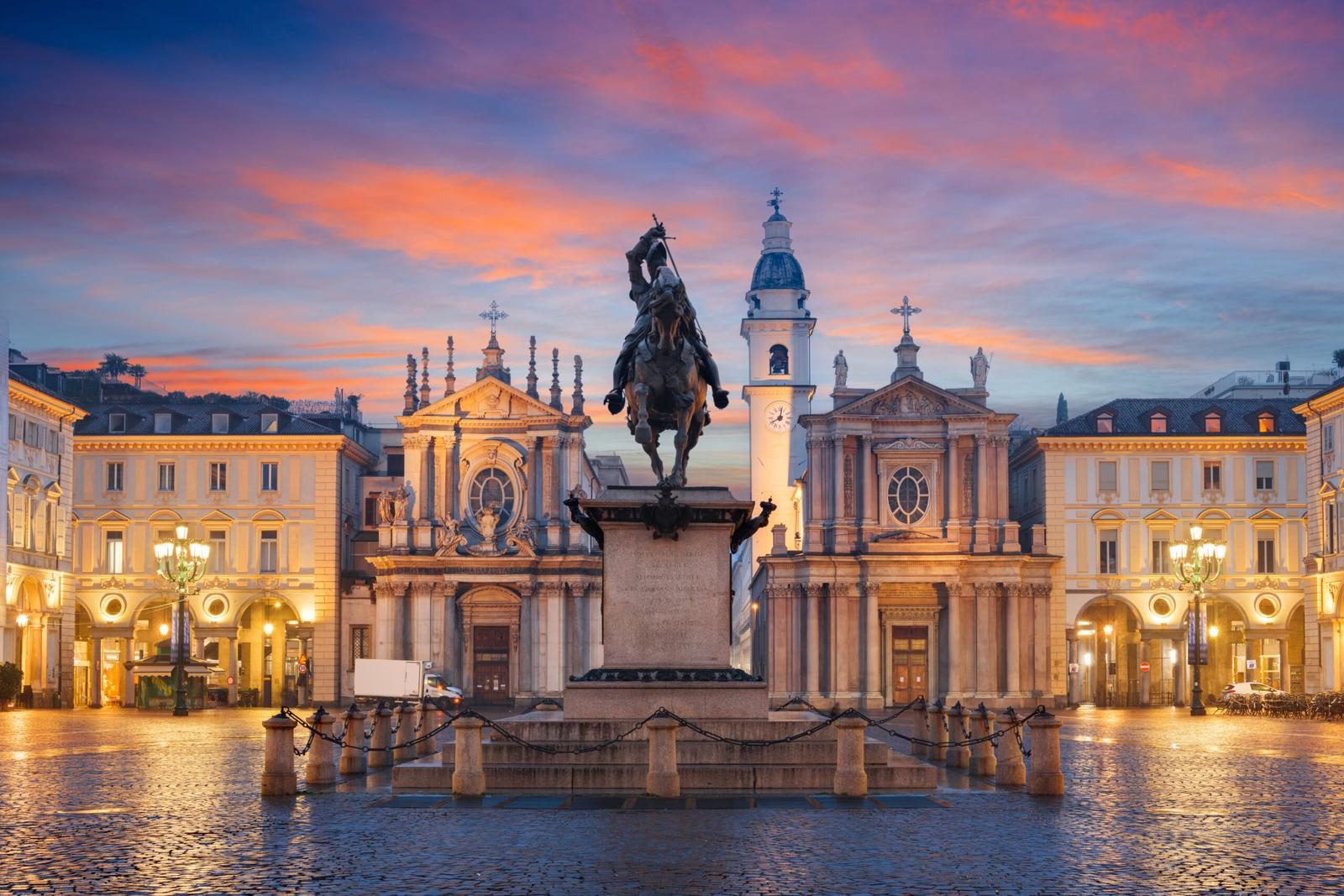 Piazza San Carlo in Turin
Piazza San Carlo
Piazza San Carlo is the «drawing room of Turin», as the Turinese traditionally call it. With its wide porticoes and regular façades, it has that orderly air that invites you to walk through it unhurriedly.
Read more
It was designed by Carlo di Castellamonte and construction began in 1637. On the southern side stand the twin churches of San Carlo Borromeo and Santa Cristina; the façade of the latter was designed by Filippo Juvarra and built between 1715 and 1717.
In the centre of the square, the nineteenth-century equestrian monument by Carlo Marochetti depicts Emmanuel Philibert and commemorates the victory of Saint-Quentin in 1557. For the Turinese it is simply 'l caval 'd brôns, the bronze horse.
In the film Fast X, released in 2023, piazza San Carlo played the part of a square in Rome. During filming in 2022, the scene in which a truck releases the huge spherical bomb destined to roll through the streets of the capital was shot here.
In the editing, the Turin footage was combined with shots of piazza del Popolo. The two side-by-side churches helped make the substitution believable.
If you remember that sequence, it will be quite something to find the square in its usual calm.
-
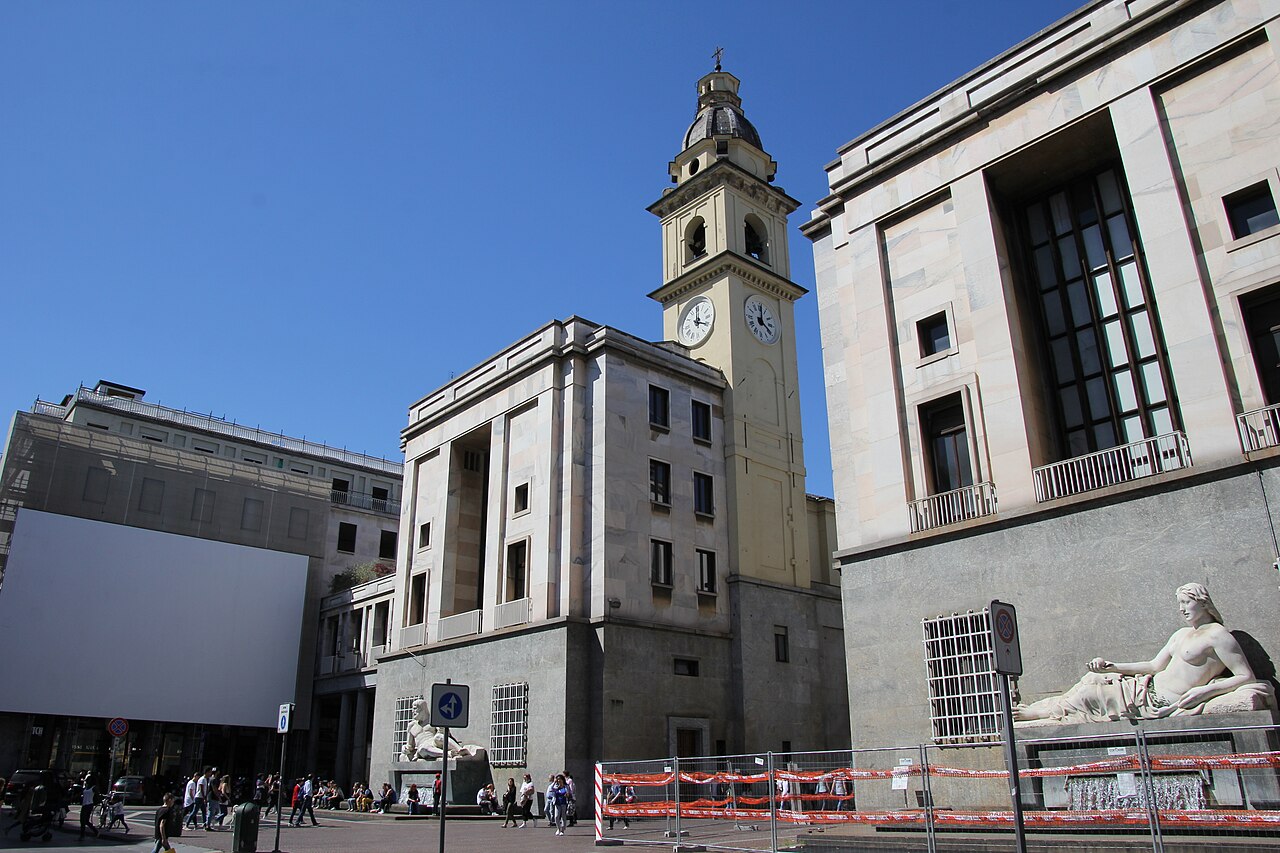 Piazza C.L.N.
Behind the two churches of piazza San Carlo are the fountains of piazza C.L.N.; the Blue Bar of Profondo rosso, however, is no longer there. In fact it had never been a real bar: for Dario Argento's 1975 film a set was built, inspired by Edward Hopper's painting Nighthawks. It was the bar where Marc Daly, the pianist protagonist, meets Carlo. Other sequences of the film were also shot in the square.
Read more
The rest of the setting is still recognisable: the rationalist layout of the 1930s, the façades of the buildings and the two great fountains representing the Po and the Dora Riparia, the work of the sculptor Umberto Baglioni. The Blue Bar disappeared after filming, but the scenes can be found again even without it.
-
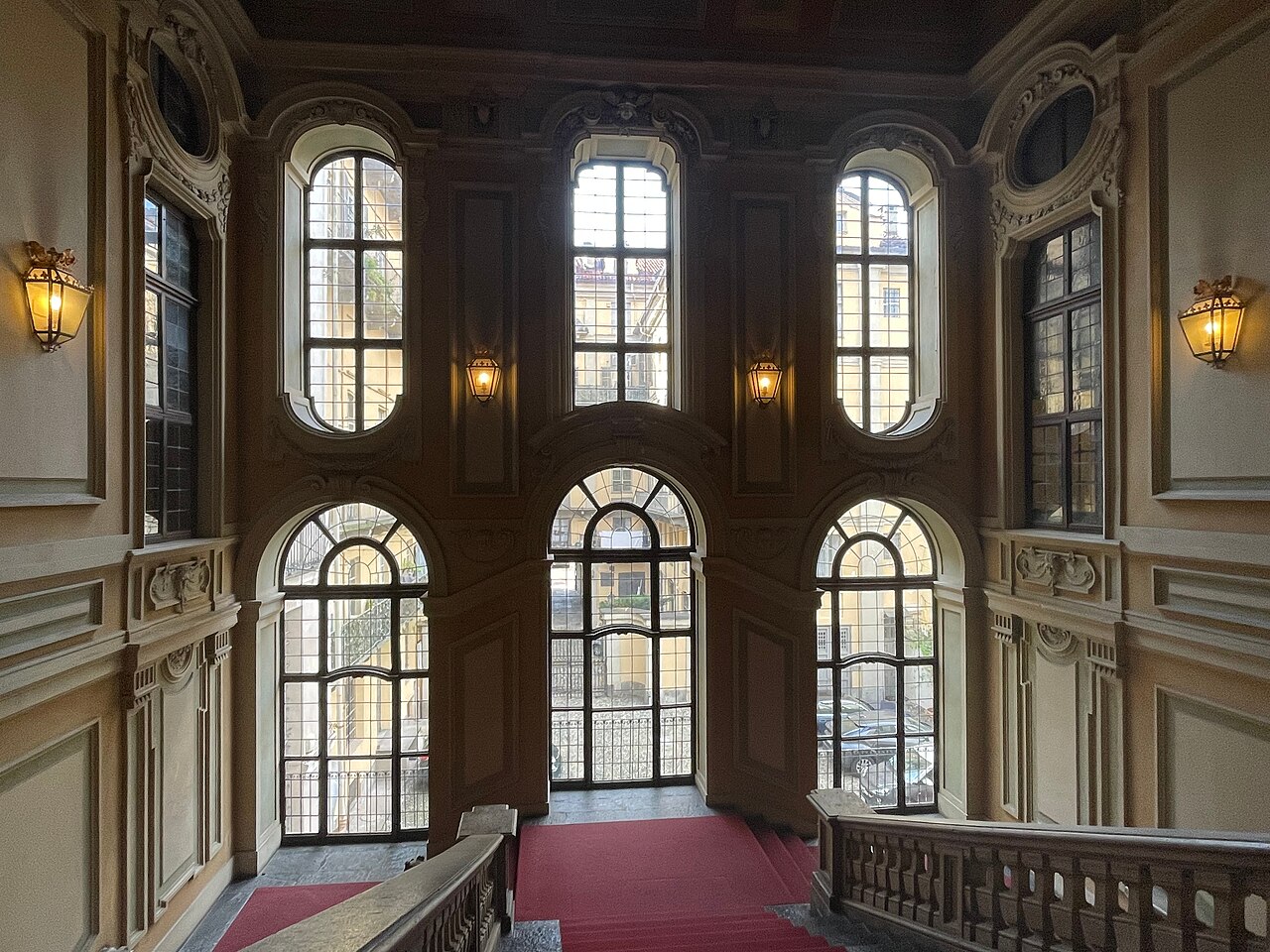 Palazzo Falletti di Barolo
Some of the courtroom halls you see in the series La legge di Lidia Poët are in fact historic rooms of Palazzo Falletti di Barolo, in the Quadrilatero Romano. To recreate those interiors, the production also used the former Curia Maxima in via Corte d'Appello.
Read more
The palazzo is a noble residence from the late seventeenth century, linked to the family of the marquises of Barolo. In the nineteenth century it was the home of Tancredi and Giulia Falletti, known for their philanthropic initiatives, and it also hosted the writer Silvio Pellico. Here the aristocratic rooms that cinema and television use to portray nineteenth-century Turin can be seen up close. Unlike many private buildings used for filming, Palazzo Barolo does in fact have spaces open to visitors, according to the access arrangements set by the institution.
-
 Villa Scott
Villa Scott does not let itself be seen all at once. From the street, beyond the fence, you can catch only part of the movement of the building's various volumes, between loggias, turrets and bay windows. The design dates from 1902: Pietro Fenoglio, with the collaboration of Gottardo Gussoni, conceived it for Alfonso Scott, an entrepreneur in Turin's car industry. In the lower hills the villa fits into the garden and the landscape, with an articulated plan, large glazed windows, floral decorations and a winding staircase leading to the main entrance. Alongside the Liberty style there are neo-Rococo references. It is a private property, not normally open to visitors: the view has to stop at what appears beyond the fence.
Read more
Those who have seen Dario Argento's Deep Red, released in 1975, will recognise the so-called "Villa of the Screaming Child". In the film the protagonist Marc Daly explores the building and discovers, under a layer of plaster, a drawing that is important for solving the mystery. The villa is outside the film route of the historic centre, but from our B&B you can reach it with an uphill walk, even as a visit in its own right.

The route
The map loads after consent to third-party content (OpenStreetMap).
These are the essential stops, but there is much more
When you book your stay with us you receive the complete step-by-step itinerary, a practical box with directions to get there and back, tips on what to see and a final treat to round off the themed day.