In Turin you can devote a day to shopping without spending all your time in the shops. The centre is discreet and elegant, refined without ostentation: between one shop window and the next you will come across Baroque squares, nineteenth-century arcades, historic cafés and shops that still keep their period furnishings and signs. Even if you have nothing to buy, there is plenty to browse.
Via Roma and via Lagrange are the streets of boutiques and big names; via Garibaldi offers more affordable shops, while under the porticoes of via Po you will find bookshops and second-hand book stalls. In the Quadrilatero Romano, small shops and workshops still hold on. And then there is the Balon, the historic flea market of Borgo Dora, where people go just for the pleasure of rummaging.
From the B&B you can start by reaching piazza Vittorio Veneto, across the Po. The route is mostly on foot, between the historic centre and Borgo Nuovo, with a detour to Borgo Dora. Allow at least half a day, or a full day if you want to go into the shops.
For the Balon, the day to choose is Saturday; on the second Sunday of the month there is the Gran Balon, devoted above all to antiques and collectables. On the other days, the neighbourhood's permanent shops remain. Before setting out, check shop opening times and whether the markets are taking place anyway.
On foot Walking: 9.1 km, 2 h 5 min
-
 The Balon of Turin
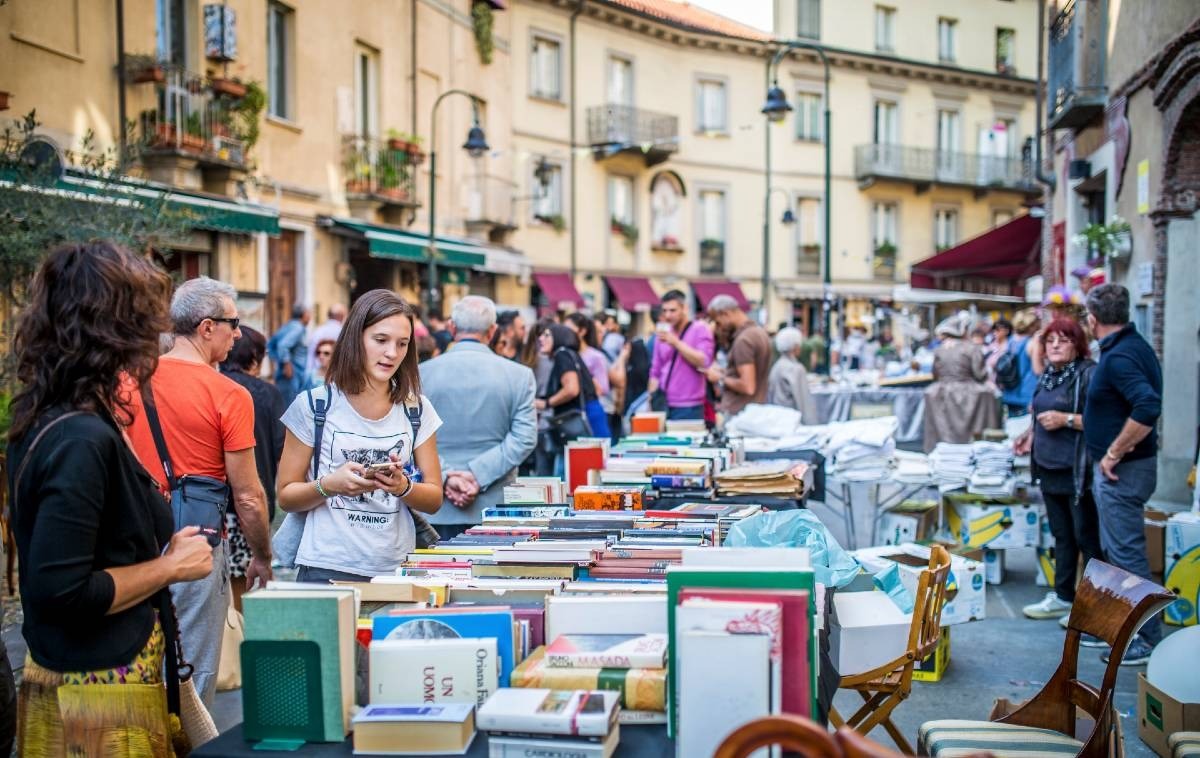
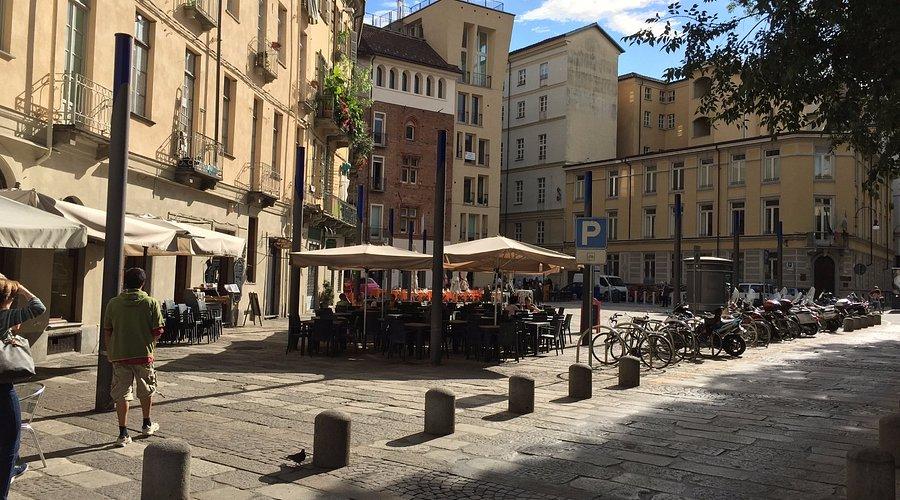
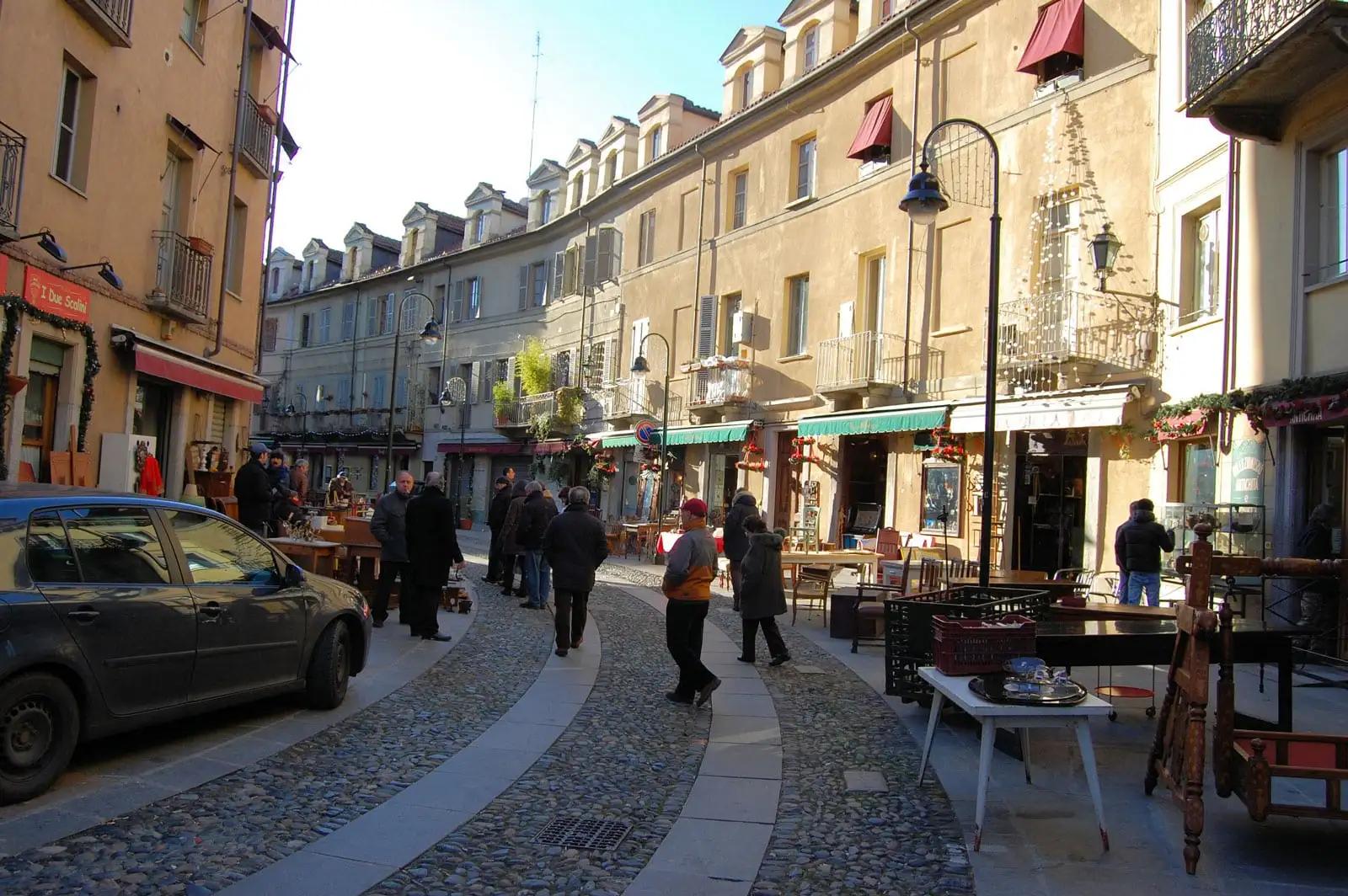
At the Balon the pleasure is arriving without a shopping list. Every Saturday the streets and little squares of Borgo Dora, behind Porta Palazzo, fill with stalls: second-hand clothes, books, furniture, ceramics, records, collectables and curiosities of every kind. It is Turin's historic flea market, and people come as much to rummage among objects of different periods and origins as to buy something.
Read more
The hot-air balloon is part of the Balon tradition and has become one of the symbols of the district. On the second Sunday of the month the market expands with the Gran Balon, devoted above all to antiques, vintage and collecting. On the other days the permanent shops of Borgo Dora remain, and they are still worth a look.
-
 Via Po
 and Piazza Vittorio
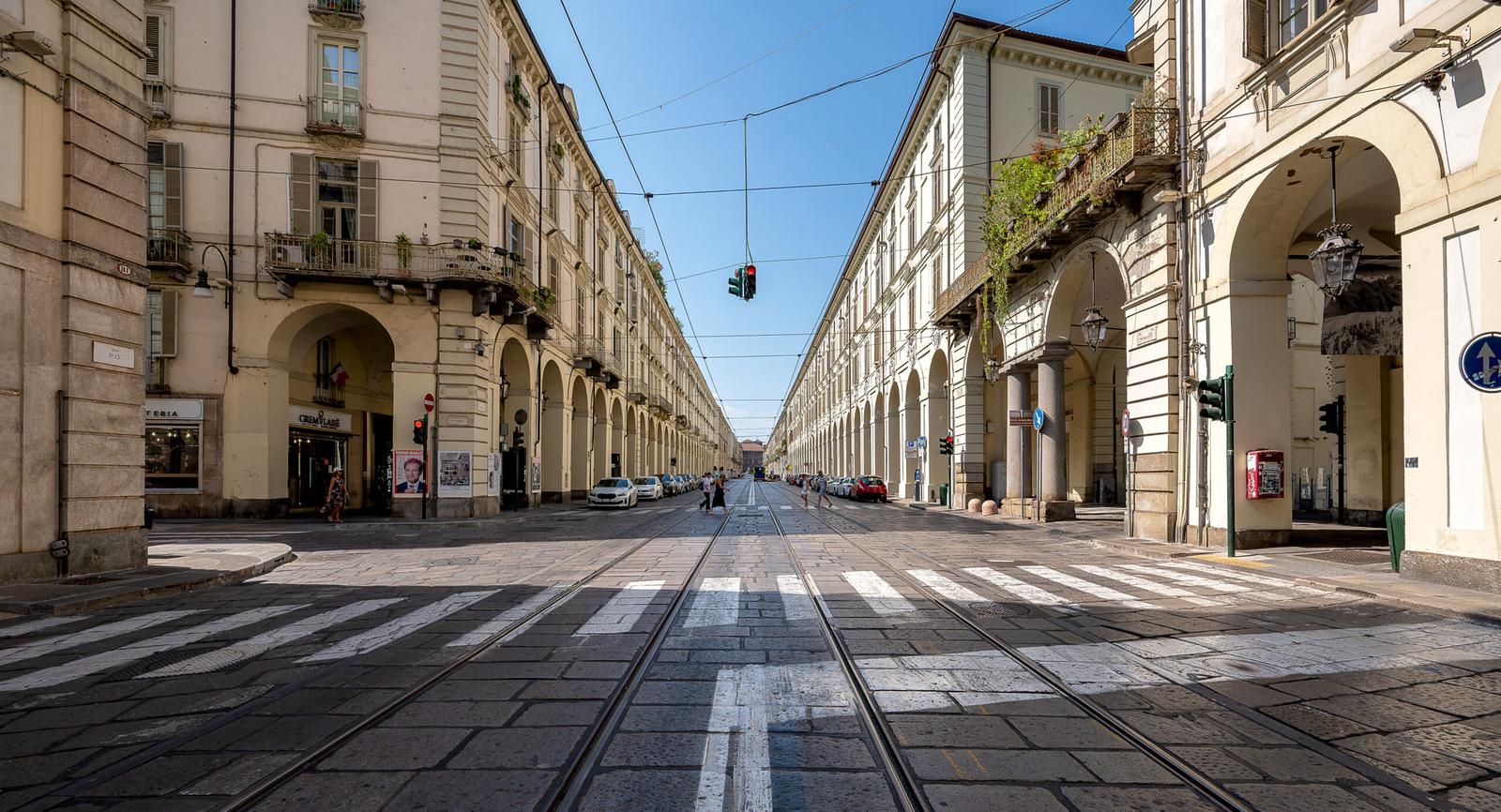
Under the arcades of via Po you pass easily from an antiquarian bookshop to a second-hand book stall, from prints to records, from old wooden shopfronts to historic cafés and clothing shops. The street links piazza Castello to piazza Vittorio Veneto and, between one shop window and the next, offers glimpses of the hill. The comings and goings also owe something to the proximity of Palazzo Nuovo, the university building for the humanities.
Read more
At via Po 17 stands the Palazzo dell'Università: if you can get into the courtyard, the loggia on two orders of columns deserves a short detour, also as an example of eighteenth-century university architecture. Once in piazza Vittorio, you can choose a café under the arcades or carry on towards the Po, with the view of the Gran Madre and the hill.
-
 Contrada dei Guardinfanti
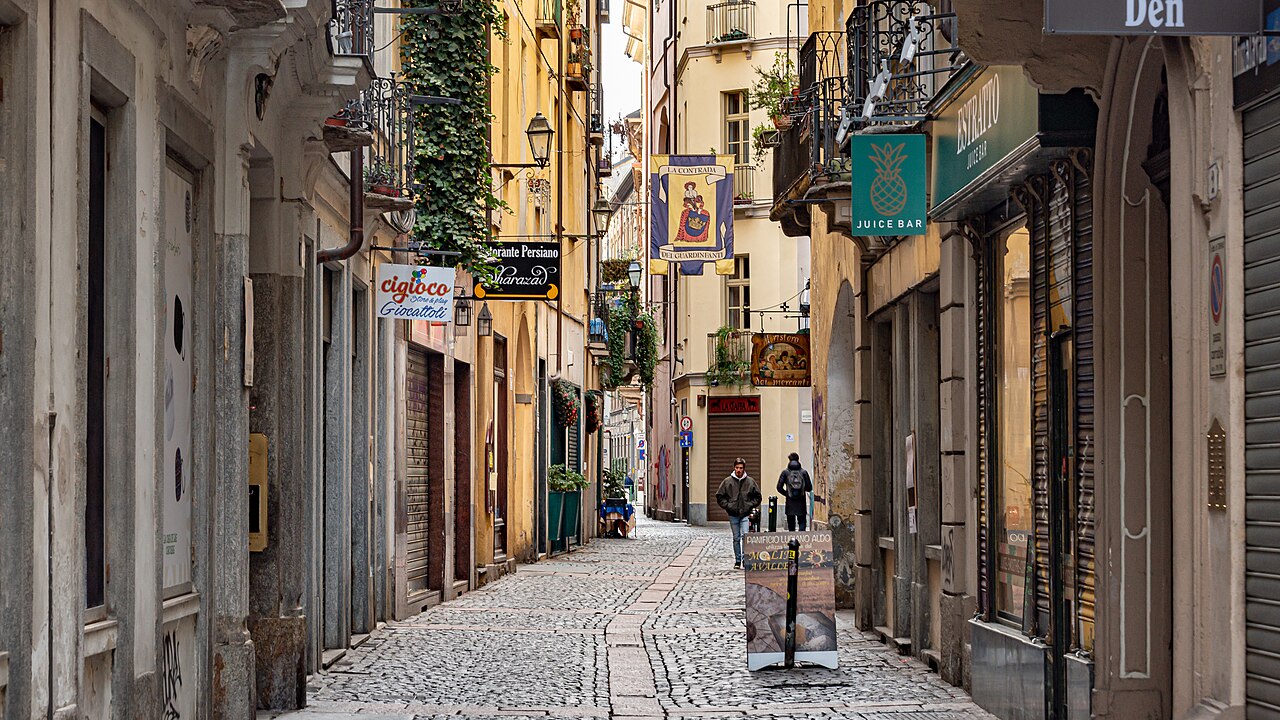
Here the streets narrow and the shop windows change character. Between via Barbaroux, via dei Mercanti and via San Tommaso you are on the edge of the Quadrilatero Romano, in one of the oldest parts of the centre: the grid of streets partly preserves the layout of ancient Augusta Taurinorum. In place of the great nineteenth-century commercial axes you find artisan workshops, antique dealers, small studios and doorways that invite you to explore the side streets too.
Read more
It is worth going as far as number 4 of via Stampatori, where Palazzo Scaglia di Verrua stands, a rare Turin example of architecture between the Renaissance and the early seventeenth century. The façade preserves the frescoes by Antonino Parentani, painted from 1603 onwards. When the main door is open, you can also see the arcaded courtyard with its decorations.
-
 Via Garibaldi
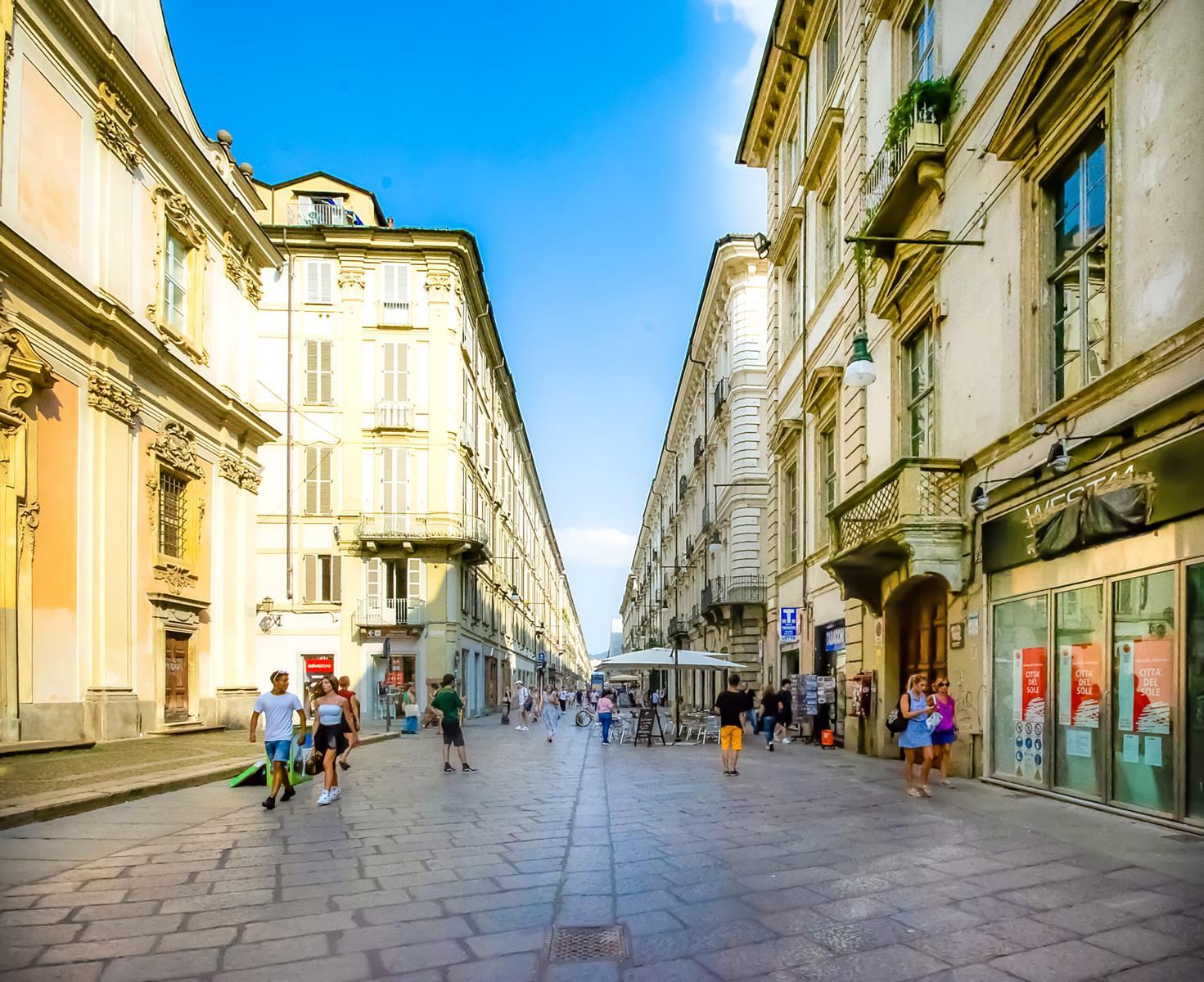
On Saturday afternoons via Garibaldi is particularly lively: clothing shops, bookshops, big retail chains, cafés and ice-cream parlours follow one another for almost a kilometre, entirely pedestrian, between piazza Castello and piazza Statuto. The route largely follows the ancient decumanus maximus of the Roman city. The street was once called Contrada di Dora Grossa, after the canal that ran along it; in the eighteenth century it was gradually widened and regularised. Many of the palaces date from that period, others are later.
Read more
Among the shop windows, at number 25, you will find the Cappella della Congregazione dei Banchieri e Mercanti. Built in 1692, it preserves rich Baroque decorations: a detour that changes, for a few minutes, the tone of the walk.
-
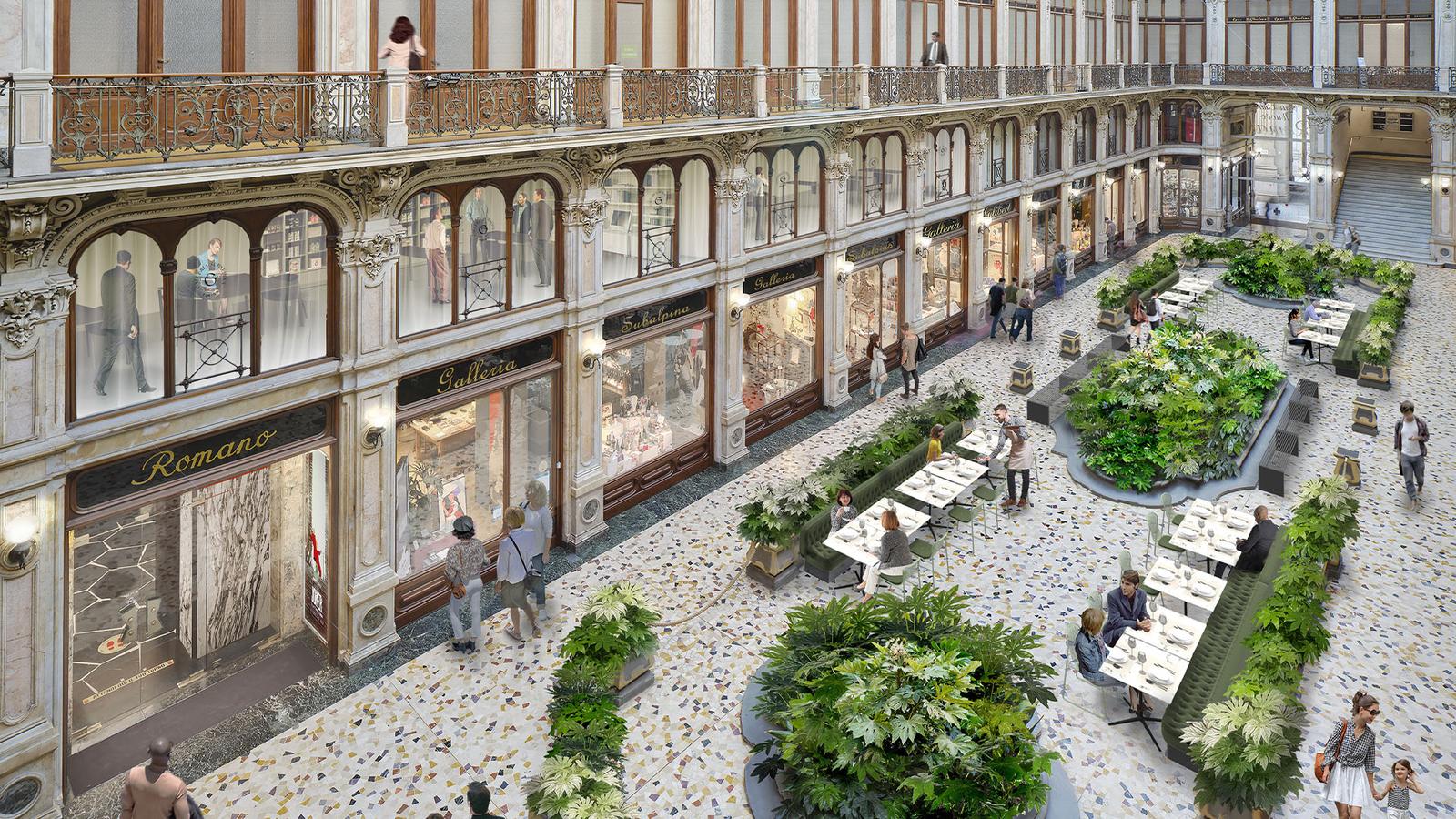 Galleria Subalpina
Between piazza Castello and piazza Carlo Alberto you can walk through the Galleria dell'Industria Subalpina, passing beneath a great vault of iron and glass. It is one of those places where it comes naturally to slow down and look around.
Read more
It was designed by Pietro Carrera in 1873 and opened in 1874, modelled on the Parisian passages. The balconies, the inner shopfronts and the eclectic decorations mix Renaissance and Baroque references, in keeping with nineteenth-century taste.
The gallery has a long commercial tradition, above all tied to books: here you will find antiquarian bookshops such as La Casa del Libro and Gilibert. There are also the confectioner Baratti & Milano, which moved here in 1875, and the Cinema Romano.
If you love books, it is worth looking at the shop windows here too. La Casa del Libro, once also known as «l'Ebreo», is one of the gallery's historic businesses. The Galleria Gilibert, on the other hand, specialises in rare books, old prints and collectable posters.
Between one bookshop and the next you come across the old signs and shopfronts that have accompanied the commercial history of the passage since it opened. And the presence of the confectioner rounds off a thoroughly local habit: stepping into the gallery just to browse.
-
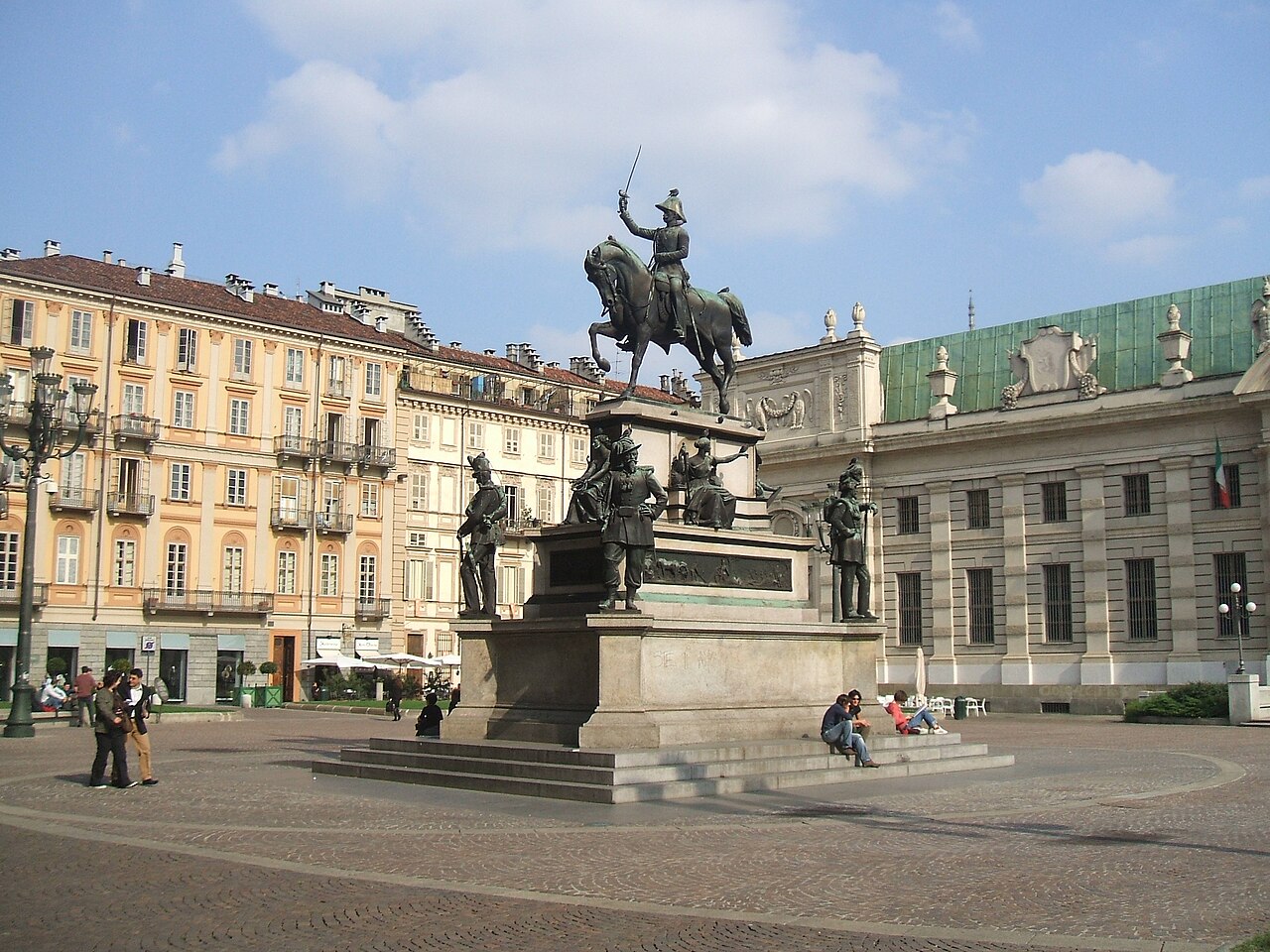 Piazza Carlo Alberto
Behind Palazzo Carignano opens piazza Carlo Alberto, a pedestrian space where you can pause away from the traffic and see another face of the centre of Turin.
Read more
On one side is the nineteenth-century façade of Palazzo Carignano, now home to the Museo Nazionale del Risorgimento Italiano. On the other, the Biblioteca Nazionale Universitaria, whose façade incorporates elements of the former stables of the princes of Carignano.
In the centre stands the equestrian monument to Charles Albert, made by Carlo Marochetti and inaugurated in 1861.
The square is also a natural passage between the via Po area, the Galleria Subalpina and the nearby shopping streets. If you feel like stopping for a moment during your walk, there is no shortage of space here.
When Extravaganza comes to town, piazza Carlo Alberto changes its look and fills with stalls devoted to vintage fashion and twentieth-century design pieces.
It is a periodic market where you can look for clothing, accessories, costume jewellery and home furnishings. A different kind of stop from the boutiques of the nearby streets, especially if you enjoy rummaging through objects and garments that already have a story.
It is not a daily event, so it is worth bearing in mind when planning your walk.
-
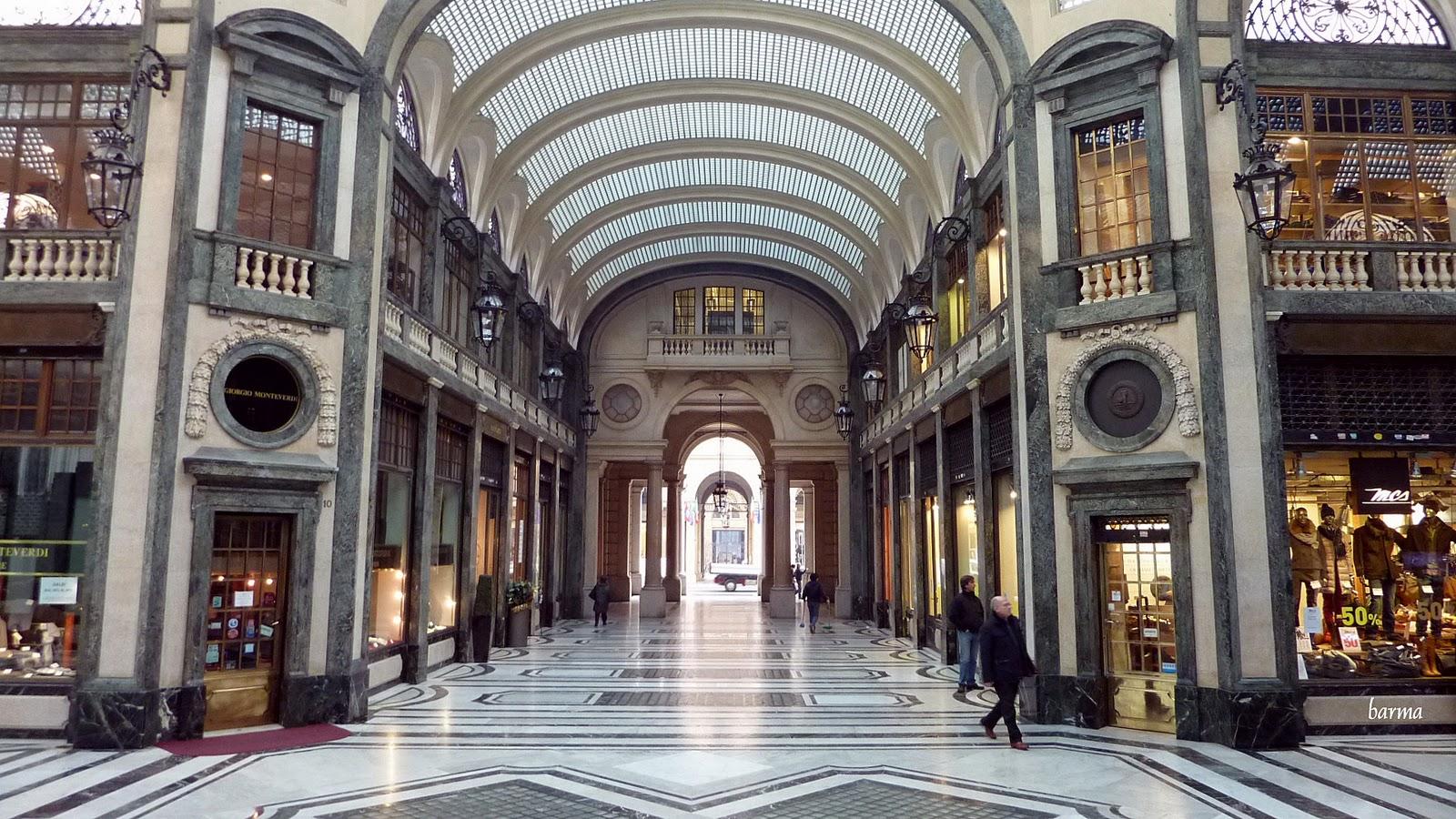 Galleria San Federico
From via Roma you enter a T-shaped space, with shops on the ground floor and offices on the upper levels. The Galleria San Federico links via Roma to via Bertola and via Santa Teresa: it was built in 1933, during the reconstruction of via Roma, to a design by the engineers Giovanni Canova and Vittorio Bonadè Bottino. The name takes up the old name of the block.
Read more
The geometries and decorations reflect the taste of the 1930s; above, glass-block roofing and domes at the entrances. There is also a cinema: the Lux, opened in 1934 as the Rex, then called the Dux and finally the Lux since 1945. The entrance and the decorations deserve a look even if you are only passing through.
Moving from via Roma into the gallery, shopping changes scale: no longer a long arcaded street, but an interior where the shop windows line a short route, with one branch. You can cross it to reach via Bertola or via Santa Teresa, or simply take a turn among the shops. It is a different way of experiencing commerce in the centre, in a space designed to bring together shopping, offices and entertainment.
-
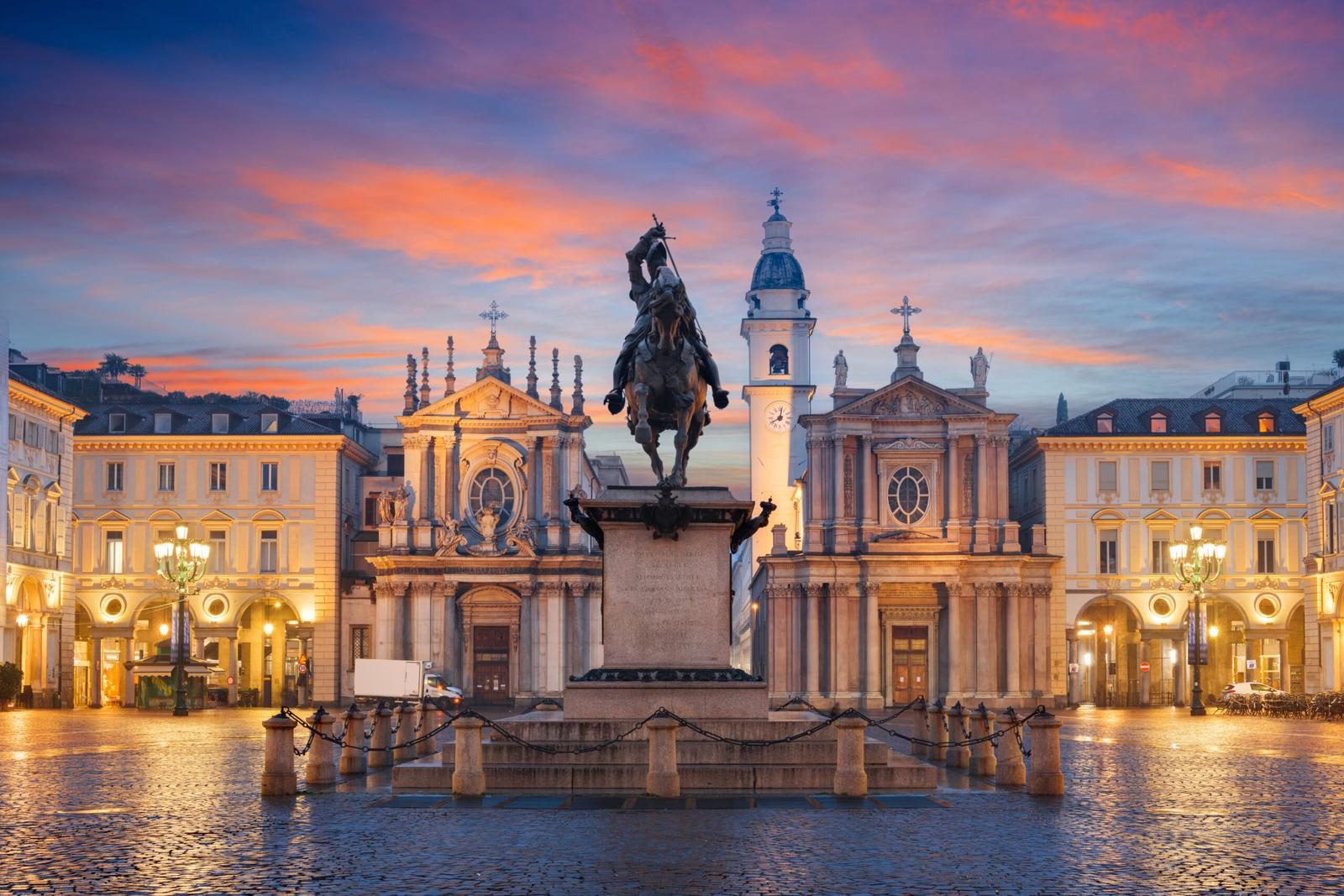 Piazza San Carlo in Turin
Piazza San Carlo
Piazza San Carlo is the «drawing room of Turin», as the Turinese traditionally call it. With its wide porticoes and regular façades, it has that orderly air that invites you to walk through it unhurriedly.
Read more
It was designed by Carlo di Castellamonte and construction began in 1637. On the southern side stand the twin churches of San Carlo Borromeo and Santa Cristina; the façade of the latter was designed by Filippo Juvarra and built between 1715 and 1717.
In the centre of the square, the nineteenth-century equestrian monument by Carlo Marochetti depicts Emmanuel Philibert and commemorates the victory of Saint-Quentin in 1557. For the Turinese it is simply 'l caval 'd brôns, the bronze horse.
The porticoes of piazza San Carlo are also a good place to alternate shopping with a few stops. Here you will find historic cafés such as Caffè San Carlo, Caffè Torino and Caval 'd Brôns, along with the Stratta confectionery.
Alongside these traditional businesses there are fashion and accessory shops. In the courtyard of Palazzo Villa, at number 161, is San Carlo dal 1973, a Turin boutique devoted to clothing and design.
The shop windows change, but the presence of the historic establishments continues to give character to a stroll under the porticoes.
-
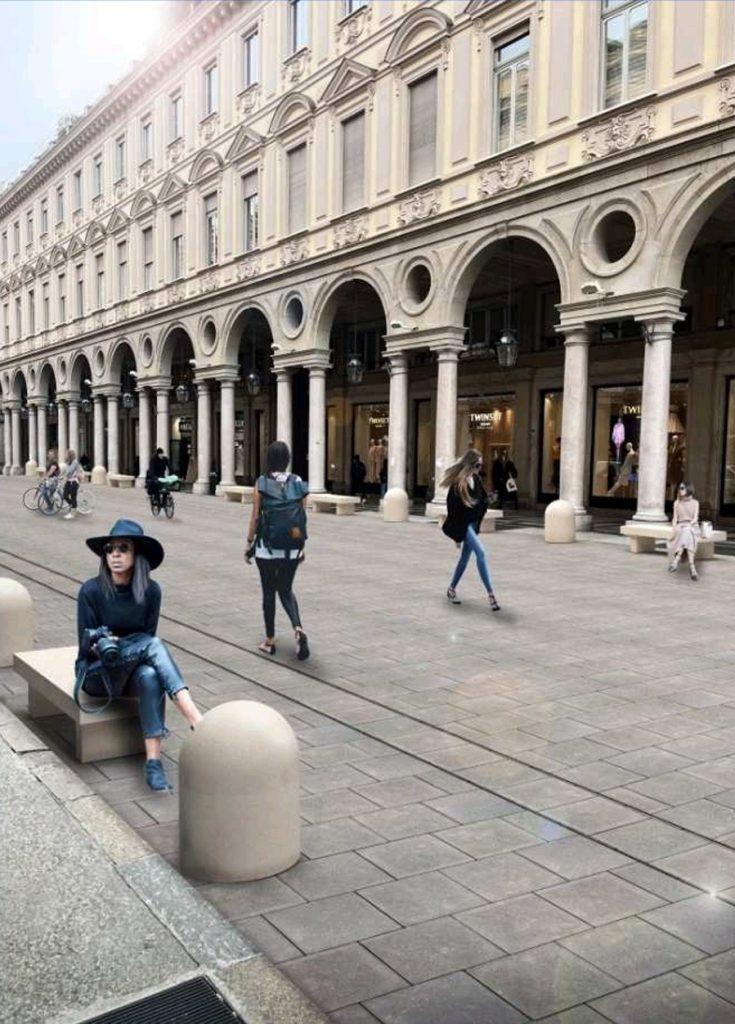 Via Roma
When it rains, via Roma lets you stroll past the shop windows for about 750 metres without leaving the arcades. It is the most traditional shopping street in Turin: from piazza Castello it reaches piazza Carlo Felice, in front of Porta Nuova station, and it is entirely pedestrian.
Read more
The façades do not all speak the same language, even though the street was completely rebuilt between 1931 and 1937. Between piazza Castello and piazza San Carlo they take up the forms of eighteenth-century architecture; between piazza San Carlo and piazza Carlo Felice the Novecento and Rationalist styles prevail, with broad marble cladding. The plan was coordinated by Marcello Piacentini. Designer boutiques, clothing shops, accessories and other businesses accompany the walk.
-
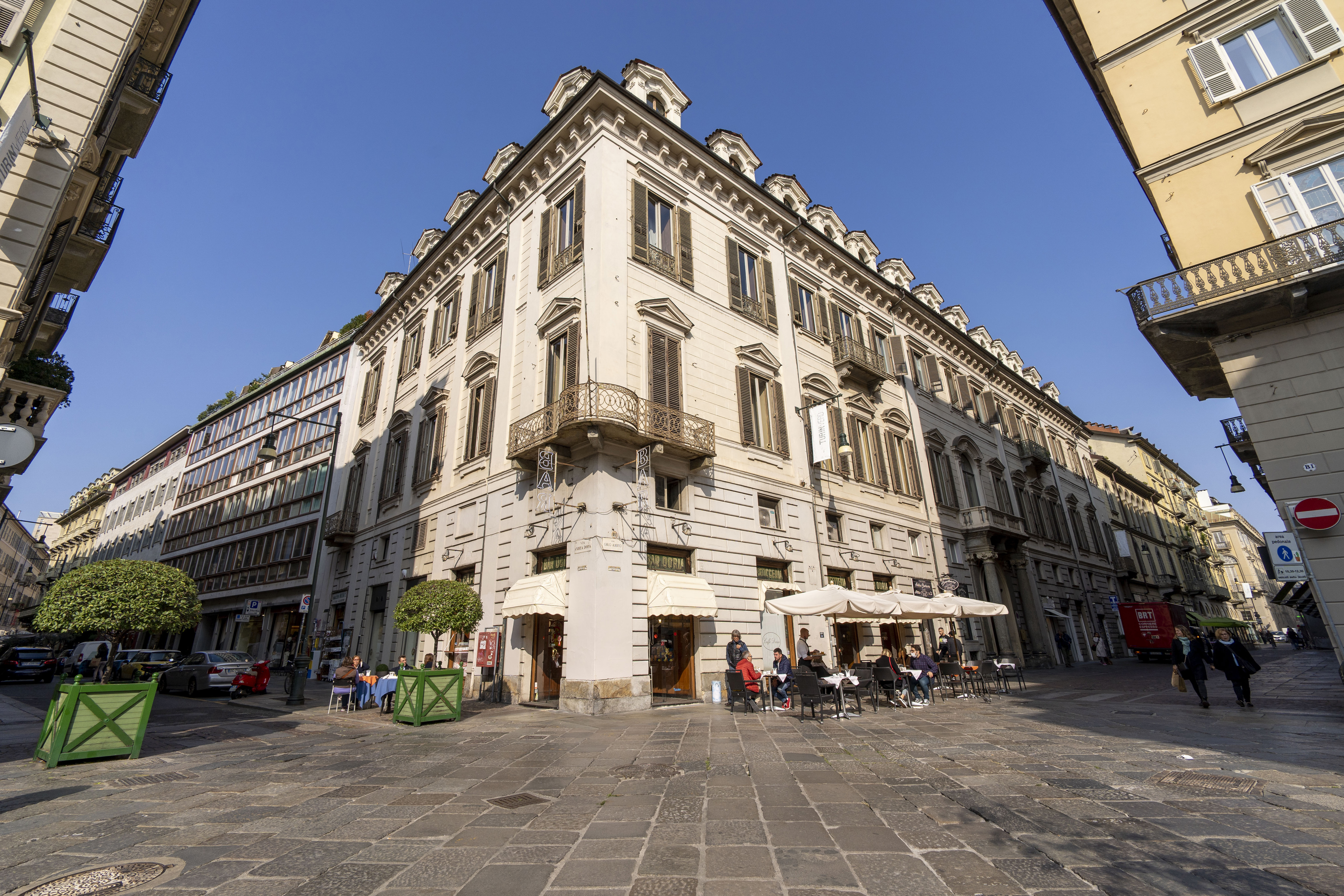 Via Carlo Alberto
If you are looking for a street where you can slow down between one shop and the next, via Carlo Alberto is pedestrian and quieter than nearby via Roma and via Lagrange. Alongside the boutiques, near piazza Carlo Alberto is the workshop of the violin maker Francesco Piloni; at the Caffarel chocolate shop you will find gianduiotti and other Turin specialities. On the corner with via Maria Vittoria, a food shop occupies rooms with coffered ceilings.
Read more
Then there is the historic garden of Palazzo Cisterna, between via Carlo Alberto and via Maria Vittoria: after a long period of closure, it was reopened to the public in 2025. The entrance is at via Carlo Alberto 15. A pause in the greenery, in the midst of the shop windows, fits in well here.
-
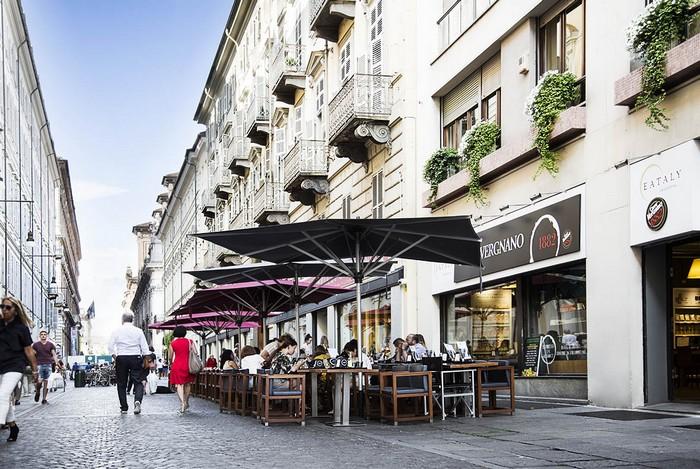 Via Lagrange
Via Lagrange invites you to look at the shop windows at your leisure: about 665 metres free of car traffic, among fashion boutiques, big international brands, multi-brand shops and stores such as la Rinascente and Eataly. Pedestrianisation, begun in 2008, encouraged this transformation; the street was once called Contrada dei Conciatori.
Read more
The present name recalls Giuseppe Luigi Lagrange, the mathematician and astronomer born right here in 1736. At number 1/A you will find the shop of Guido Gobino, for gianduiotti, cremini and other specialities of Turin chocolate. Compared with via Roma, everything feels more intimate: the shop windows alternate with the façades of the buildings, to be admired without having to worry about cars.
-
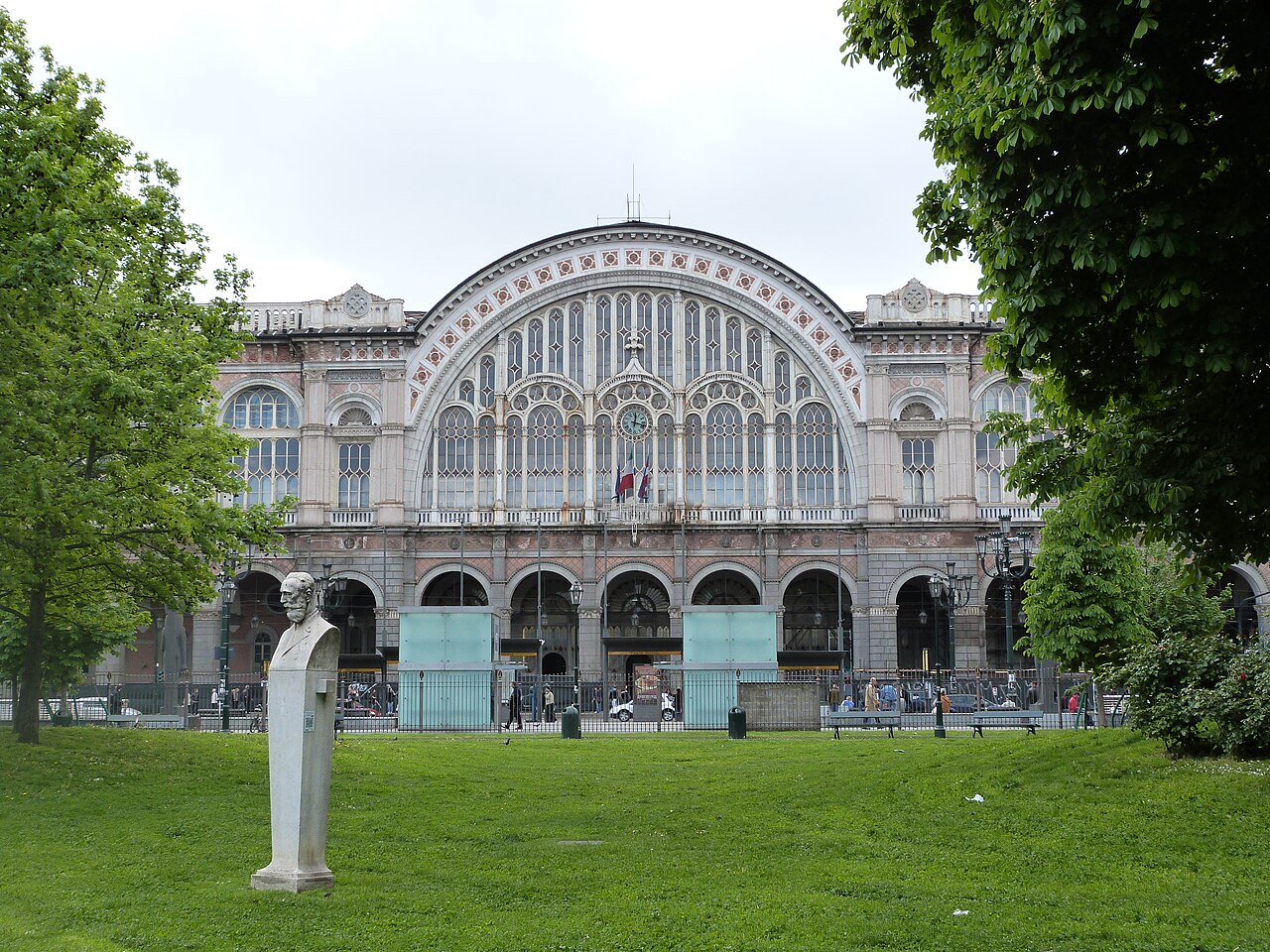 Piazza Carlo Felice and Porta Nuova
Between one shop window and the next, the Giardini Sambuy are a good chance to sit down: horse chestnuts, beeches and magnolias fill the centre of piazza Carlo Felice, at the southern end of via Roma. All around are nineteenth-century palaces and arcades, the result of a layout carried out in several phases to which Gaetano Lombardi, Giuseppe Frizzi and Carlo Promis contributed. Under the arcades you come across the historic confectioners Giordano and Avvignano and the Caffè Roma, formerly Talmone.
Read more
The Hotel Roma overlooks the square: Cesare Pavese died there in 1950, in room 346. Opposite is Porta Nuova, the nineteenth-century station designed by Alessandro Mazzucchetti with the collaboration of Carlo Ceppi: great arches and wide windows on the façade, and today a shopping gallery inside as well.
-
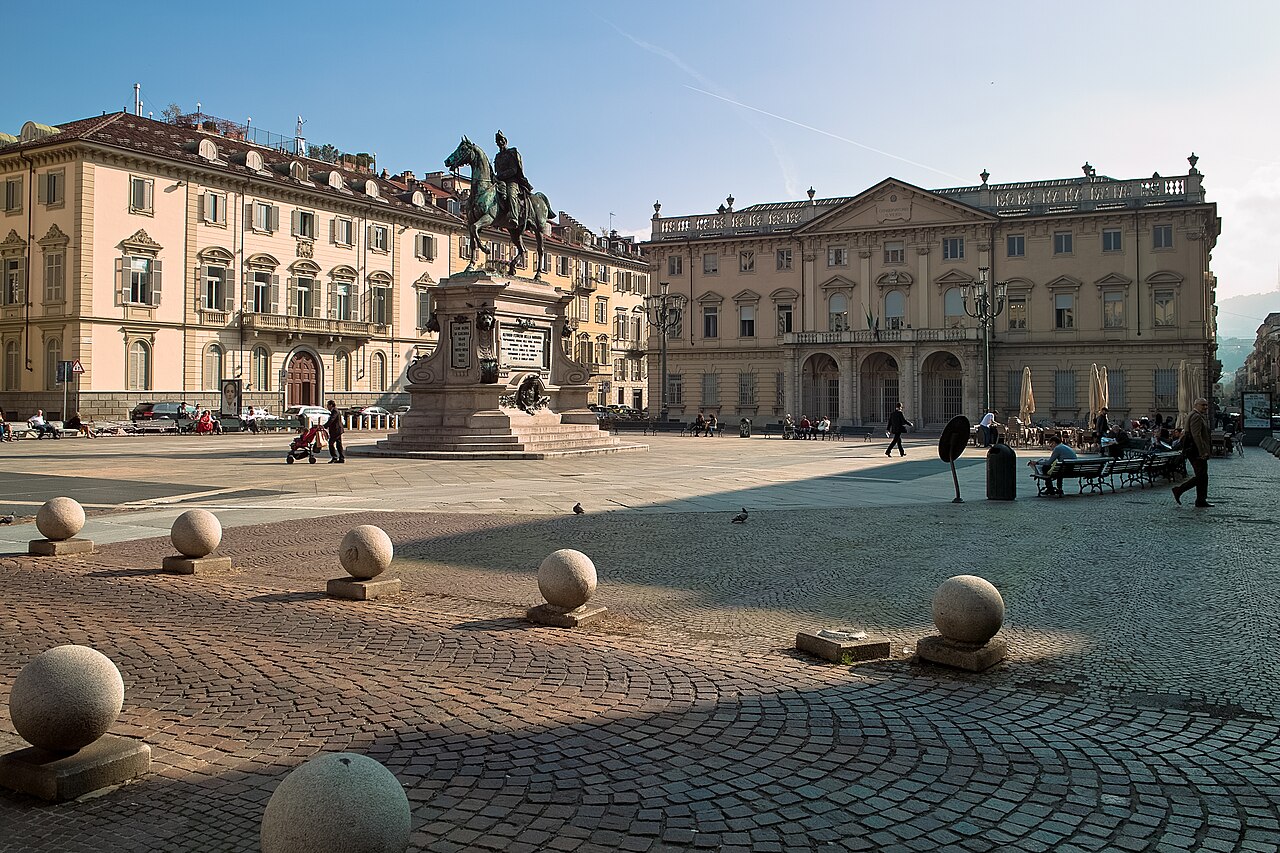 Piazza Bodoni and Via Mazzini
Sometimes a stop in piazza Bodoni comes with a soundtrack: from the windows of the Conservatorio Giuseppe Verdi come the sounds of the students' instruments, and the benches are there for a moment's pause. The Conservatory, in the Borgo Nuovo district, was built in 1928 to a design by Giovanni Ricci.
Read more
On the square are the Olfattorio, devoted to perfumes, and Provasoli, a historic fabric shop opened in 1952. Via Mazzini continues with very different shops: the rare, illustrated and pop-up books of the Libreria Antiquaria Freddi; the vintage chandeliers of Antonio Minchillo; the customisable lighting of Creative Cables, among lamps, cables and lampshades. A little further on, in piazza Cavour, you will find Bagni Paloma, a clothing and accessories shop set in a former garage.
-
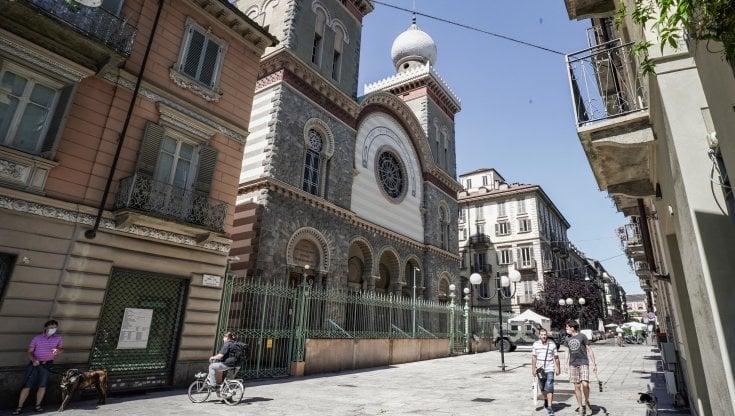 San Salvario
: via Madama Cristina and its market
For independent shops you can continue beyond the big streets of the centre, south of Porta Nuova. In San Salvario, between via Madama Cristina, via Baretti and the side streets, neighbourhood trade is still very much present: traditional shops, ateliers, craft workshops and fashion and design businesses alternate along the walk.
Read more
Piazza Madama Cristina is the landmark of the district, with a neighbourhood market whose history goes back to the nineteenth century. On some Sundays it also hosts themed markets, including San Salvario Emporium, devoted to contemporary crafts, illustration, design and independent production. Here it is worth leaving room for detours into the side streets, without a specific purchase in mind.
The route
The map loads after consent to third-party content (OpenStreetMap).
These are the essential stops, but there is much more
When you book your stay with us you receive the complete step-by-step itinerary, a practical box with directions to get there and back, tips on what to see and a final treat to round off the themed day.