From above, Turin changes its appearance. The regular streets of the historic centre, the great avenues and the course of the Po stand out more clearly, while the hill and, on clear days, the arc of the Alps fill the horizon. It is worth looking at it from different points: a historic tower, the terrace of a Savoy residence, a belvedere on the hill or a contemporary building offer different views.
There is also a peculiarity: for a long time no building exceeded the Mole Antonelliana, 167 metres high. The Intesa Sanpaolo skyscraper stayed just below it; only the Regione Piemonte tower, at Lingotto, has broken that unwritten rule. That is why Turin's skyline remains low and regular, with the hills and the mountains in the background.
From our B&B, in Borgo Po, Villa della Regina and the Monte dei Cappuccini can be reached on foot, allowing for an uphill stretch. Mole Antonelliana, the Duomo and Palazzo Madama are in the centre; for Santa Zita, the Intesa Sanpaolo skyscraper and Lingotto we recommend public transport. For Superga you can choose the car or the historic rack tramway from Sassi.
It is not a walk to do all at once: spread the stops over at least two days. Some belvederes are free and always accessible, others require a visit or an organised ascent. Before setting off, check access arrangements and weather conditions.
Car needed
-
 Villa della Regina
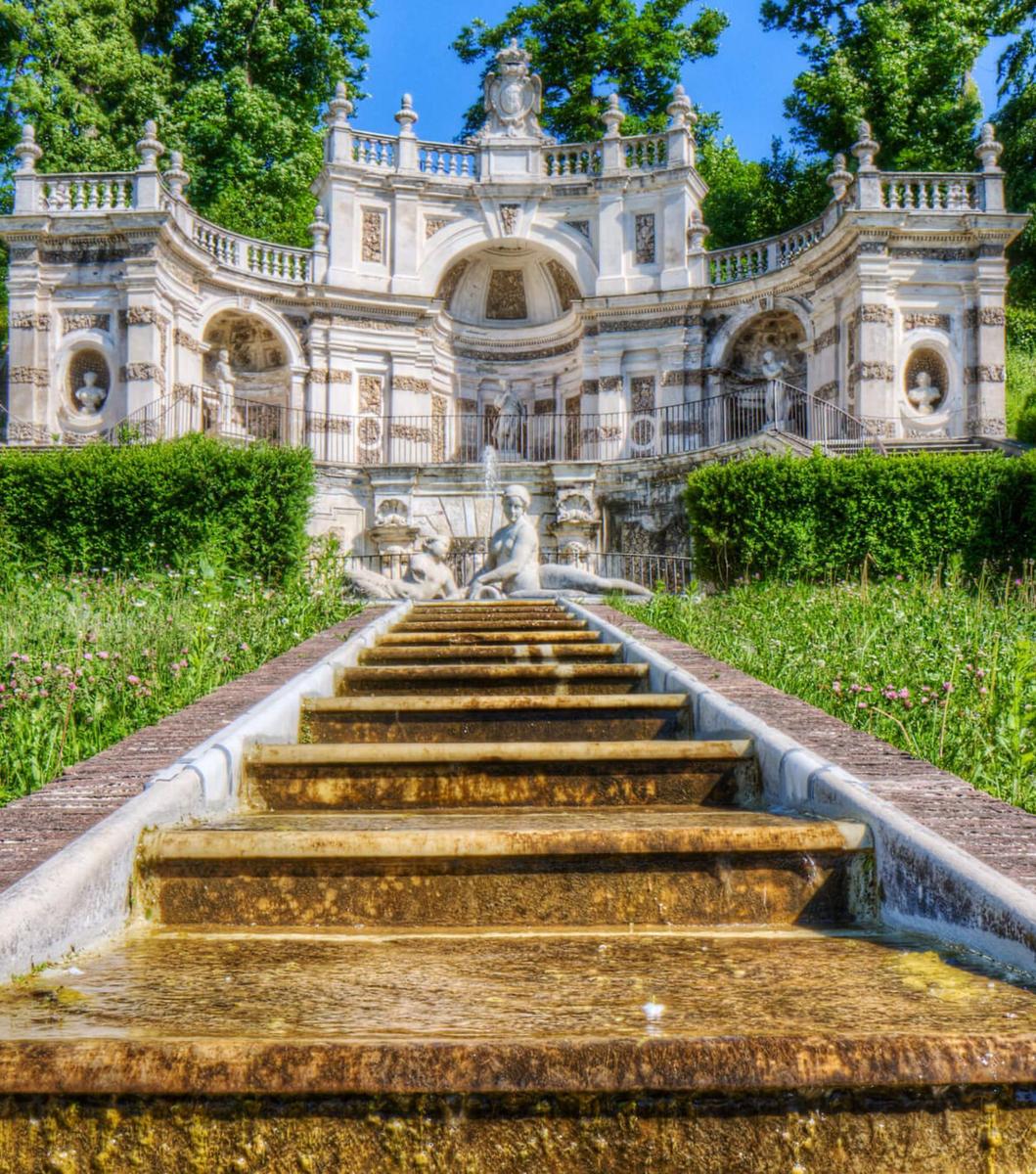
The first thing that strikes you on arriving at Villa della Regina is the layout of the gardens: terraces, flights of steps, fountains and pavilions, with a historic vineyard alongside, restored and once again productive. The villa is part of the Corona di Delizie, the group of Savoy residences intended for court life and holidays in the surroundings of Turin.
Read more
Prince Cardinal Maurizio di Savoia commissioned it in 1615; enlarged and transformed over time, it became one of the residences of Savoy princesses, duchesses and queens. In the eighteenth century, partly thanks to the work of Filippo Juvarra, the royal apartments and the great hall were enriched with decorations and furnishings of European taste, with exotic motifs and precious workmanship.
The view does not stay the same as you climb: from one level of the gardens to the next the perspective on the city changes, and among the rooftops you can pick out the Mole Antonelliana. On clear days, further away, the arc of the Alps can be made out.
From our B&B you can also reach the villa on foot, crossing Borgo Po and tackling a climb. It is one of the viewpoints closest to us, and you can devote a visit to it on its own, without necessarily having to fit it into a walk through the historic centre.
-
 Monte dei Cappuccini
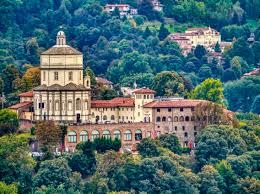
A short climb from the area of the Gran Madre di Dio takes you to the forecourt of the Monte dei Cappuccini, on the right bank of the Po. From here you look down on Turin from above, with no need to go inside anywhere: the forecourt in front of the church is the main public viewpoint.
Read more
On the summit stand the church of Santa Maria al Monte and the convent of the Capuchin friars. The church, recognisable by its dome and central plan, was begun at the end of the sixteenth century to a design by Giacomo Soldati; work continued in the seventeenth century with the contributions of Ascanio Vitozzi and Carlo di Castellamonte. The friars of the convent also carried out relief work during epidemics, including the plague of 1630.
From up here the historic centre appears all at once: piazza Vittorio Veneto, the Mole Antonelliana, the regular grid of the streets and the Po crossing the city. When the air is clear, the arc of the Alps also appears in the background.
The viewpoint can be reached on foot from our B&B with a short climb. To enjoy the view you do not need to enter the church or the convent: it is all in front of you, from the forecourt.
-
 Pista 500 Lingotto
The Lingotto
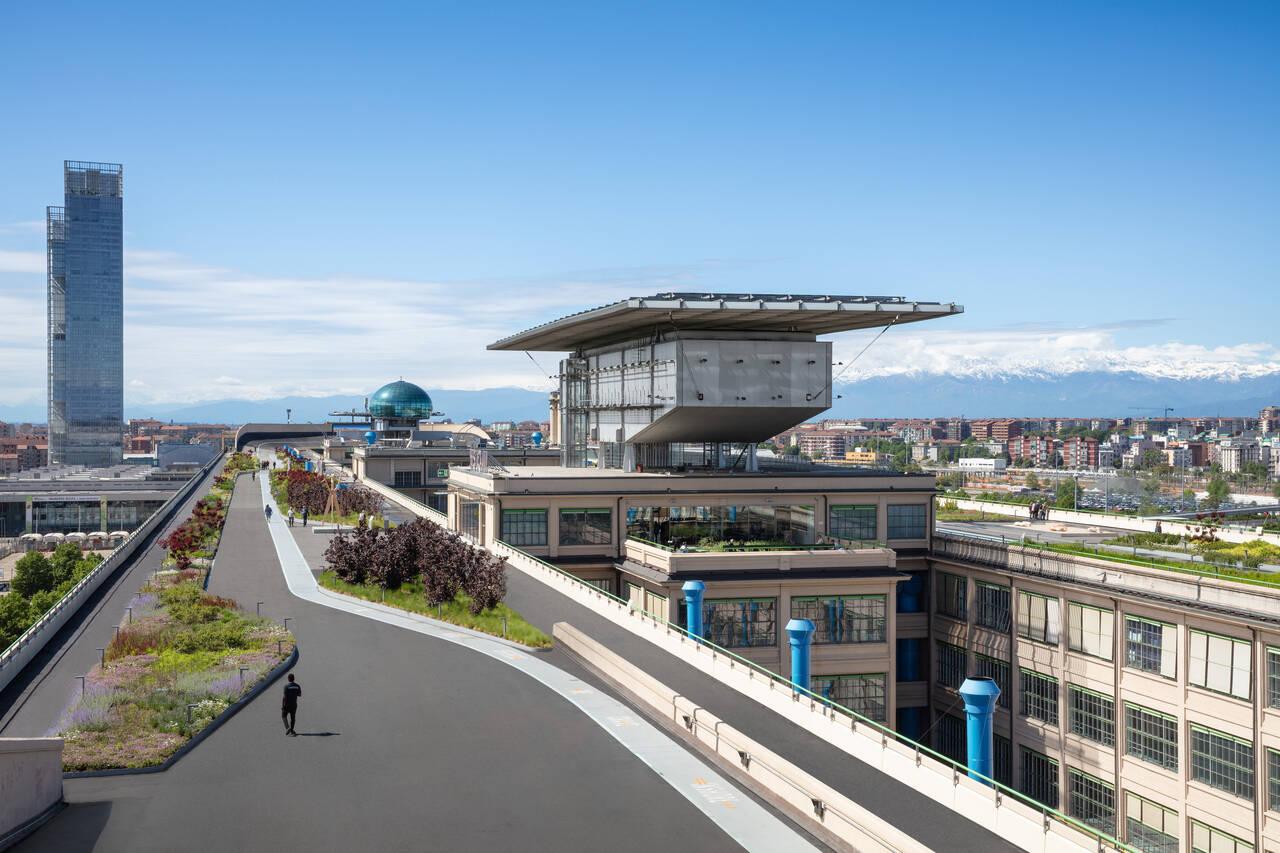
To understand why the Lingotto has remained so recognisable, two things are enough: the helical ramps and the test track on the roof. In the former Fiat factory, designed by the engineer Giacomo Mattè Trucco from the 1910s onwards and inaugurated in 1923, newly built cars were tested on a circuit on the roof. The ramps that allowed the cars to climb up there are still in place.
Read more
After the transformation of the complex, designed by Renzo Piano, the track became the Pista 500: since 2022 it has housed a roof garden and an open-air exhibition route, curated by the Pinacoteca Agnelli, with contemporary art installations. Access follows the Pinacoteca's visiting arrangements.
The contrast makes up much of the charm of this stop: on top of a building conceived to produce and test cars there is now a green space, and the ramps and the track hold the two eras together without needing much explanation. If the track looks familiar, it is because in 1969 the Mini chase of The Italian Job was filmed here: we talk about it in the itinerary <a href="/en/itineraries-in-turin/cinematic-turin-22/">Cinematic Turin.
You are not at the height of Turin's great viewpoints, but that is precisely the difference: from the track you can see the southern districts without losing sight of the individual buildings. Further on there is the hill and, when the sky is clear, you can also make out the mountains. It is a good choice if you like a view that keeps a link with the city's industrial history.
-
 Mole Antonelliana
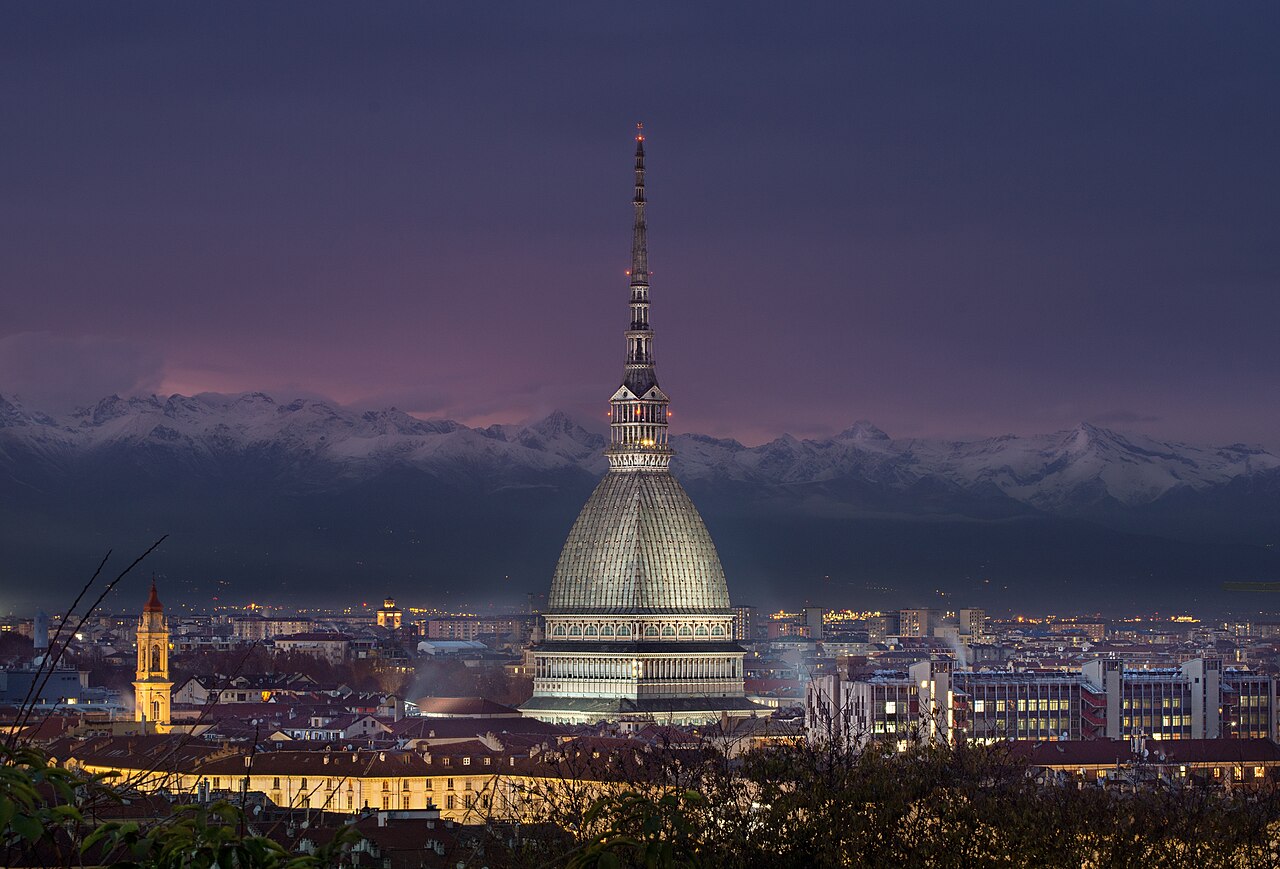
The Mole's glass lift rises through the inside of the dome to a viewpoint at about 85 metres: below you are the rooftops of the centre, the regular grid of the streets and, when the sky is clear, the mountains.
Read more
The Mole, 167.5 metres high, today houses the Museo Nazionale del Cinema and is one of the symbols of Turin. Alessandro Antonelli designed it in 1862 as a future synagogue, but the continual changes, the growing height and the costs led to disputes with the Jewish community, which gave up completing it. The people of Turin, who had watched it rise for years, asked for it to be finished. The City took over the site and completed the work in 1889.
-
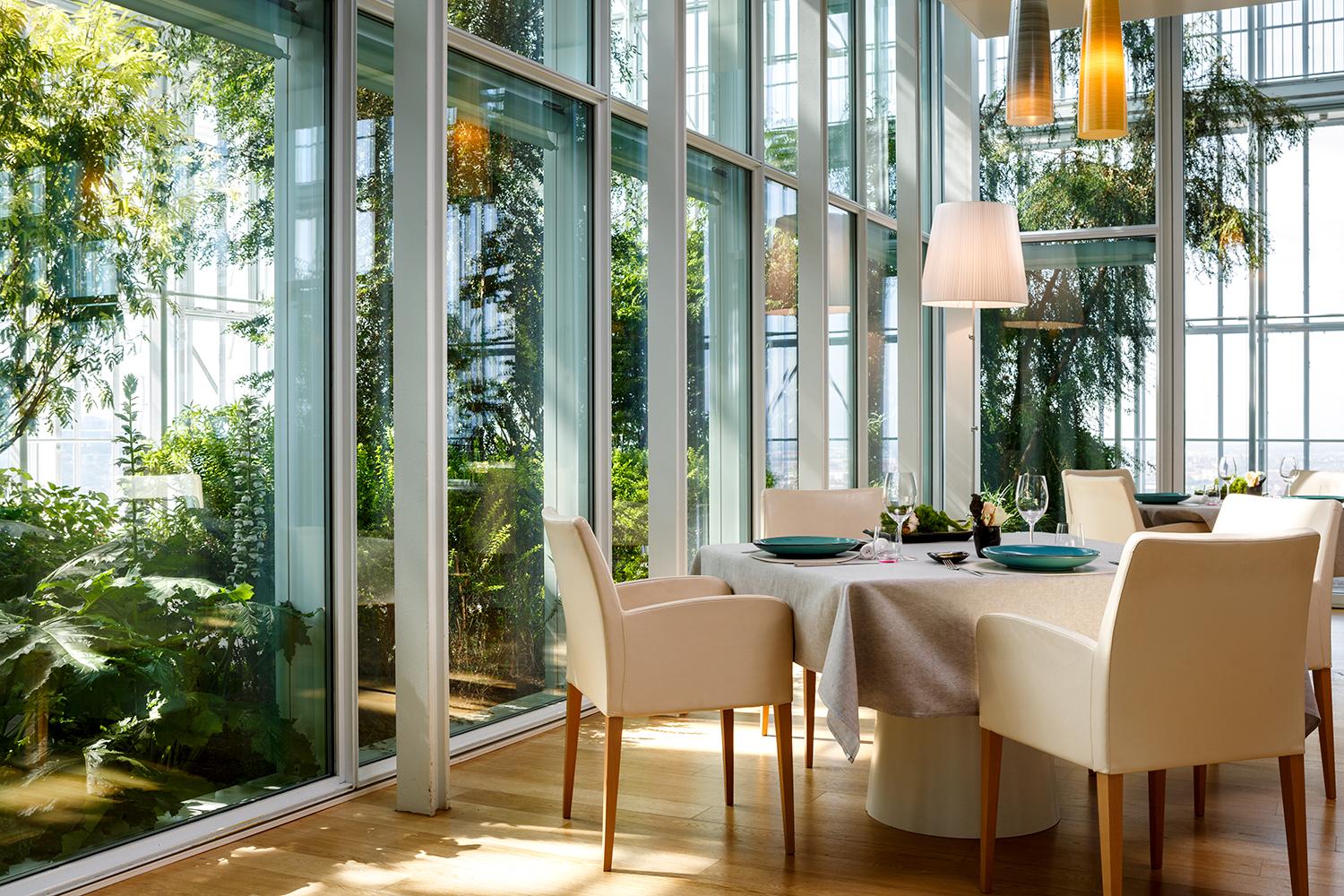 Piano 35 terrace - Lounge bar
Piano 35
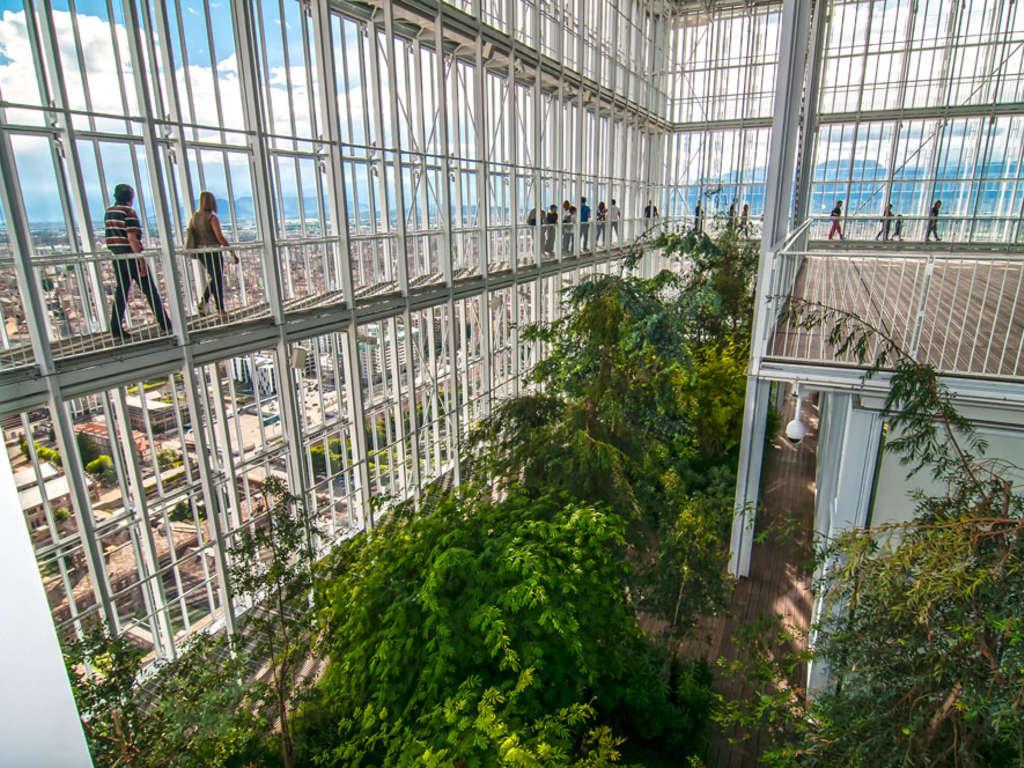
About 150 metres above Turin, the Piano35 restaurant is surrounded by a bioclimatic greenhouse with Mediterranean plants and large windows. It occupies the thirty-fifth floor of the Intesa Sanpaolo skyscraper, near Porta Susa station. The building, designed by Renzo Piano's studio, was opened in 2015 and also houses a panoramic lounge bar on the thirty-seventh floor.
Read more
From these spaces you can see the city, the hills and, with a clear sky, the mountains. It is not, however, a public terrace with free access: the view is enjoyed through the restaurant services or during initiatives that allow access to the upper floors.
From the hillside viewpoints you look at Turin from the outside; here you are above its neighbourhoods. Through the large windows you can make out the regular layout of the city and, with good visibility, the arc of the Alps. It is a different perspective from that of the hill, to be enjoyed in the restaurant or lounge bar spaces, not from an independent public observation deck.
-
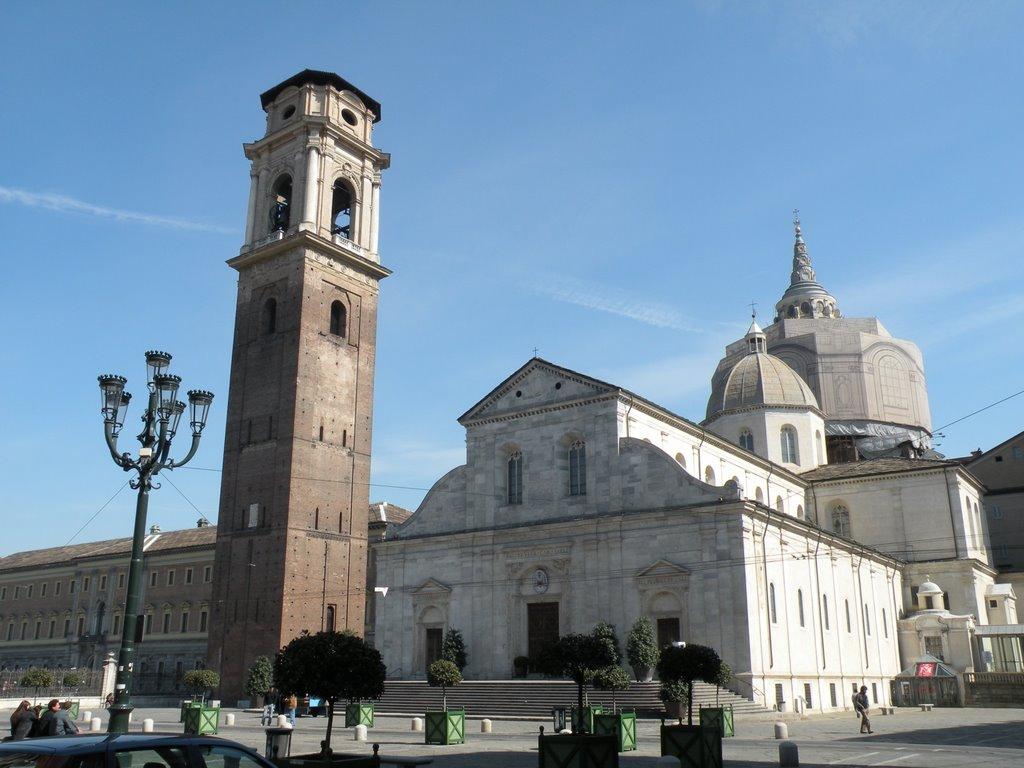 Bell tower of the Duomo
Bell tower of Santa Zita
To reach the top of the bell tower of Santa Zita there are about three hundred steps. From the top you can see the rooftops of San Donato, the centre of Turin and the mountains on the horizon. The bell tower, built in brick in 1876, is about 75 metres high, yet rests on a base of just five metres per side and has 32 small columns.
Read more
Francesco Faà di Bruno, a mathematician and priest, also set up an astronomical observatory in it. It was he who wanted, in the San Donato district, the church of Nostra Signora del Suffragio, known as Santa Zita, for the institute devoted to sheltering and training young women. The climb is possible only on special occasions and as part of organised initiatives; it is not recommended for those who suffer from vertigo or have difficulty walking.
-
Bell tower of the Duomo
Duomo di San Giovanni Battista by public transport or car
Among the Baroque buildings that surround it, the white marble façade of the Duomo is immediately recognisable: three portals and a look that differs from the rest of the square. The cathedral, dedicated to St John the Baptist, stands next to the Musei Reali and was built between 1491 and 1498 to a design by Meo del Caprina. It is one of the landmarks of Renaissance religious architecture in Turin. In the 17th century the complex was enlarged with the Cappella della Sacra Sindone, designed by Guarino Guarini between the Duomo and Palazzo Reale. Today the cloth is kept in a chapel of the left aisle, beneath the Tribuna Reale, and is normally not on view.
Read more
The viewpoint, when climbing it is allowed, is the 15th-century bell tower next to the cathedral, later modified to a design by Filippo Juvarra. From the tower the historic centre spreads out below you, with the Porta Palatina, the Roman archaeological area and the buildings of the Musei Reali. Access to the panoramic route is not always possible.
-
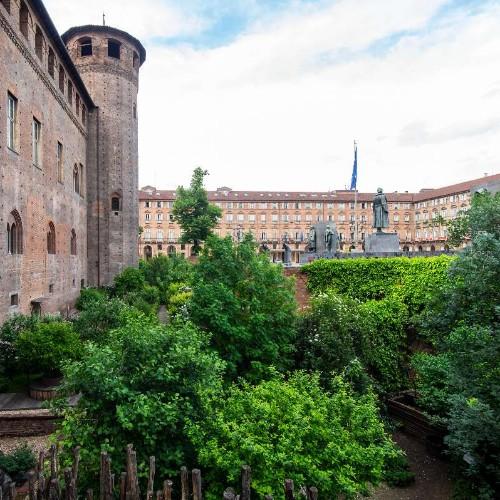 Tower of Palazzo Madama
Panoramic tower of Palazzo Madama
From the panoramic tower of Palazzo Madama, piazza Castello lies right beneath you. You can see the roofs of the historic centre and the regular streets that spread out around the oldest core of the city: from here it is easier to compare the medieval buildings with the expansions of the following centuries.
Read more
The palace too spans different eras. In the middle of piazza Castello it preserves the ancient gates of the Roman city, the towers born from its transformation into a medieval castle and the Baroque facade designed by Filippo Juvarra in the eighteenth century. Later one of the residences of the Savoy Madame Reali, today it houses the Museo Civico d'Arte Antica. The tower is reached during the visit to the museum.
-
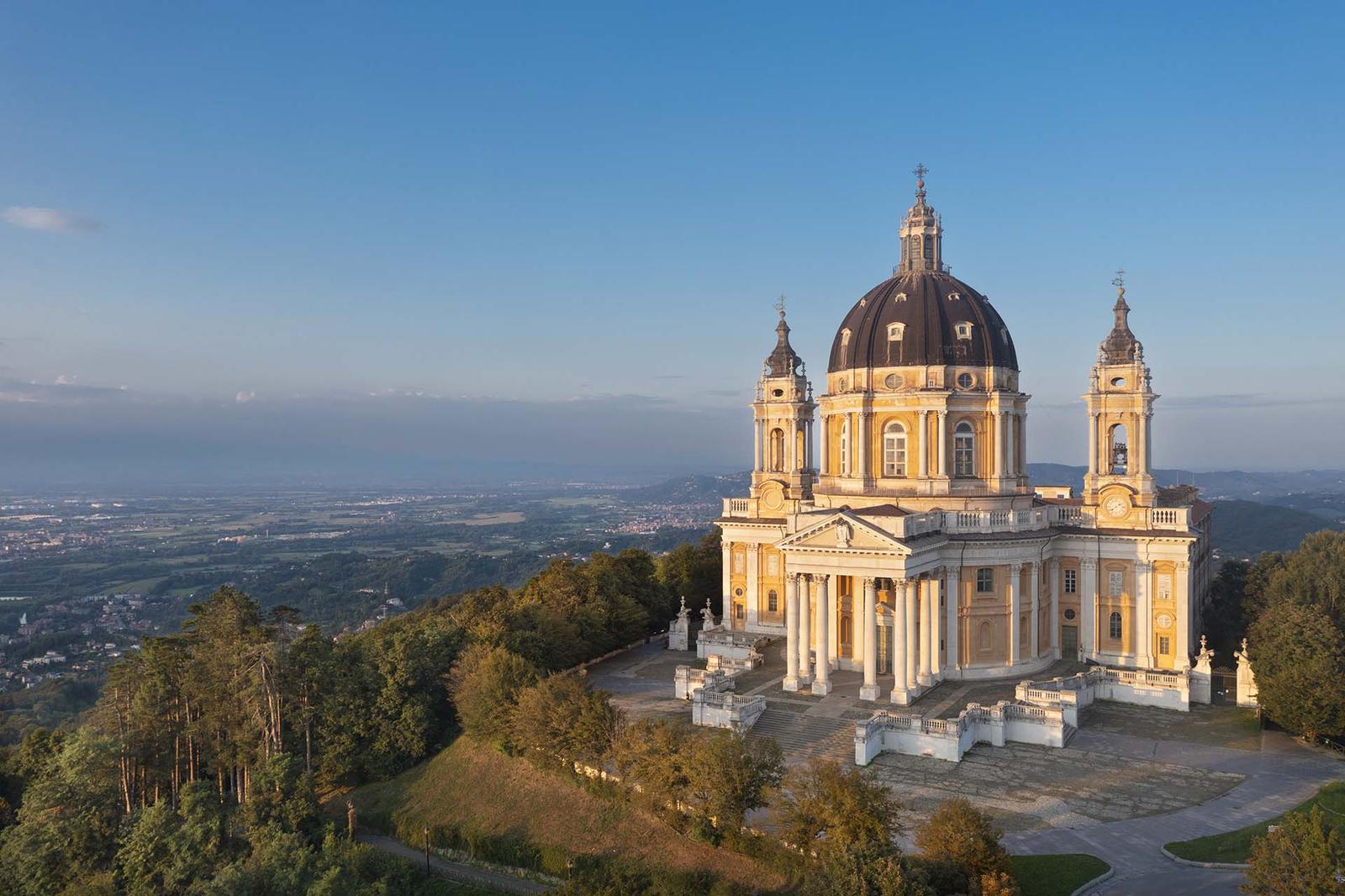 Basilica di Superga
 by public transport or car
«When Superga wears its hat, the weather will turn either bad or fine.»
If you look at the hill behind Turin, you will see a dome appear. It is Superga, 672 metres: one of the highest points of the Turin hills and the place where the people of Turin take their guests when they want to show them the whole city at once. The basilica was born of a promise: in 1706 Turin was besieged by the French and Vittorio Amedeo II vowed a church to the Madonna if the city were saved. It was saved, and Filippo Juvarra built the church between 1717 and 1731, with the columned pronaos in front, the great dome and the two bell towers. Behind it are the convent and, below, the Royal Tombs of the Savoy. If you can, go up on the rack tramway from Sassi: it goes slowly, crosses the woods and prepares you for the view. You can get there by car too, but the climb is already part of the visit.
Read more
From the forecourt and the surroundings of the basilica, Turin opens up before you, with the course of the Po and, on clear days, the arc of the Alps in the background. When visibility is good, the eye can travel from Monviso to the Monte Rosa massif.
If the route is accessible and you feel like climbing further, the panoramic dome is reached by a spiral staircase of 131 steps. But you do not need to tackle them to enjoy the view: from the forecourt you can already see the city stretching out at the foot of the hill.
The route
The map loads after consent to third-party content (OpenStreetMap).
These are the essential stops, but there is much more
When you book your stay with us you receive the complete step-by-step itinerary, a practical box with directions to get there and back, tips on what to see and a final treat to round off the themed day.