Day 1
On foot Walking: 5.7 km, 1 h 26 min
-
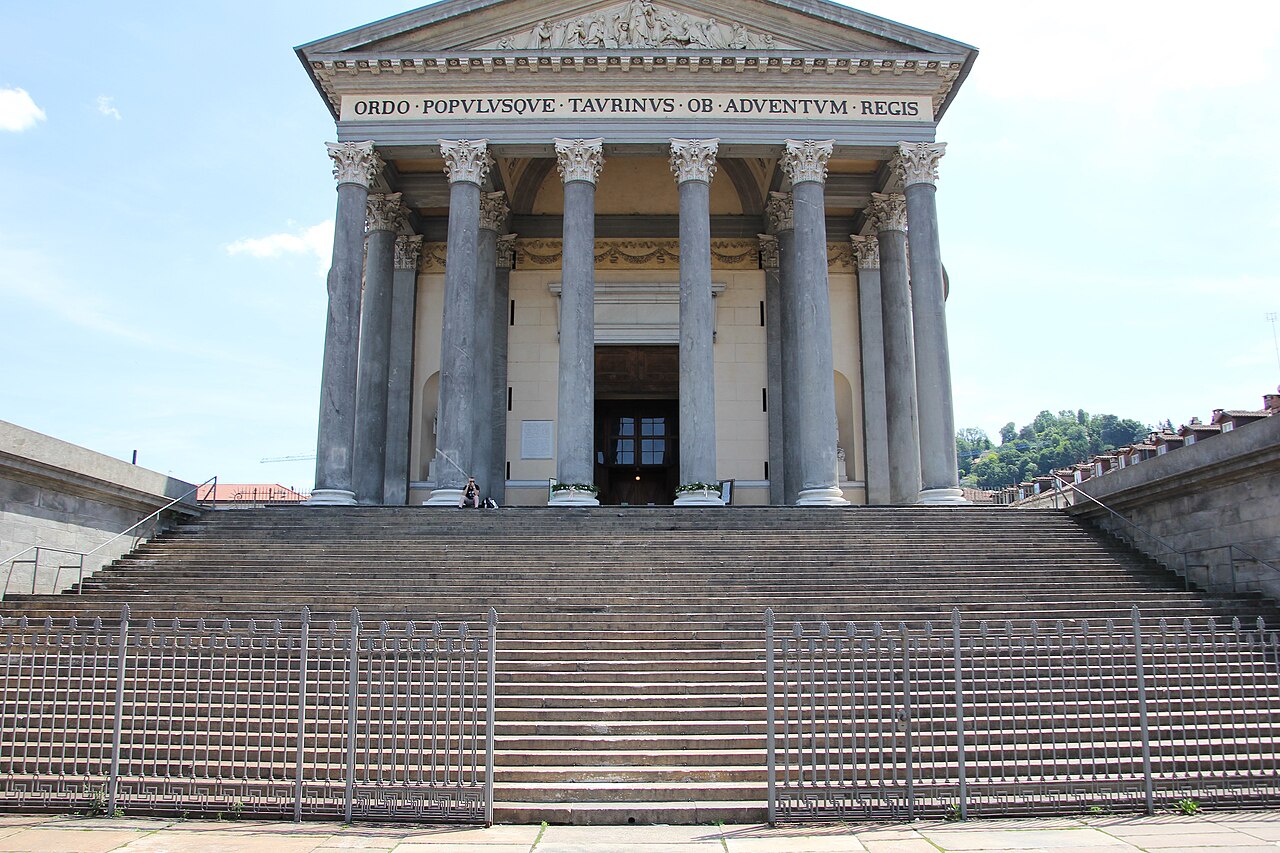 Chiesa della Gran Madre di Dio
According to some esotericists, the church of the Gran Madre is of fundamental importance because, between the two statues representing Faith and Religion, the Holy Grail is said to be buried.
Read more
It is a very evocative building, both for the construction itself and for its position, as well as for the meanings attributed to it by those who consider Turin the centre of a strong energetic power.
-
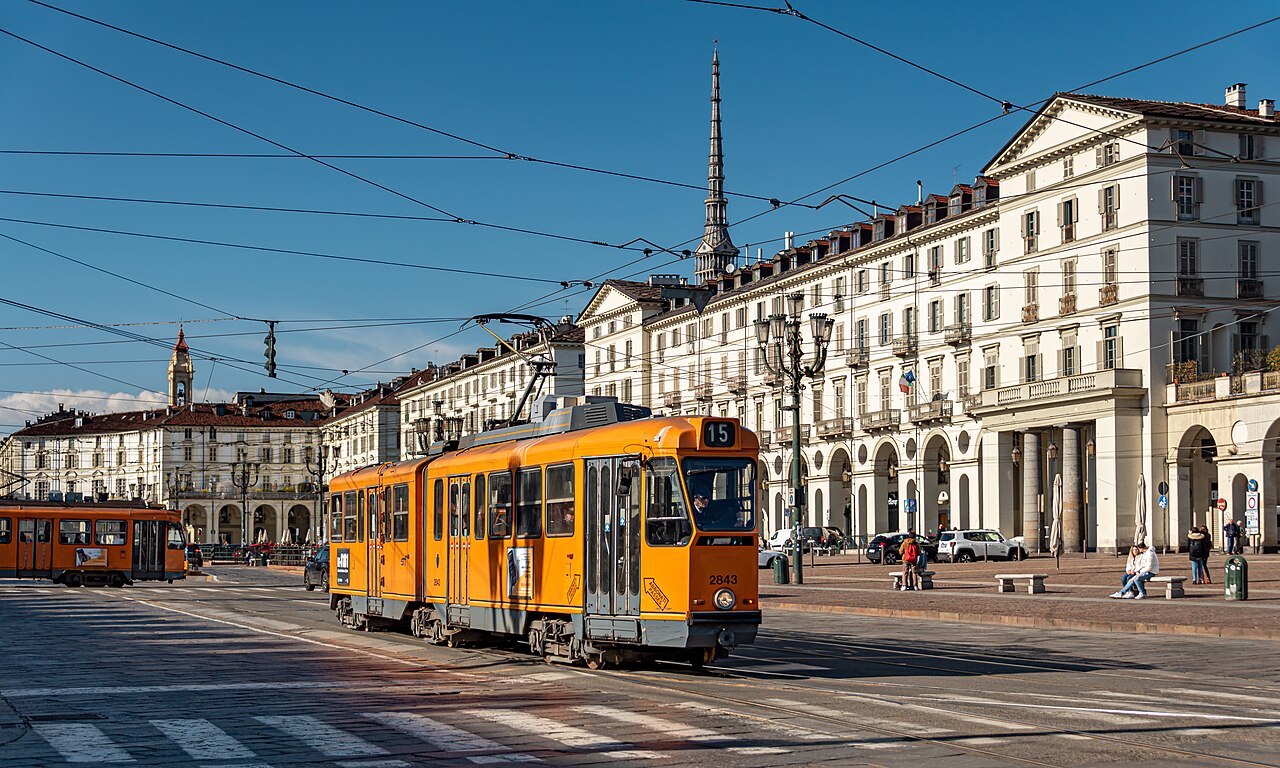 Piazza Vittorio Veneto
Piazza Vittorio Veneto, more commonly called simply Piazza Vittorio by the Torinesi, is one of the most beautiful and important squares of the Piedmontese capital. The square lies in the centre of Turin, on the banks of the Po, right opposite the Chiesa della Gran Madre (linked to the square by the Vittorio Emanuele I bridge). From the square, going down towards the river, you reach the Murazzi area, famous for its lively nightlife, especially in summer.
Read more
With its more than 38,000 square metres of surface, Piazza Vittorio is one of the largest squares in Europe and a very important meeting place for the Torinesi. On the square and under its arcades there are many cafés and bars where you can stop for a break while admiring the majesty of this square a stone's throw from the Po
-
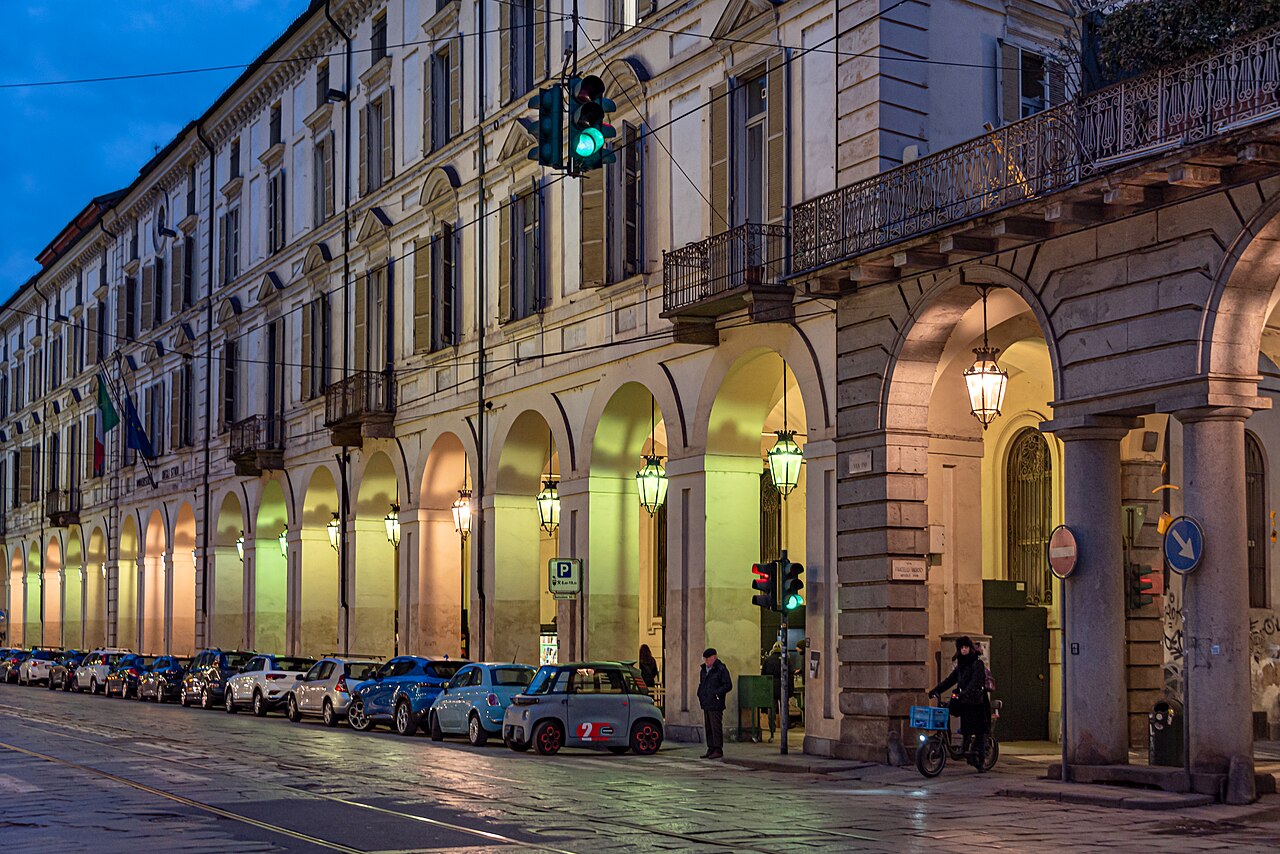 Via Po: the most beautiful and widest street in the city
Via Po is 704 metres long and 30 metres wide.
Read more
It was laid out on a non-parallel line to link the city centre with the bridge over the Po.
Its arcades, together with those of piazza Castello, via Roma and via Pietro Micca, form the longest system of arcades in the city.
The particular thing is that the left side of the street has roof terraces over the pedestrian crossings, which are missing on the right side.
In practice, only the left side guarantees the continuity of the arcades all the way to piazza Vittorio Veneto.
So via Po in Turin is a street that visitors absolutely must see, perhaps also to enjoy a good bicerin in one of the historic cafés found here.
-
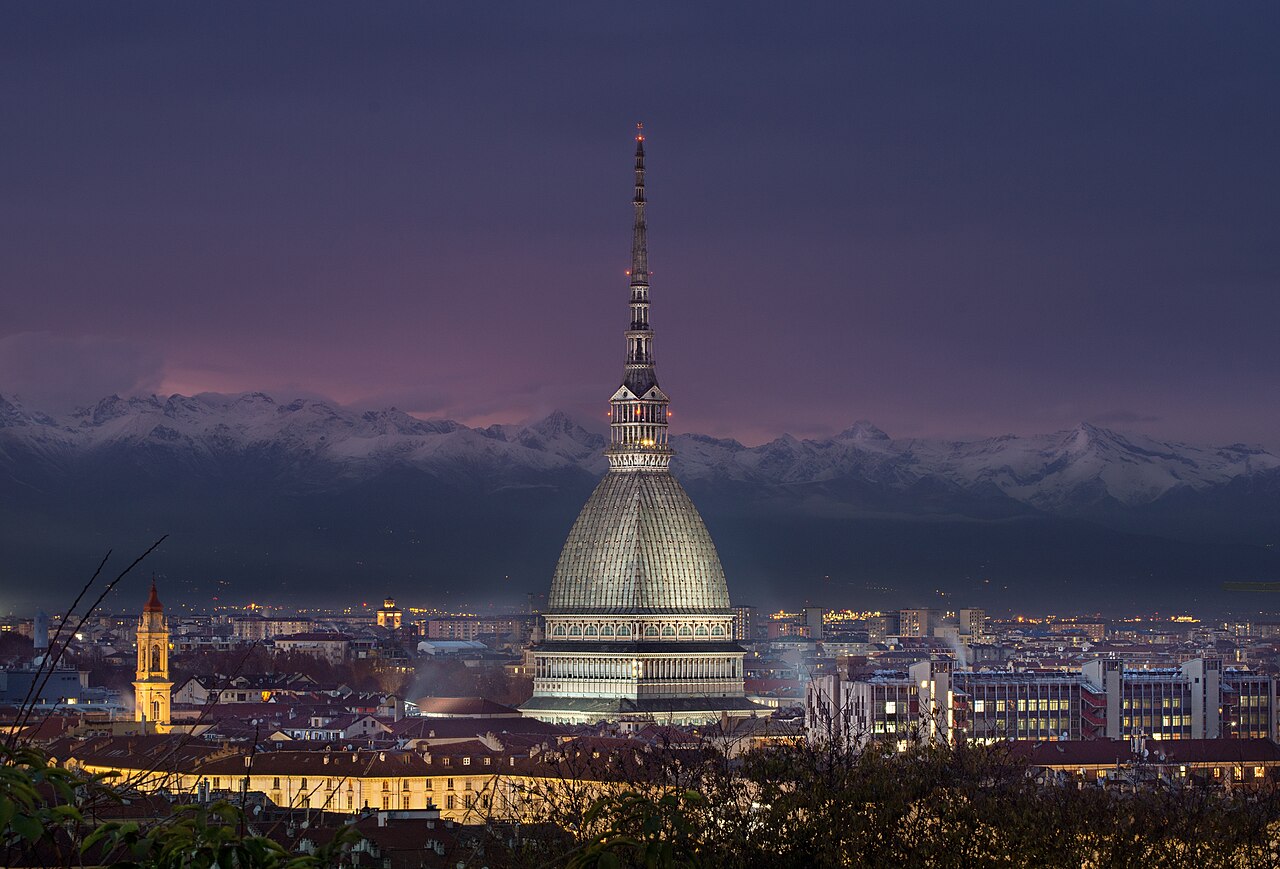 Mole Antonelliana
The Mole's glass lift rises through the inside of the dome to a viewpoint at about 85 metres: below you are the rooftops of the centre, the regular grid of the streets and, when the sky is clear, the mountains.
Read more
The Mole, 167.5 metres high, today houses the Museo Nazionale del Cinema and is one of the symbols of Turin. Alessandro Antonelli designed it in 1862 as a future synagogue, but the continual changes, the growing height and the costs led to disputes with the Jewish community, which gave up completing it. The people of Turin, who had watched it rise for years, asked for it to be finished. The City took over the site and completed the work in 1889.
-
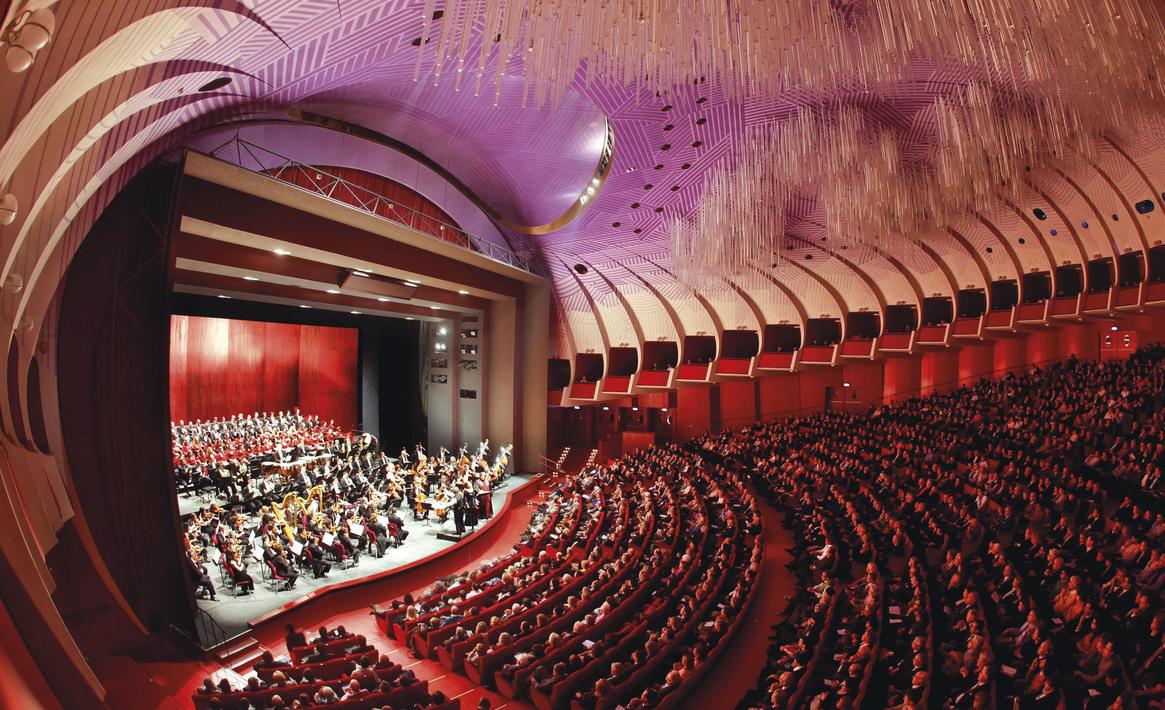 Teatro Regio
The Regio shows you two faces: from piazza Castello, the historic façade and the arcades preserved in the reconstruction; from piazzetta Mollino, the curved walls in brick and glass. The eighteenth-century theatre, inaugurated in 1740 for the Savoy court to a design by Benedetto Alfieri, was devastated by a fire in 1936. Rebuilt to a design by Carlo Mollino, with the collaboration of the engineer Marcello Zavelani Rossi, the new theatre was inaugurated in 1973 with Giuseppe Verdi's I vespri siciliani. The main entrance, in the Galleria Francesco Tamagno, has a bronze gate by Umberto Mastroianni dedicated to music. The great foyer, the staircases and the auditorium designed by Mollino can be visited during performances or guided tours. The Regio hosts opera, ballet, symphonic and choral concerts.
-
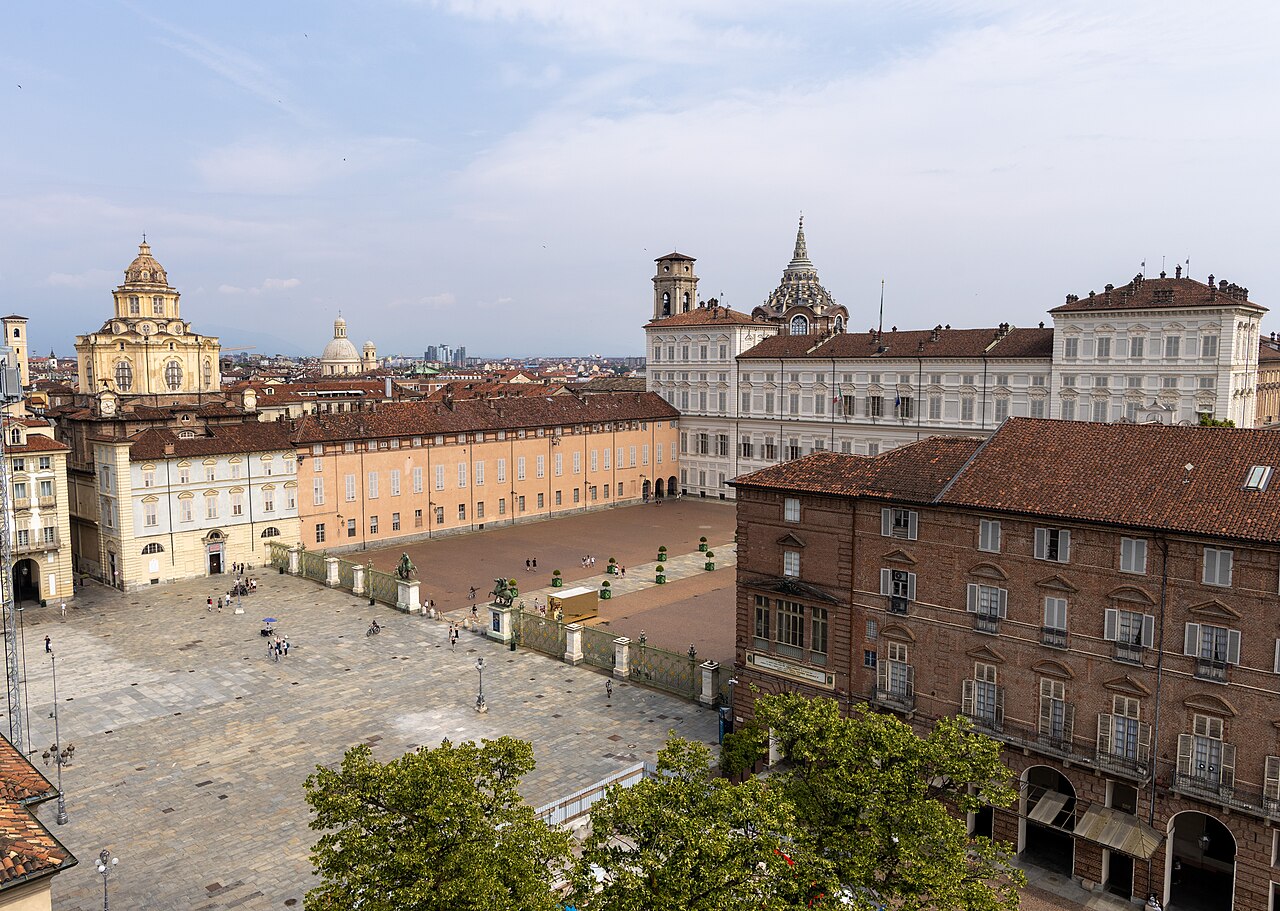 Piazza Castello
Coming from via Po, you find yourself in a space where Turin seems to have gathered a good part of its own history. Piazza Castello is the historic, political and administrative centre of the city, and via Garibaldi, via Po, via Roma and via Pietro Micca all converge here.
Read more
The layout of the square began in 1587, when Ascanio Vitozzi, by ducal order, started a project that would continue over the following centuries. In the centre stands Palazzo Madama; on the northern side, the Piazzetta Reale leads to the residence of the Savoy family. The porticoes and buildings surrounding the square belong to different periods, yet they form a surprisingly harmonious whole.
If you arrive by train, from Porta Nuova you can walk along via Roma; from Porta Susa, via Cernaia and then via Pietro Micca.
-
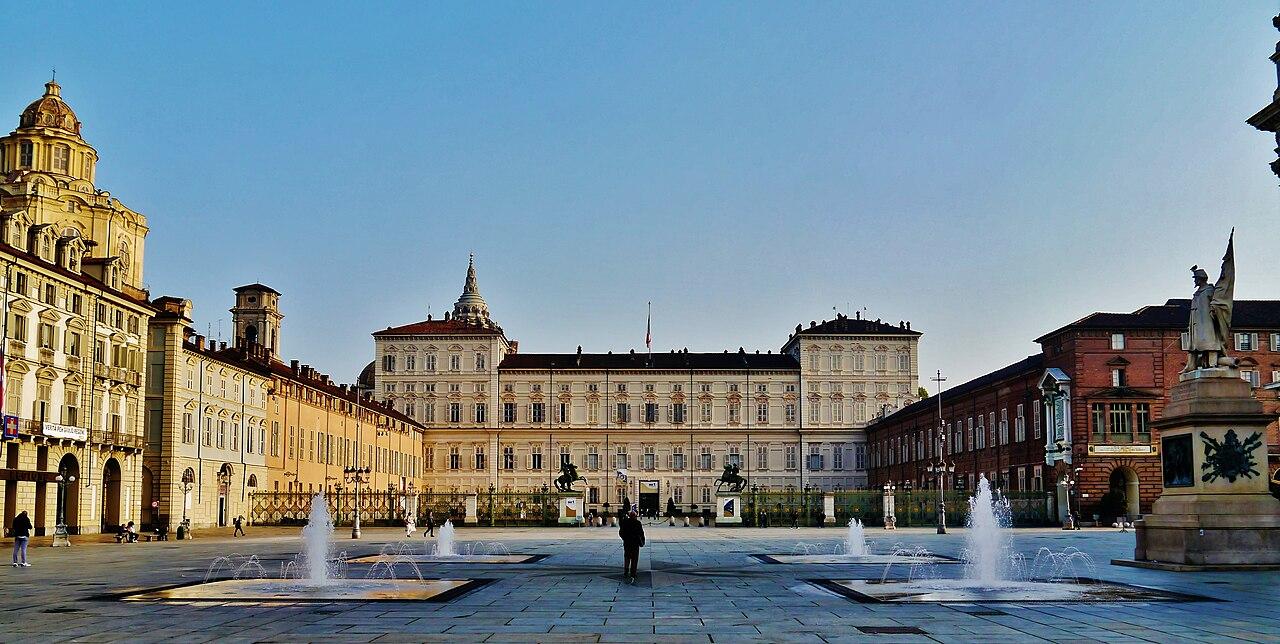 Palazzo Reale
The façade of Palazzo Reale, beyond the nineteenth-century railing that separates the Piazzetta Reale from piazza Castello, is rather sober. Inside, on the other hand, the Savoy family certainly did not hold back on splendour.
Read more
For over two centuries this was the main residence of the Savoy court in Turin, and the sovereigns lived here until 1865. The palace took shape in the seventeenth century, partly through the work of Amedeo di Castellamonte, begun in 1646.
State rooms, throne rooms, reception halls, tapestries, frescoes and precious furnishings tell of the official life of a court that received sovereigns, nobles, political representatives and foreign delegations. The interiors also preserve the transformations of later centuries.
Today the palace is part of the Musei Reali.
-
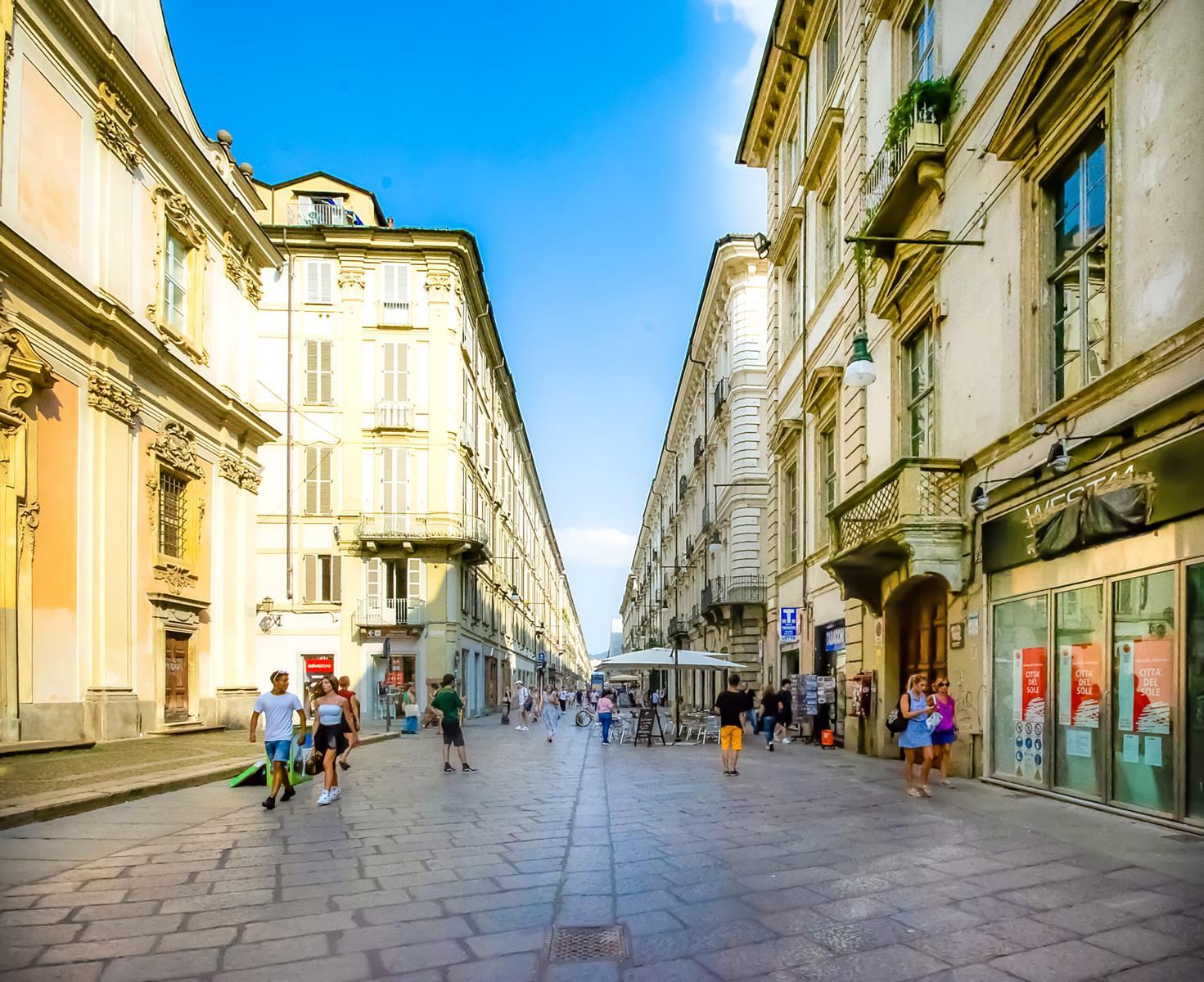 Via Garibaldi
On Saturday afternoons via Garibaldi is particularly lively: clothing shops, bookshops, big retail chains, cafés and ice-cream parlours follow one another for almost a kilometre, entirely pedestrian, between piazza Castello and piazza Statuto. The route largely follows the ancient decumanus maximus of the Roman city. The street was once called Contrada di Dora Grossa, after the canal that ran along it; in the eighteenth century it was gradually widened and regularised. Many of the palaces date from that period, others are later.
Read more
Among the shop windows, at number 25, you will find the Cappella della Congregazione dei Banchieri e Mercanti. Built in 1692, it preserves rich Baroque decorations: a detour that changes, for a few minutes, the tone of the walk.
-
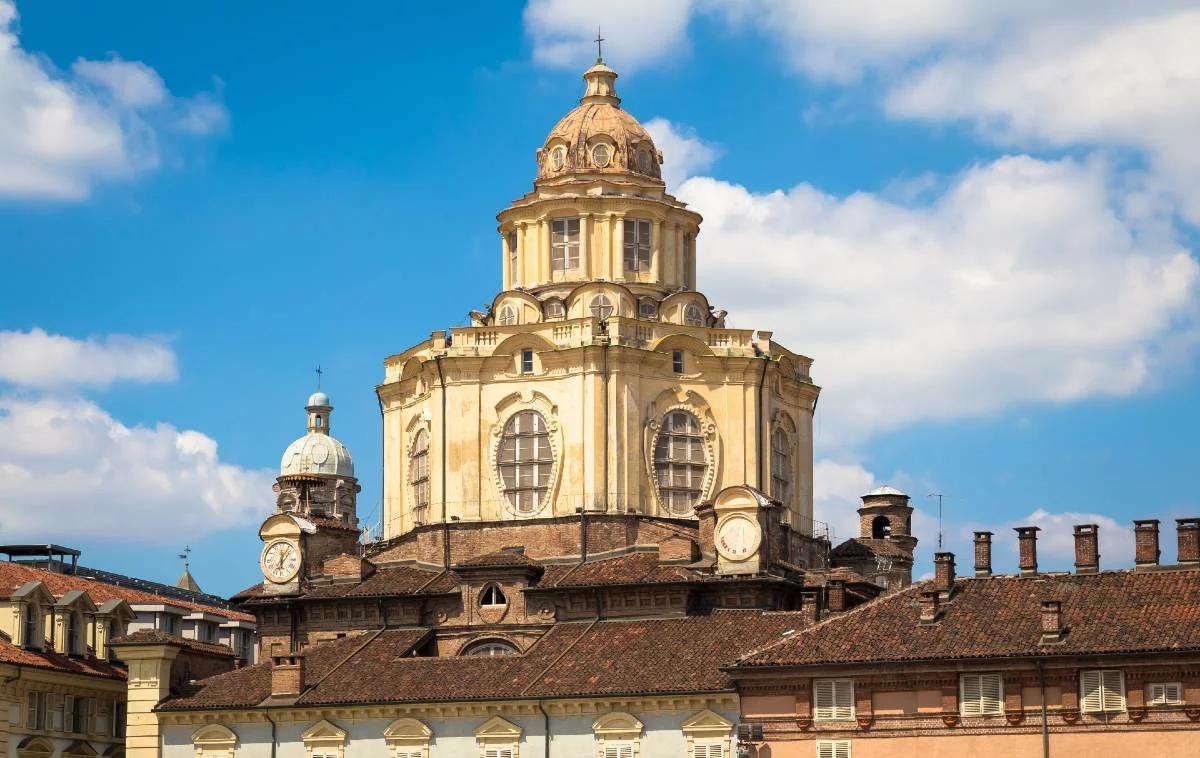 Real Chiesa San Lorenzo
Chiesa di San Lorenzo
Next to Palazzo Reale, on piazza Castello, San Lorenzo almost seems to hide: it has no monumental façade of its own. Once you step inside, however, it is a completely different story.
Read more
The church was commissioned by the Savoy family and entrusted to the Theatines. Guarino Guarini developed the design from 1668; the dome was built mainly in the 1670s and the church was inaugurated in 1680.
The interior has a central plan, with chapels and cladding in marbles of different colours. But the most interesting thing happens above your head: eight large arches intertwine to form a star, while light enters through openings arranged on several levels. It is one of those domes you can look at for a long time, discovering a different relationship between the forms each time.
-
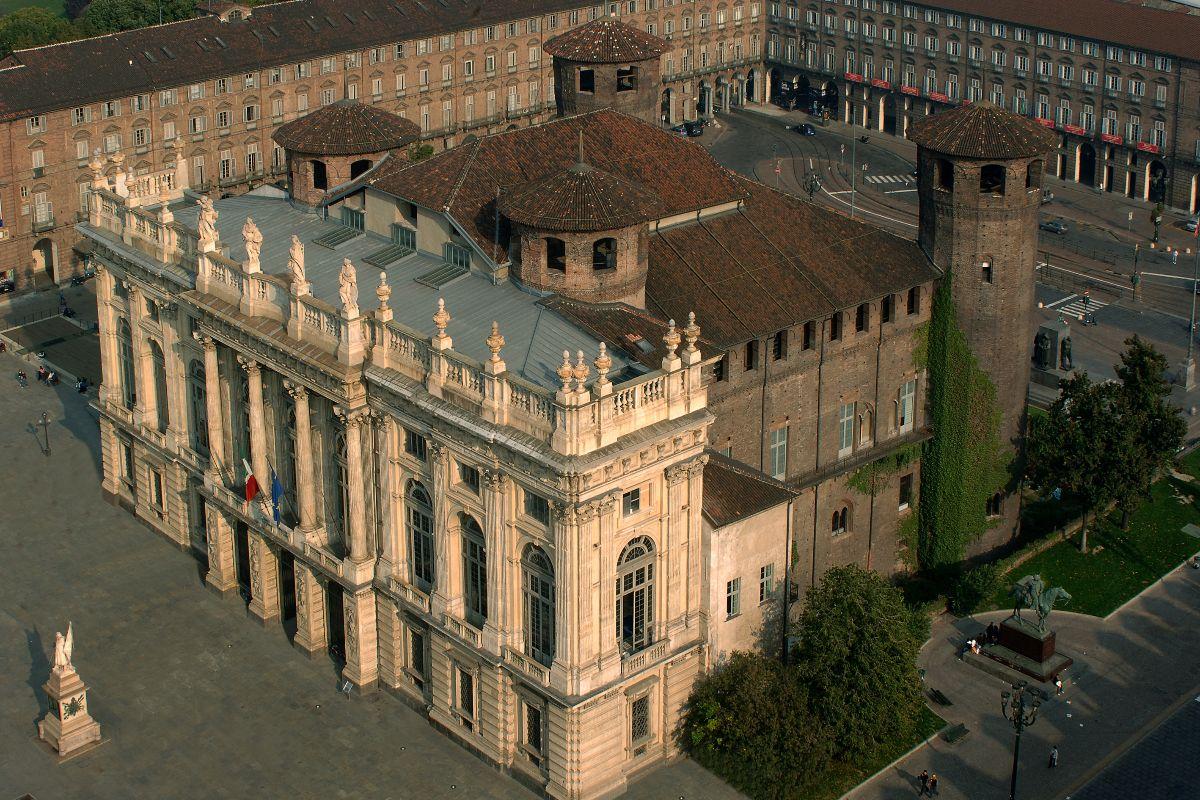 Palazzo Madama
Walk around Palazzo Madama and you will find yourself facing two buildings that seem to belong to different cities. On one side there is a medieval castle; on the other, the Baroque façade that Filippo Juvarra designed in the eighteenth century.
Read more
The story begins much earlier. The palace incorporates the remains of a gate of the Roman city, later turned into a medieval fortification. Between the twelfth and fourteenth centuries the complex gradually became a castle, linked first to the marquises of Monferrato and then to the princes of Savoy-Acaia.
In the seventeenth century it was home to the Madame Reali, Marie Christine of France and Marie Jeanne Baptiste of Savoy-Nemours. The western side bears Juvarra's signature, the eastern one retains its medieval appearance.
Today Palazzo Madama houses the Museo Civico d'Arte Antica.
-
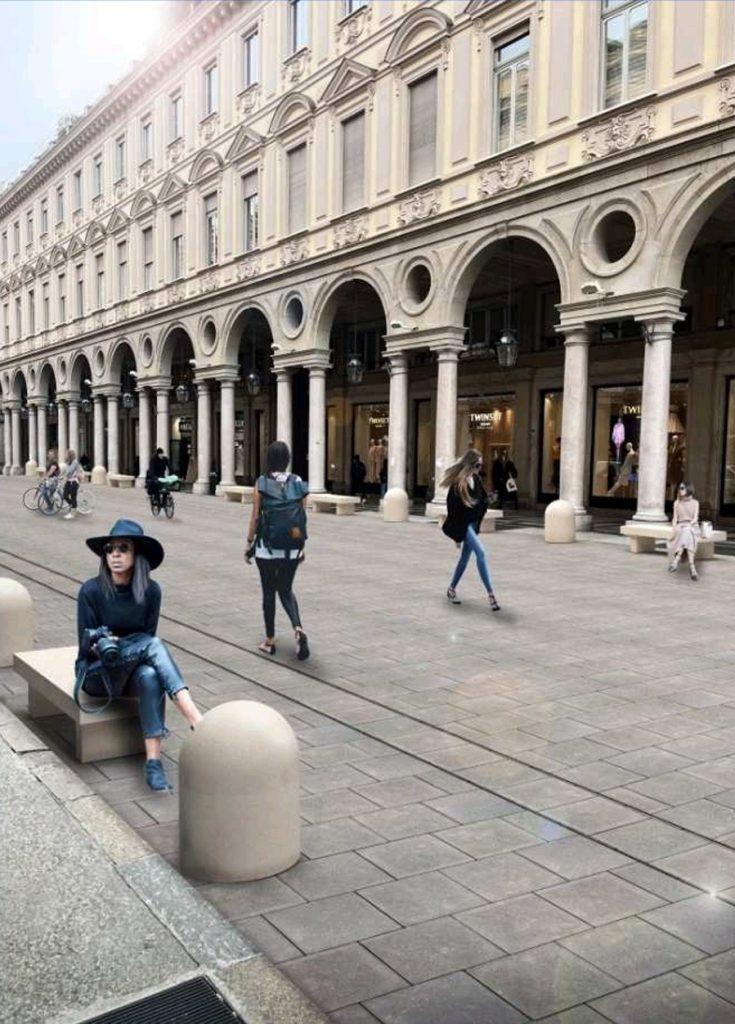 Via Roma
When it rains, via Roma lets you stroll past the shop windows for about 750 metres without leaving the arcades. It is the most traditional shopping street in Turin: from piazza Castello it reaches piazza Carlo Felice, in front of Porta Nuova station, and it is entirely pedestrian.
Read more
The façades do not all speak the same language, even though the street was completely rebuilt between 1931 and 1937. Between piazza Castello and piazza San Carlo they take up the forms of eighteenth-century architecture; between piazza San Carlo and piazza Carlo Felice the Novecento and Rationalist styles prevail, with broad marble cladding. The plan was coordinated by Marcello Piacentini. Designer boutiques, clothing shops, accessories and other businesses accompany the walk.
-
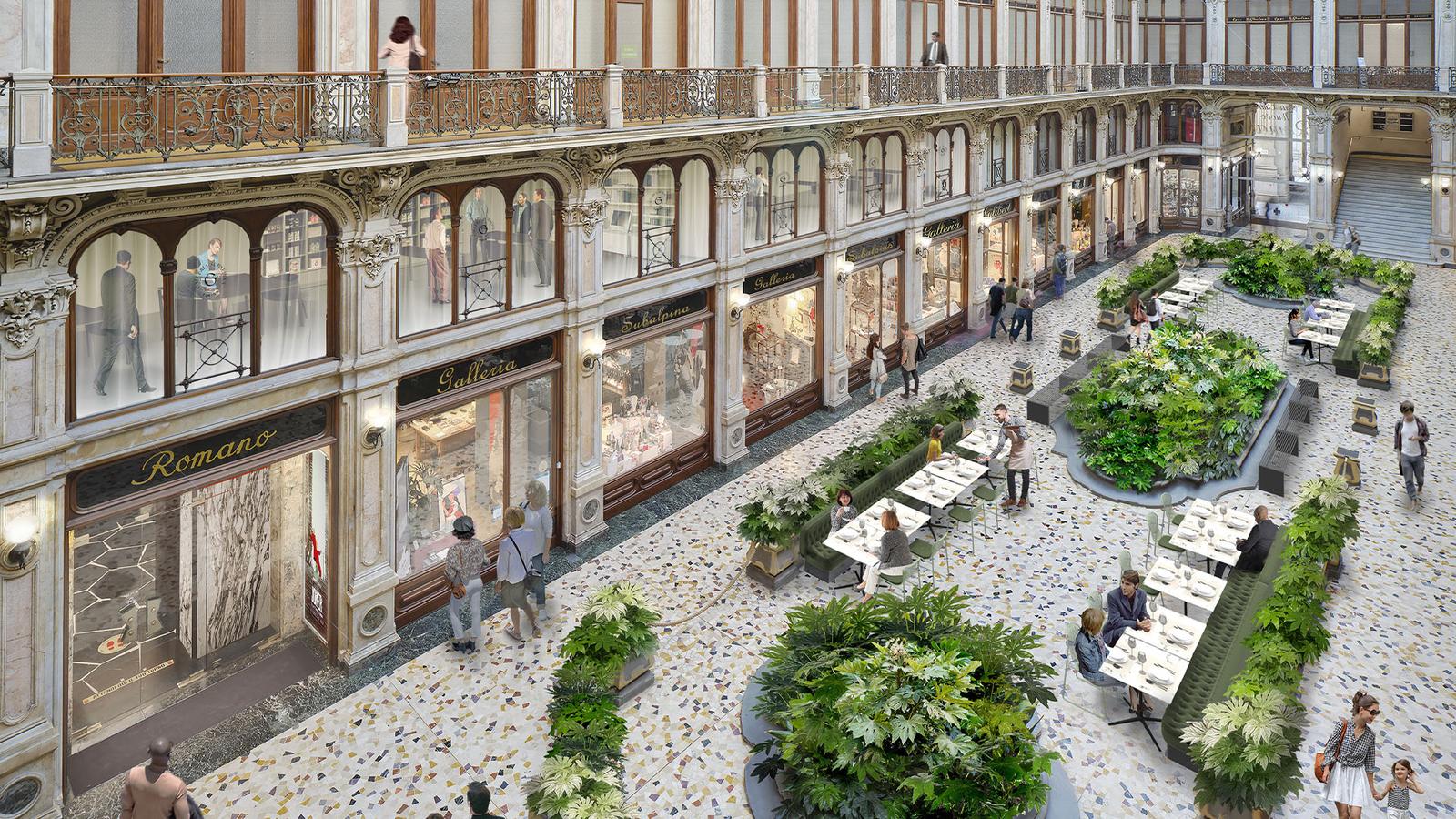 Galleria Subalpina
Between piazza Castello and piazza Carlo Alberto you can walk through the Galleria dell'Industria Subalpina, passing beneath a great vault of iron and glass. It is one of those places where it comes naturally to slow down and look around.
Read more
It was designed by Pietro Carrera in 1873 and opened in 1874, modelled on the Parisian passages. The balconies, the inner shopfronts and the eclectic decorations mix Renaissance and Baroque references, in keeping with nineteenth-century taste.
The gallery has a long commercial tradition, above all tied to books: here you will find antiquarian bookshops such as La Casa del Libro and Gilibert. There are also the confectioner Baratti & Milano, which moved here in 1875, and the Cinema Romano.
The route
The map loads after consent to third-party content (OpenStreetMap).
These are the essential stops, but there is much more
When you book your stay with us you receive the complete step-by-step itinerary, a practical box with directions to get there and back, tips on what to see and a final treat to round off the themed day.