Turin has two sides to its character: one of sunlit squares and Baroque palaces, the other winding through the silence underground. Beneath your feet lies a parallel city of military tunnels, centuries-old icehouses, air-raid shelters and forgotten passageways that protected the people of Turin during sieges and wars.
This itinerary takes you to discover places where sunlight never reaches, but where the presence of history feels stronger than ever. Perfect for anyone who enjoys mystery, urban archaeology and places off the usual tourist trail.
IMPORTANT: how to visit underground Turin
Unlike the other itineraries, which you can follow independently, exploring underground Turin requires specialist guided tours. Many tunnels are closed to the public for safety reasons or open only on special occasions with authorised guides.
Our advice: choose tours organised by professional agencies (such as Somewhere Tours), which have exclusive access to underground sites and experienced guides who bring history to life as you descend as far as 15 metres below ground.
During your stay at our B&B, I'll be happy to give you all the information you need to book these exclusive guided tours.
Museo Pietro Micca and the countermine tunnels – the gateway to Turin's underground depths
This is the main entrance to Turin's historic underground network.
What it is: Museo Pietro Micca is dedicated to the French siege of 1706 and the heroism of the miner Pietro Micca, who sacrificed himself by blowing up a tunnel to stop the enemy's advance. But the museum is only the beginning: from here, you actually descend underground to explore the tunnels built to intercept enemies digging their way towards the city.
What to see:
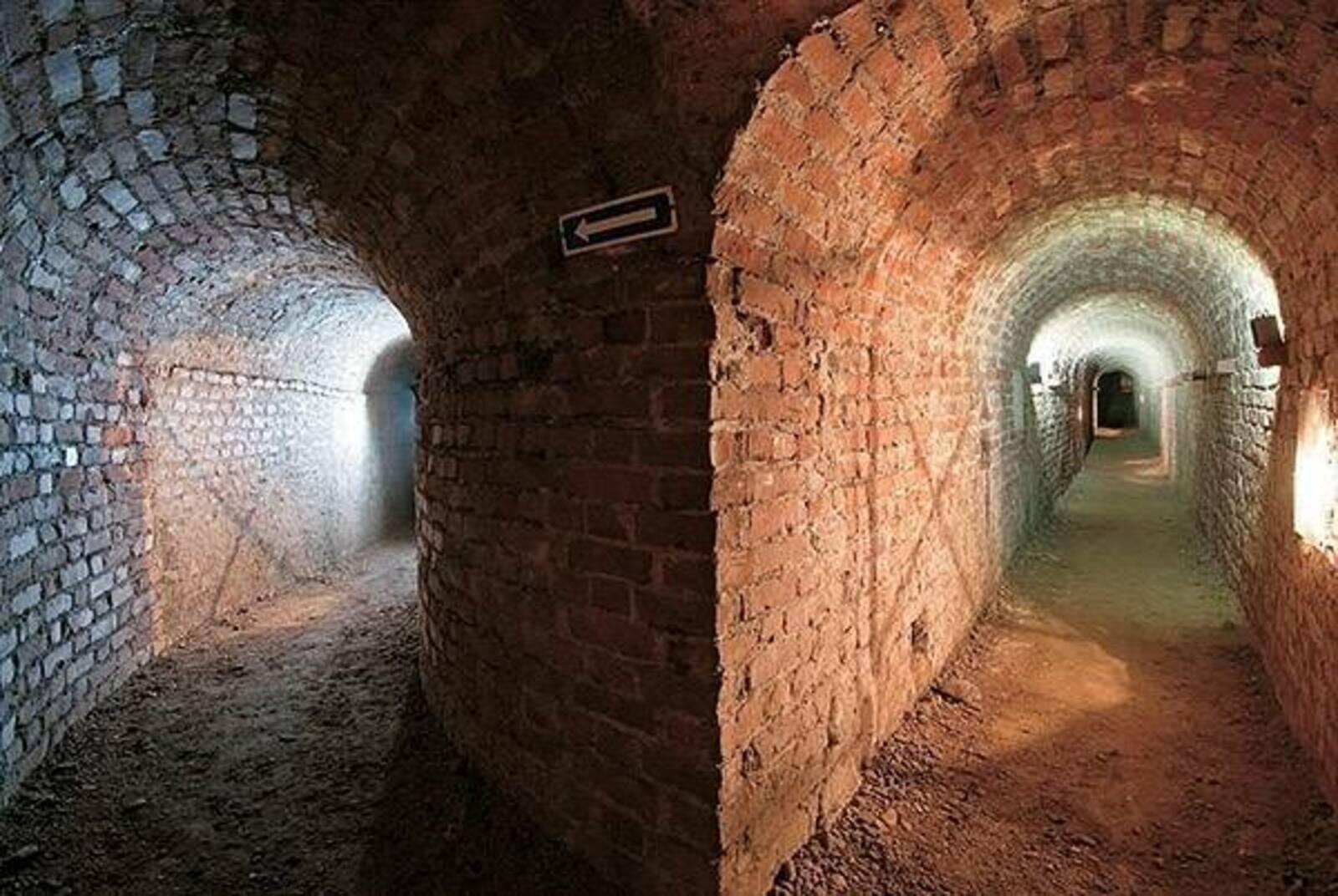
- The labyrinth of 18th-century tunnels stretching beneath the Mastio della Cittadella area
- The narrow, atmospheric passageways dug by hand in the 18th century
- The original, extremely steep staircases descending deep into the earth
- The listening posts where soldiers monitored the underground network to detect the sounds of enemy tunnelling
- Reconstructions of explosions and underground military strategies
The atmosphere: Descending here is like travelling back three centuries. The air is cold, the humidity high and the silence complete. You can feel the weight of the earth above your head. Some passages are so narrow that you have to walk bent over. It's both a physical and an emotional experience.
Why it's special: this is one of the few underground defensive systems in Europe that remain intact. Turin's countermine tunnels are a masterpiece of 18th-century military engineering. Pietro Micca is a local hero: his sacrifice saved the city from the French invasion.
An interesting detail: The tunnels extend for kilometres beneath central Turin. Only a small section can be visited. There are stories of secret passageways that have still never been fully explored.
The icehouses beneath Mercato Centrale (Porta Palazzo) – underground cathedrals of cold
Beneath the modern Mercato Centrale in Porta Palazzo lies a remarkable example of early engineering.
What they are: the icehouses are enormous underground chambers built in the 19th century to store ice and keep food supplies fresh for the entire city, before refrigerators were invented.
What to see:
- The circular chambers with exceptionally high vaulted ceilings
- The imposing architecture, almost like an upside-down cathedral
- The perfectly preserved exposed brickwork
- The system of wells and channels used to drain away melting ice water
- The constant temperature (always cool, even in summer)
How they worked: in winter, ice was cut from the Po or brought down from the mountains and stored here. Layers of ice were separated by straw and sawdust to slow down melting. The cold was preserved for months, allowing meat, fish and dairy products to be kept fresh for the market.
Why they're special: the architecture is imposing: the vaulted ceilings create an extraordinary acoustic effect (every whisper echoes), while the constantly cool temperature creates an atmosphere where time seems to stand still. You're only a few metres from the bustle of Europe's largest market, yet underground an almost sacred silence prevails.
An interesting detail: these icehouses were essential to city life. Without them, feeding a growing population would not have been possible. They show how pre-industrial engineering could solve complex problems with simple but ingenious solutions.
The underground floor of Museo Egizio – an archaeological excavation beneath the excavation
Even Turin's most famous museum has an underground heart.
What it is: the sections of the museum on level -1, where modern exhibition design meets the depths of the earth. This level houses permanent collections and temporary installations that explore the very ideas of excavation and discovery.
What to see:
- The underground galleries displaying archaeological finds below street level
- The multimedia installations describing archaeological excavation campaigns in Egypt
- The interplay between contemporary architecture (glass, steel, lighting) and the underground environment (stone, shadow, silence)
- The temporary exhibitions that often explore underground themes: tombs, necropolises and buried temples
Why it's special: the underground floor of Museo Egizio creates a symbolic parallel: just as archaeologists dig beneath the Egyptian sands to uncover buried treasures, you descend beneath Turin to discover hidden layers of history. It's a meta-archaeological experience.
An interesting detail: some artefacts kept on level -1 were deliberately chosen to be displayed 'underground' because they come from subterranean tombs or underground temples. The exhibition design reflects their origins.
The air-raid shelters beneath Palazzo Civico – the concrete heart that protected the city
Beneath Piazza Palazzo di Città lies a reinforced-concrete heart that protected the city during the Second World War.
What they are: the air-raid shelters built beneath Palazzo Civico (the seat of Turin's municipal government) to protect citizens and municipal employees from Allied bombing raids.
What to see:
- The reinforced rooms with thick walls and low ceilings
- The original, extremely heavy armoured doors designed to withstand explosions
- The original wall inscriptions: directions, capacity figures and warnings
- The benches and camp beds where people waited for the all-clear
- The atmosphere of waiting that characterised those difficult years: silence, fear and hope
The history: Turin was heavily bombed during the Second World War because it was the centre of the armaments industry (Fiat manufactured military vehicles). The underground shelters saved thousands of lives. Some were public, others private (beneath apartment buildings, factories and schools).
Why they're special: visiting these shelters is an emotionally powerful experience. They aren't sterile museums: they are places where people experienced fear, solidarity and resistance. The writing on the walls, the weathered doors and the damp cold tell stories that no book can convey with the same intensity.
An interesting detail: hundreds of air-raid shelters exist beneath Turin, many of which have never been opened to the public. Some have been converted for other uses (cellars, storage rooms), while others have been forgotten. They are underground scars left by the war.
The best way to venture truly 'into the depths' (as far as 15 metres underground) is with professional guides. The 'Torino Sotterranea' tour (organised by Somewhere Tours or other specialist agencies) is a well-established Turin experience.
What's included:
- A visit to the Pietro Micca tunnels with an expert guide
- Access to air-raid shelters that are normally closed
- Engaging historical accounts: from the 18th-century sieges to the bombing raids of 1943
- Evening tours: when the city above grows quiet and the silence underground becomes almost magical
Why choose a guided tour:
- Safety: the tunnels can be slippery and narrow, with steep staircases
- Exclusive access: many areas can only be visited with authorisation
- Historical insight: the guides know anecdotes, stories and details that bring the experience to life
- Atmosphere: evening tours create an almost cinematic experience
A perfect combination: pair this experience with dinner in Quadrilatero Romano (the medieval neighbourhood just a short walk from the Pietro Micca tunnels) to end your day with a little thrill and plenty of history. Once you've emerged from underground, a plate of agnolotti and a glass of Barbera in a historic osteria are the perfect finishing touch to your Turin experience. 🍷🔦
On foot
-
 Underground Turin
PRACTICAL INFORMATION
Read more
Who can take part: underground tours are not suitable for everyone. Before booking, please check the following:
- Some passages are narrow and low: not recommended for people with claustrophobia
- There are steep stairs and uneven paths: a basic level of mobility is needed
- The underground temperature is constant (10-15°C): bring a jacket even in summer
- Closed-toe, comfortable shoes are compulsory (no sandals or heels)
When to book:
- Underground tours fill up quickly, especially at weekends
- We recommend booking at least 1-2 weeks in advance
- Some sites open only on special occasions (Giornate FAI, cultural events)
Duration: Underground tours last an average of 1h30-2h
What to bring:
- A jacket or sweatshirt (it is cold underground)
- Closed-toe, non-slip shoes
- A camera (where permitted)
- A spirit of adventure and an interest in history
THE VALUE OF THE EXPERIENCE
Going down into underground Turin is an experience few tourists have. It is the Turin you do not see on postcards, the one without Instagram filters, the one that affects you physically and emotionally.
It means walking where eighteenth-century soldiers listened for the sound of enemies digging. It means standing where the people of Turin waited for the bombing to end. It means seeing how engineering in the past solved problems without modern technology.
It means touching history, quite literally: the damp walls, the worn steps, the doors marked by time.
If you take this tour, you will come away seeing Turin differently: not just palaces and squares, but layers, depths and hidden roots.
These are the essential stops, but there is much more
When you book your stay with us you receive the complete step-by-step itinerary, a practical box with directions to get there and back, tips on what to see and a final treat to round off the themed day.