There is an unusual Turin, often unknown even to the Turinese themselves, that surprises and enchants: works of art, street art, places where nature reigns supreme. Here are 9 stops not to be missed, simply wandering around with your nose in the air
On foot Walking: 19.4 km, 4 h 51 min
-
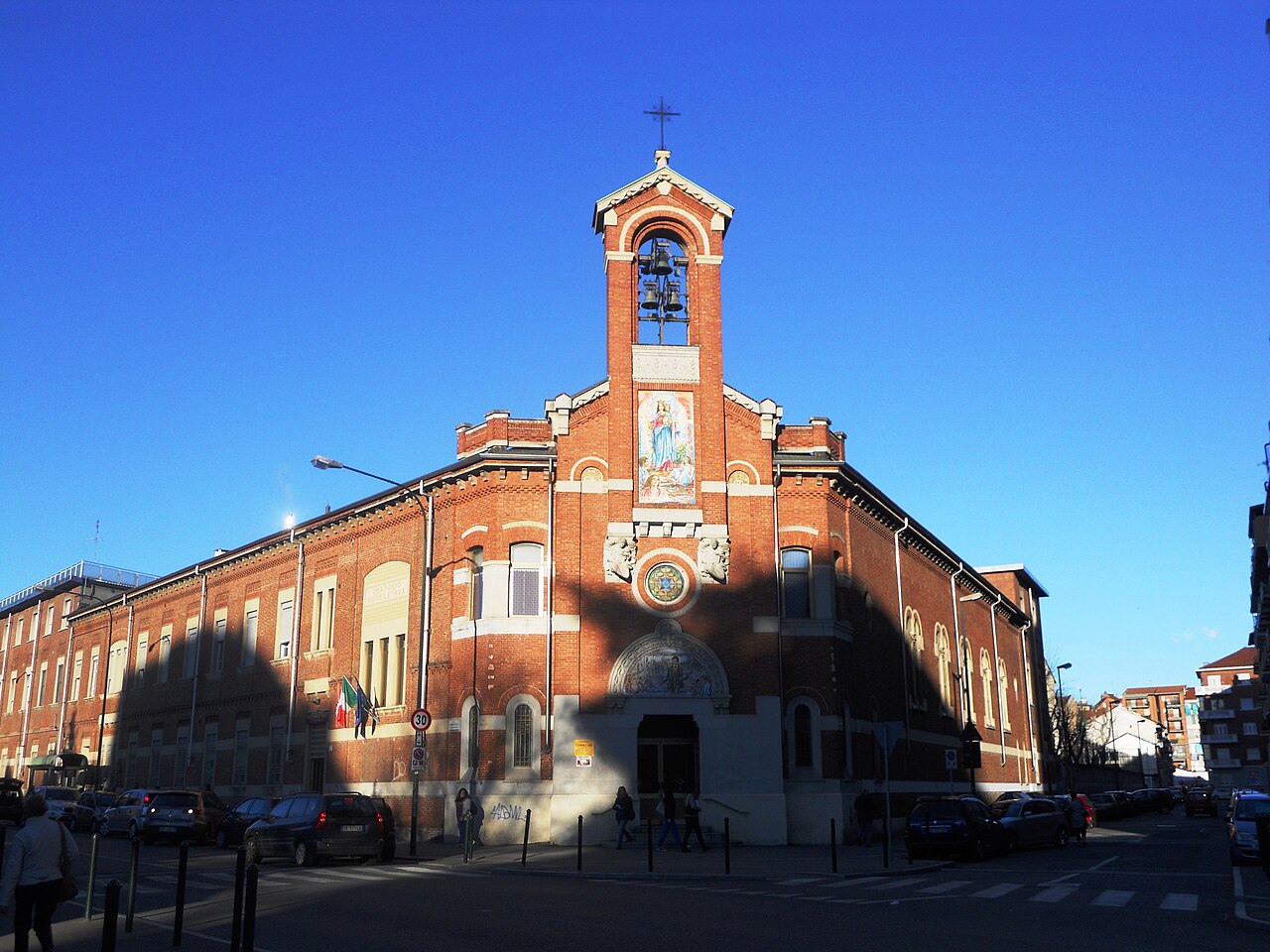 Barriera di Milano
In Barriera di Milano, a historic district in the north of Turin, teems the most interesting and majestic street art in the city: 13 works by Francesco Camillo Giorgino, known as Millo, painted across entire blind walls of the district's buildings. Millo's giant murals, found in many other Italian cities, tell of the relationship between people and the city, its contradictions, the individual's relationship with the urban fabric
-
 Fetta di Polenta, or Casa Scaccabarozzi
Fetta di polenta
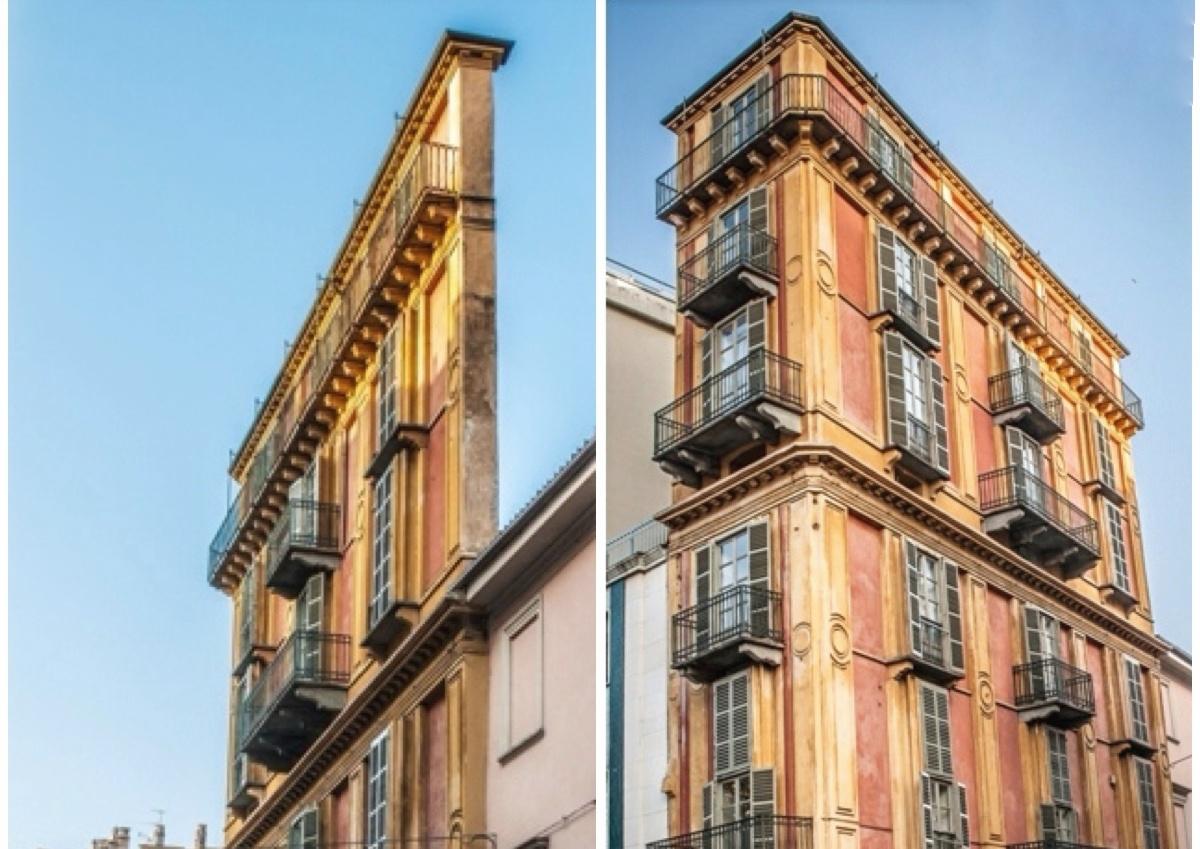
On the corner of via Giulia di Barolo and corso San Maurizio, in the Vanchiglia district, there is a house that seems to change shape as you walk around it. It is Casa Scaccabarozzi, known to the people of Turin as Fetta di Polenta (slice of polenta): the nickname comes from the yellow of the façades and above all from the incredibly thin plan, which on one side narrows to just 54 centimetres.
Read more
Alessandro Antonelli designed it starting in 1840; the building was later raised, with works continuing until 1881. The contrast between the height and the extremely narrow width of one end creates an unusual perspective effect.
Photograph it both from corso San Maurizio and from via Giulia di Barolo: the proportions will look very different. The house is private and is viewed from the outside.
-
 Mole Antonelliana
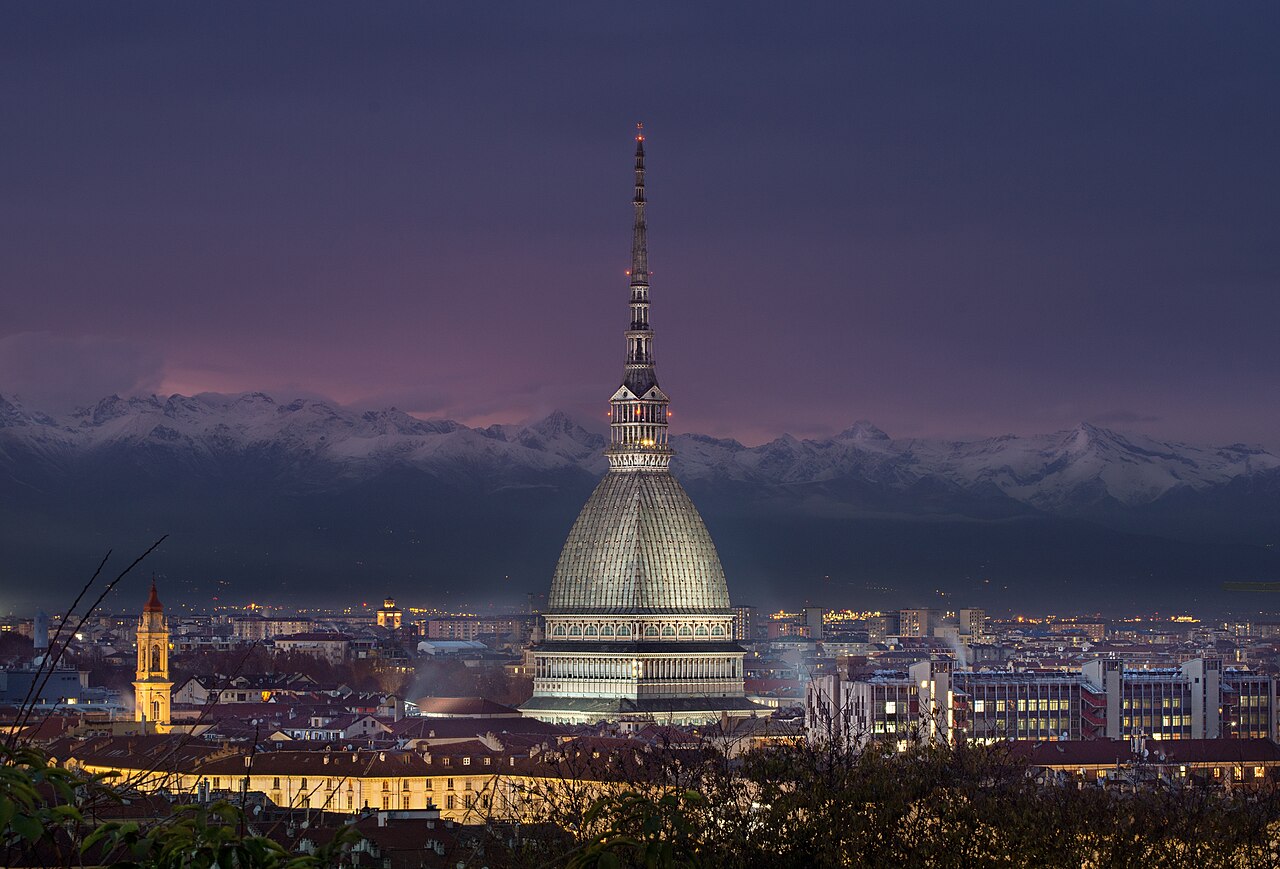
The Mole's glass lift rises through the inside of the dome to a viewpoint at about 85 metres: below you are the rooftops of the centre, the regular grid of the streets and, when the sky is clear, the mountains.
Read more
The Mole, 167.5 metres high, today houses the Museo Nazionale del Cinema and is one of the symbols of Turin. Alessandro Antonelli designed it in 1862 as a future synagogue, but the continual changes, the growing height and the costs led to disputes with the Jewish community, which gave up completing it. The people of Turin, who had watched it rise for years, asked for it to be finished. The City took over the site and completed the work in 1889.
-
 Palazzo con il piercing
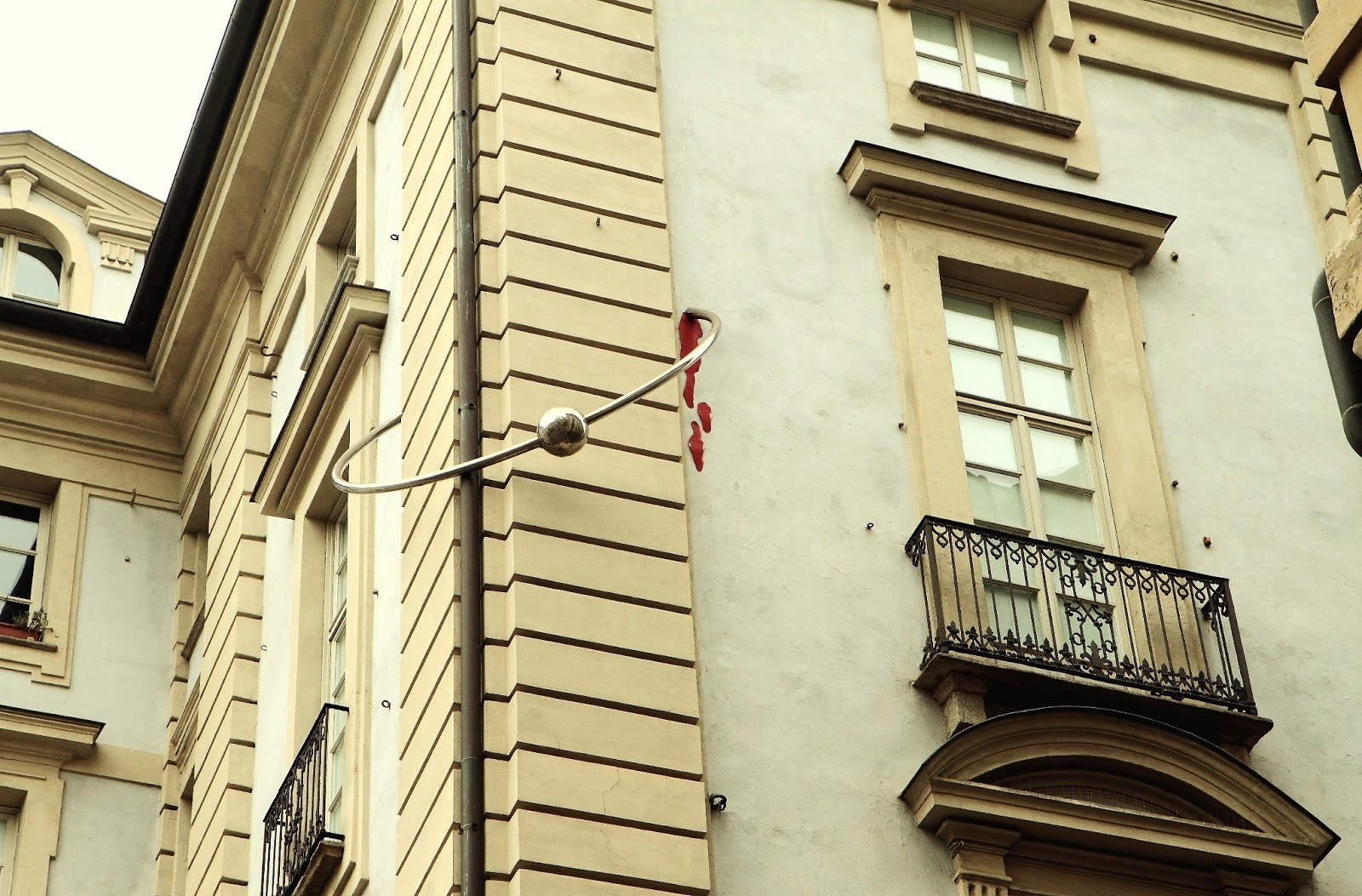
The Palazzo con il piercing, a contemporary work from 1991 known as Baci Rubati, was created by Corrado Levi in collaboration with Cliostraat, a group of artists and architects. Set on a historic eighteenth-century building in the heart of the Quadrilatero Romano, the Palazzo con il piercing is an evocative and rather unusual work. On either side of the piercing, at the two corners, there are drops of red and blue blood. The two colours probably represent nobility and poverty
-
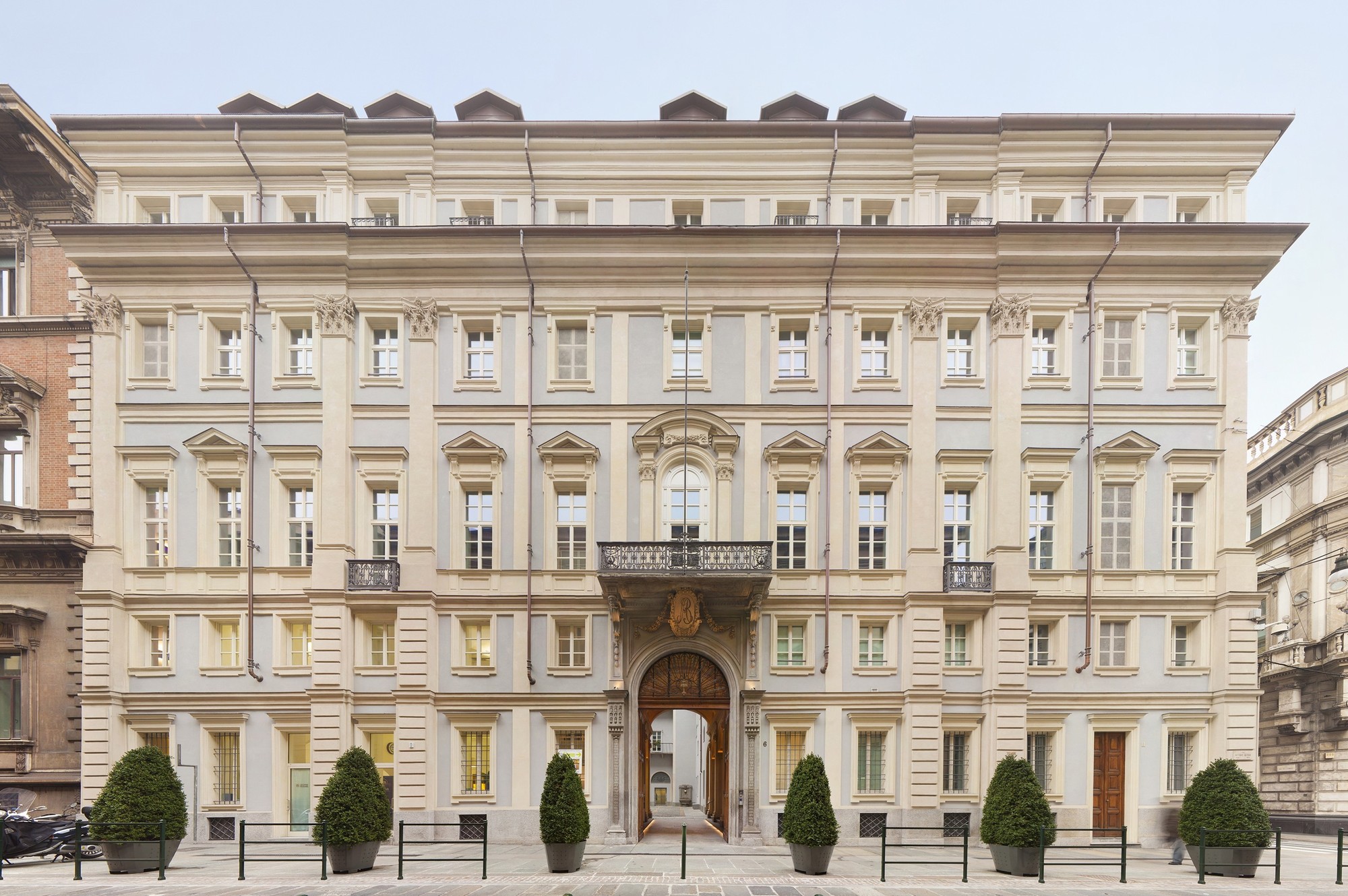 The number 6
A few steps from the beating heart of the city stands what ArchDaily has called the most beautiful house in the world, in the restoration category. The number 6 is the perfectly accomplished renovation of a building dating back to the 1600s. Baroque and modernity meet and blend skilfully in this 6,500-square-metre palazzo, which houses 36 apartments with garage, a wellness centre, a gym, a sauna and, in the central courtyard, a light installation by the artist Richi Ferrero. Needless to say, only exceptional owners live here
-
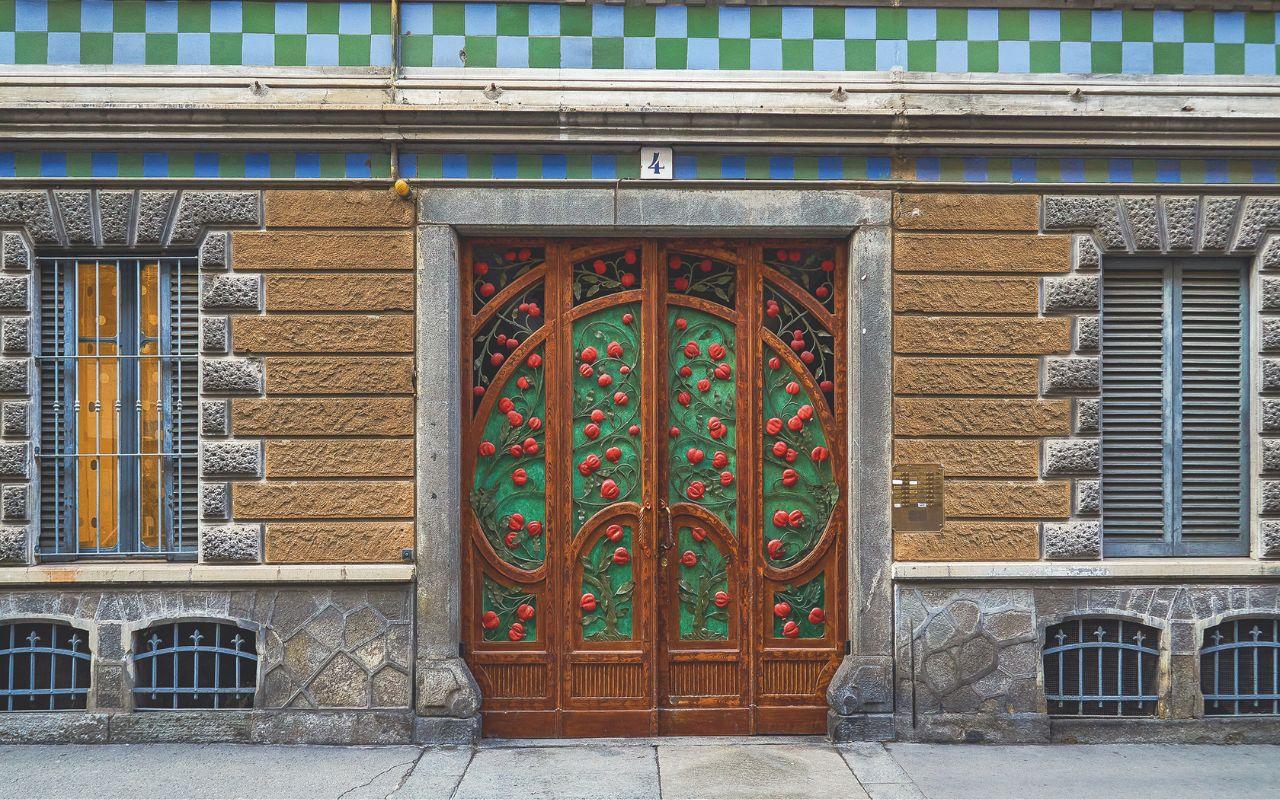 The pomegranate door
It is the green of the leaves and the red of the fruit that catch the eye in front of this door in via Argentero, in the San Salvario district. Then you make out the two wrought-iron pomegranate trees, laden with fruit, enclosed in a frame reminiscent of a peacock's tail.
Read more
The building was designed in 1907 by Pietro Fenoglio, one of the leading exponents of Turin's Art Nouveau. The bright colours you see today, however, are not the original ones: they come from a later restoration and repainting.
A frontal photograph highlights the symmetry of the composition; as you move closer, on the other hand, the details of the branches and fruit emerge. The door is the entrance to a private building, so the visit is limited to the outside.
-
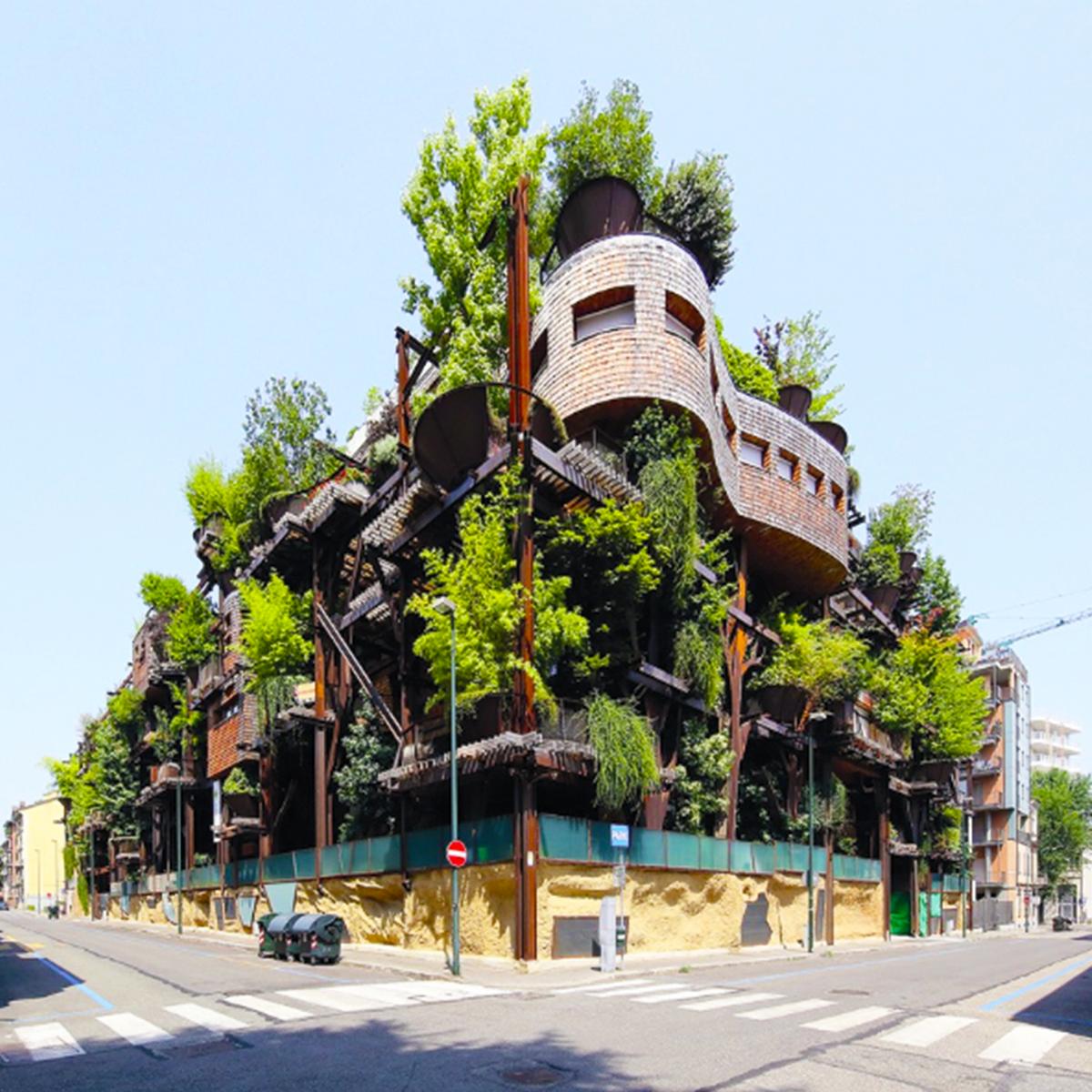 Condominio 25
 Verde
Trees grow on the terraces, while the steel structures look like trunks and branches: the Condominio 25 Verde, in Via Chiabrera, a short distance from Parco del Valentino, is a house where architecture and vegetation truly intertwine.
Read more
The architect Luciano Pia designed it and the building was completed in the early 2010s, with irregular terraces, wooden cladding and about 150 trees integrated into the steel and wood structures, in addition to the greenery of the inner gardens and the roofs. It is an experiment in bioclimatic architecture: the plants are not merely decorative, they shade the flats and help create a natural microclimate for those who live there. The result is a kind of inhabitable forest, where the boundary between building and vegetation becomes less clear.
Its appearance changes with the seasons. In spring and summer the vegetation dominates; in winter the metal structures stand out more clearly. It is a private building, but you can photograph it from the street: even without going in, the relationship between trees and structures is the main reason to stop and look.
-
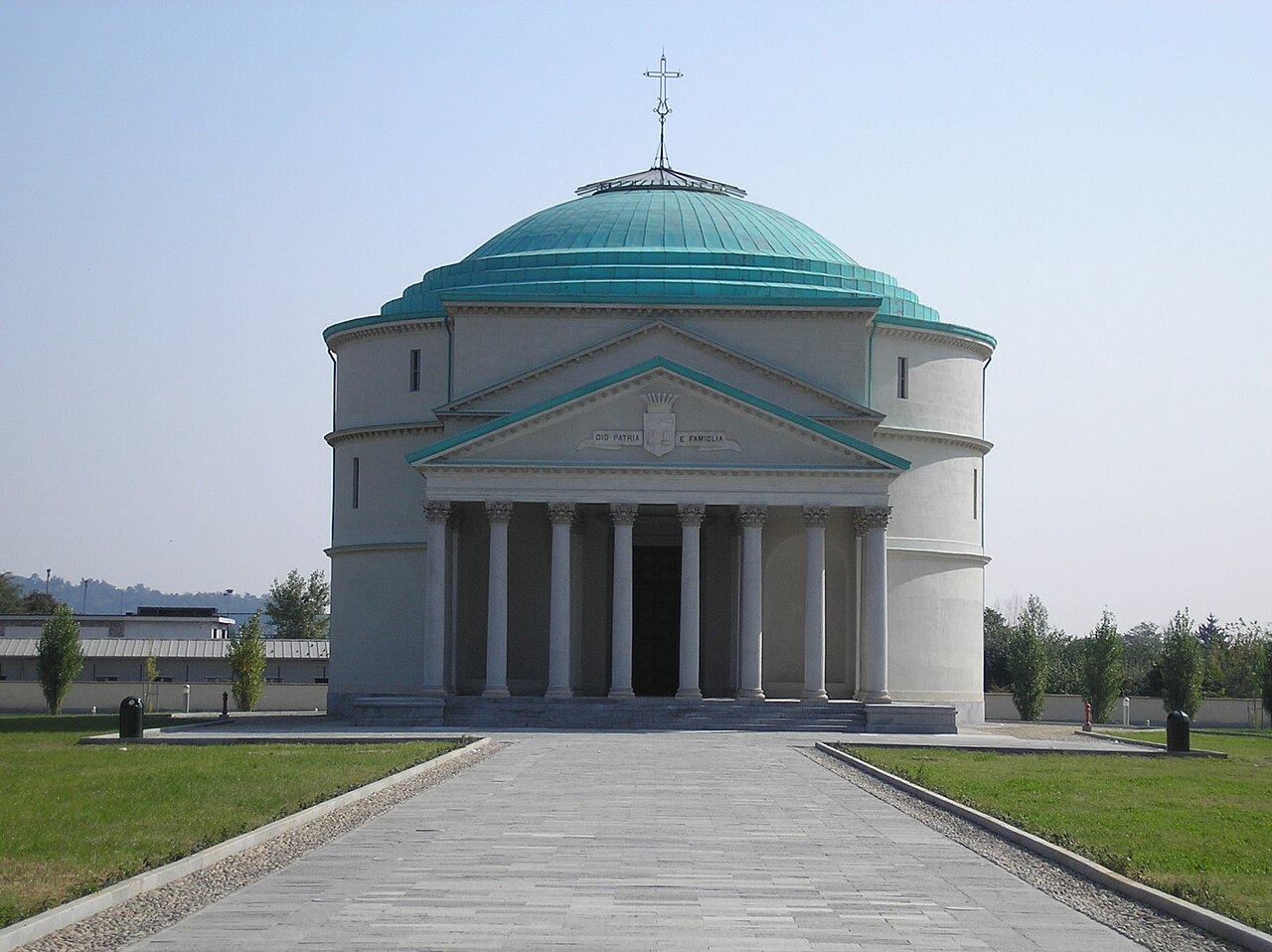 Mausoleo della Bela Rosin
Located in the Mirafiori Sud district, the Mausoleo della Bela Rosin is a neoclassical building, an exact copy of the Pantheon in Rome, but far less famous: a splendid work designed by the architect Angelo Demezzi, yet little known even in Turin itself, perfect for an itinerary of unusual Turin. It was commissioned as a family tomb by the children of Rosa Vercellana, nicknamed la Bela Rosin - eight columns, an imposing dome. The Bela Rosin was to be buried here, with her husband Vittorio Emanuele II. Rosa Vercellana was in fact the mistress and later also the wife of the first King of Italy. Her remains, together with those of her children, were buried here, but were later moved to the Cimitero Monumentale following several lootings
Read more
Why it is Instagrammable: it is the most symmetrical and Instagrammable spot in Turin. The perfect symmetry of the neoclassical architecture, the pure white of the columns and the green of the surrounding park create dreamlike photographic compositions. It is a favourite of wedding photographers and influencers.
The route
The map loads after consent to third-party content (OpenStreetMap).
These are the essential stops, but there is much more
When you book your stay with us you receive the complete step-by-step itinerary, a practical box with directions to get there and back, tips on what to see and a final treat to round off the themed day.