A star on the forehead of a statue, a door knocker with an unsettling look, a chalice raised in front of a church: in Turin even the most visible details have given rise to mysterious tales. The city has long had the reputation of a «magic city», suspended between legends of white and black magic. According to esoteric tradition, it would form part of two symbolic triangles: that of white magic with Prague and Lyon, and that of black magic with London and San Francisco. These are readings that arose and spread above all in contemporary esoteric culture, interwoven with the history of the monuments, not established historical facts.
We suggest following their traces on foot, keeping facts and interpretations apart. We begin between Valdocco and piazza Statuto, the so-called dark pole, then cross the Quadrilatero Romano, piazza Solferino and the historic centre, as far as piazza Castello and the Gran Madre di Dio, associated with white magic.
The walk is about eight kilometres: allow three or four hours, stops included. From the B&B you can also reach the starting point by public transport; from the Gran Madre, the last stop, you will be a few minutes' walk from us. All the stops can be seen from the outside, without organised visits. If you add other visits along the way, check the practical information first.
On foot Walking: 8.4 km, 1 h 45 min
-
 Rondò della Forca in Turin
Rondò della Forca
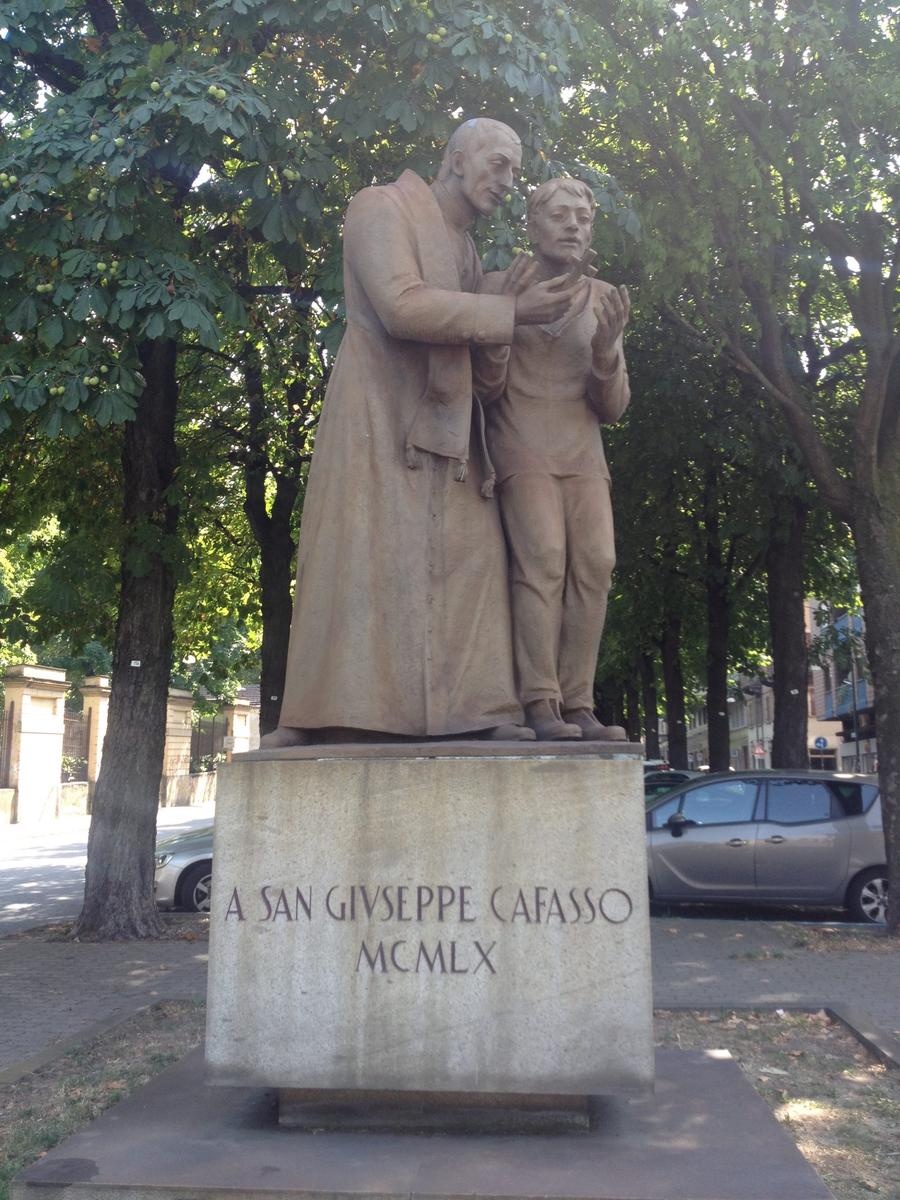
The name of the Rondò della Forca tells of a far from happy part of the city's history. In the nineteenth century, at the junction of corso Regina Margherita, corso Valdocco, corso Principe Eugenio and via Cigna, the gallows for capital executions were erected. The condemned arrived escorted by the guards and by members of the Confraternita della Misericordia.
Read more
Today they are remembered by the monument to San Giuseppe Cafasso, a priest who gave spiritual assistance to prisoners and the condemned. The sculpture by Virgilio Audagna, placed there in 1961, shows him comforting a man bound for execution. It is one of the reasons why the Rondò appears in the tales of dark Turin; before the legends, however, comes the history of the criminal justice of that era.
-
 Frejus war memorial
Monument to the Fallen of the Frejus
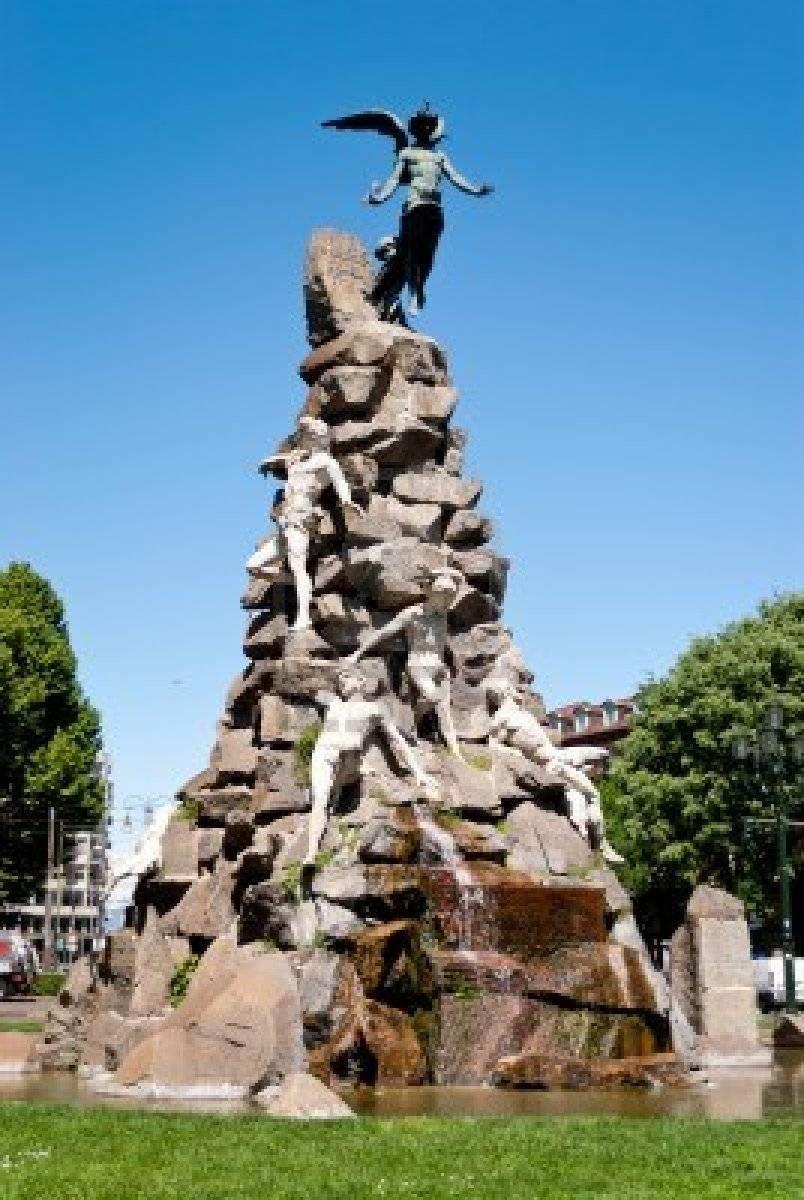
In the centre of piazza Statuto the Titans clamber up a pyramid of boulders, while above them rises a winged genius. It is the monument to the Fréjus tunnel, made by Luigi Belli and unveiled in 1879 to celebrate the railway works through the Alps: the genius represents the triumph of science over the difficulties of nature.
Read more
Esoteric tradition reads the square differently. Its position to the west, towards the sunset, and the memory of ancient burial grounds and places of execution have made it the supposed heart of Turin's black magic. The five-pointed star on the genius's forehead has also been interpreted by some as the sign of Lucifer: a later reading, not the original meaning of the monument.
-
 Casa del boia, the executioner's house
Casa del boja
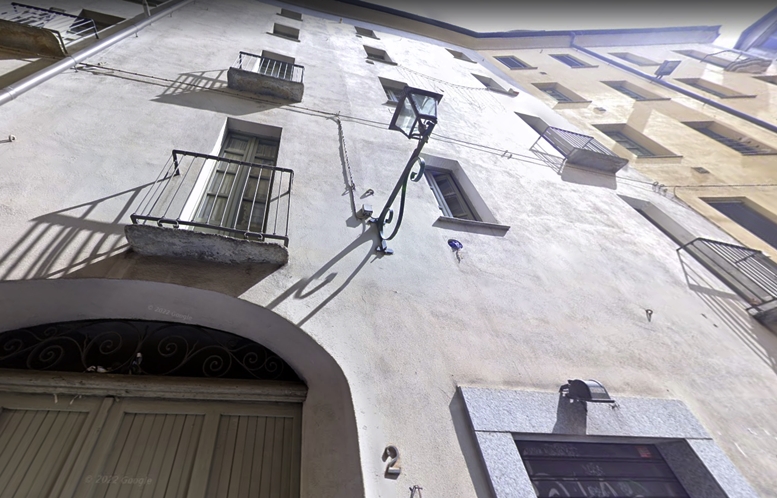
At number 2 via Bonelli you will find yourselves in front of an ordinary front door. It is the so-called executioner's house, in the Quadrilatero Romano, between via delle Orfane and via Bellezia. The street was once called contrada Pusterla and later via dei Fornelletti; from the sixteenth century it housed the home of those who carried out death sentences.
Read more
The executioner was an employee of the justice system, but his trade was despised and set him apart from the population. In the church of Sant'Agostino the executioners even had a reserved pew, and that is where they were traditionally buried. The building is still a private home, not a place to visit. After the Rondò della Forca, this simple street number tells of the everyday life of those who carried out the sentences.
-
 Fontana Angelica
Fontana delle Quattro Stagioni
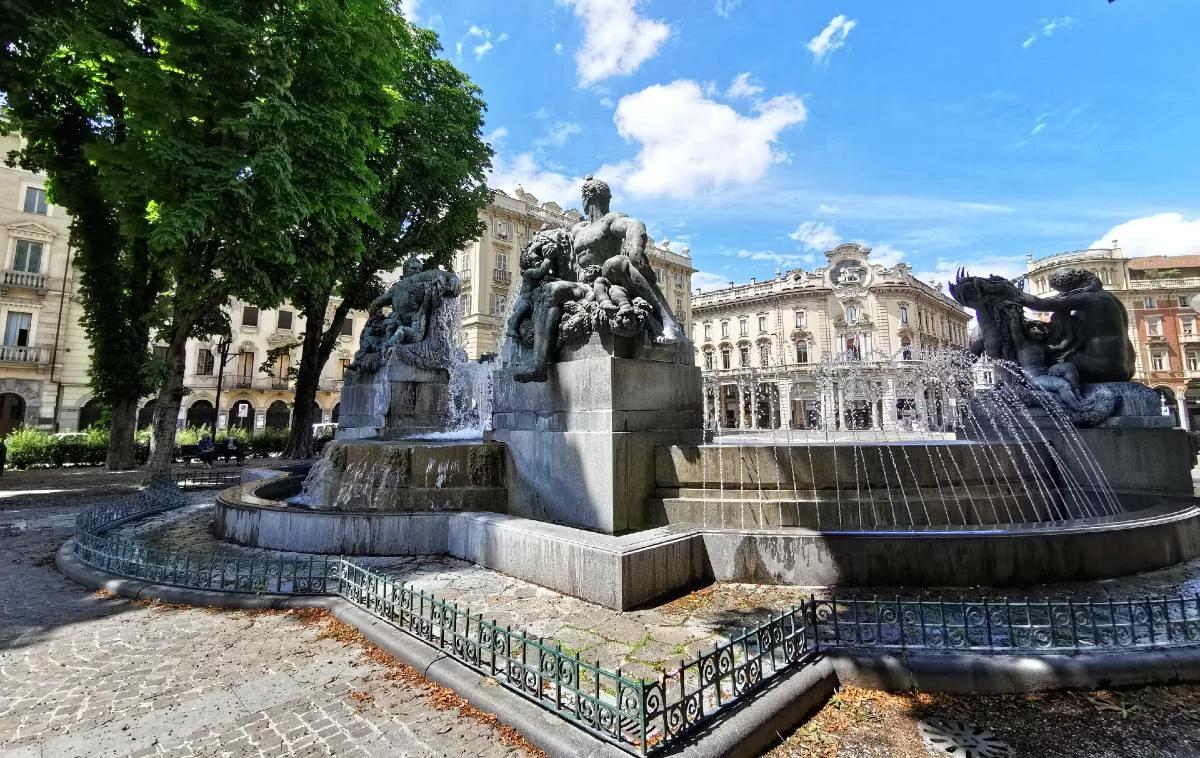
At one end of piazza Solferino, four groups of statues depict the seasons: male and female figures, putti and natural symbols. It is the Fontana delle Quattro Stagioni, also known as the Fontana Angelica, made in 1930 by the sculptor Giovanni Riva.
Read more
The male figures of Autumn and Winter, arranged symmetrically, have been interpreted in an esoteric and Masonic key as the pillars of an entrance to knowledge. The female figures of Spring and Summer, on the other hand, are said to be linked to different forms of love. Hence also the idea that piazza Solferino marks the passage from the dark western pole to the luminous part of the centre of Turin. These are symbolic readings suggested by the arrangement of the statues, not the documented meaning of the work.
-
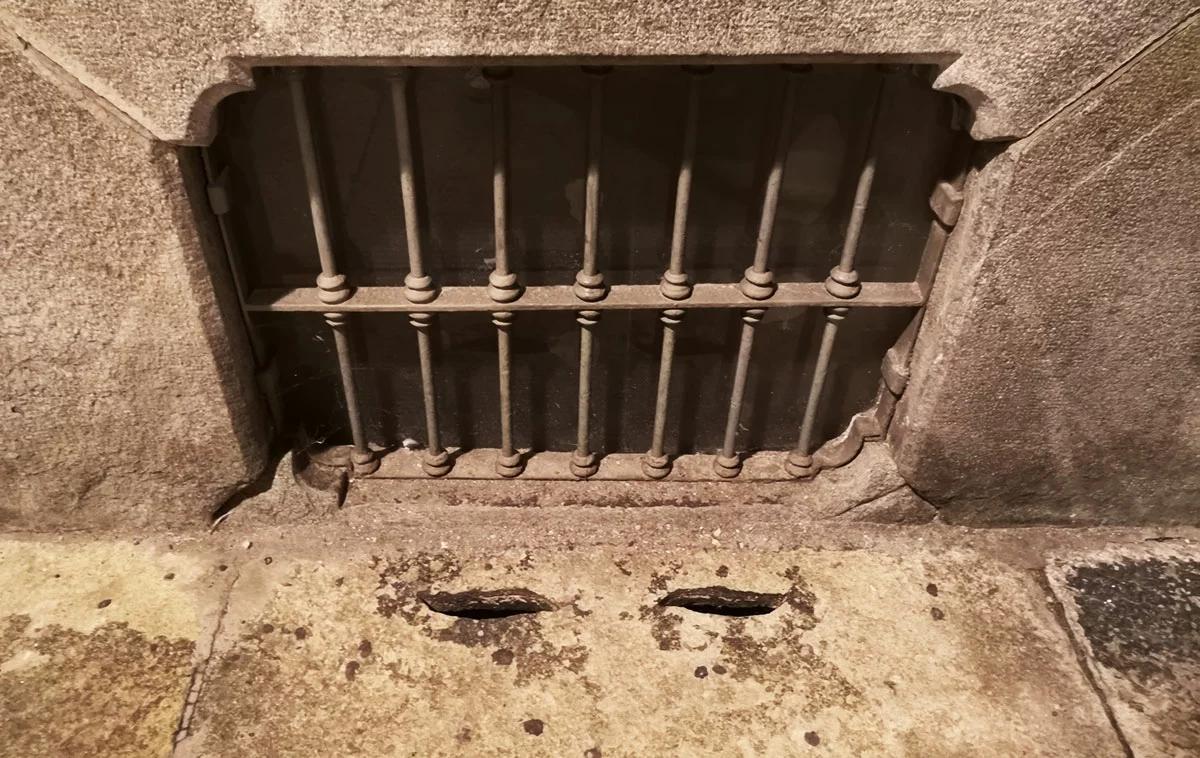 The devil's eyes
Former Masonic lodge
On the corner of via Lascaris and via San Francesco d'Assisi, the most curious details of the building are right at pavement level: pairs of elongated slits, like half-closed eyes. Esoteric tradition calls them «the devil's eyes».
Read more
In fact they serve to give air and light to the underground rooms. But their unusual shape has encouraged tales of mysterious presences and occult forces. According to some sources, it was precisely in the basement that meetings of a Masonic lodge were held: a connection that has contributed to the building's esoteric reputation. There is no need to enter the building; the slits can be seen from the street.
-
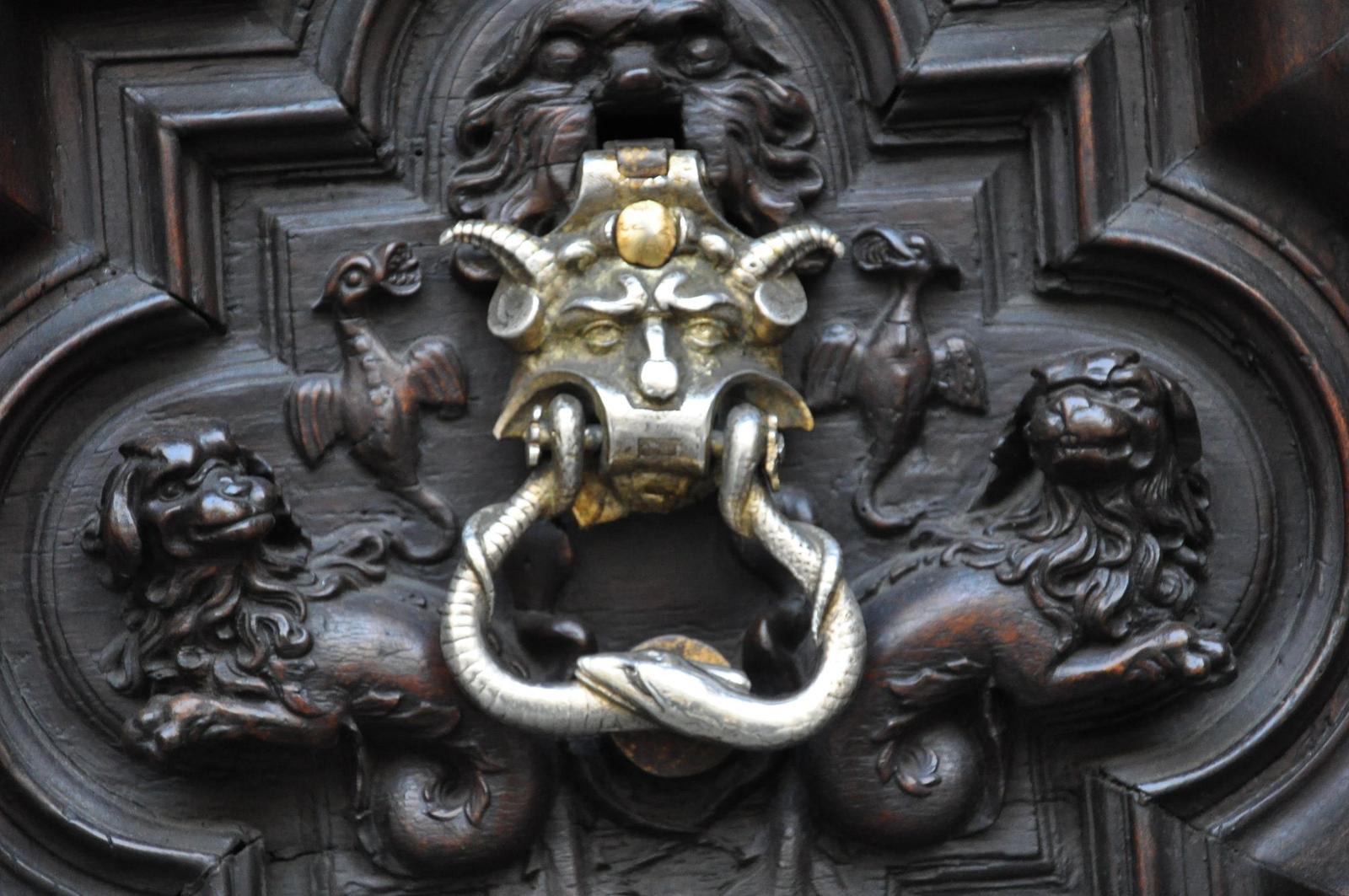 The Devil's Door
What gives the Portone del Diavolo, the Devil's Door, its name is a bronze knocker: a demonic face and two snakes whose heads meet at the point where you knock. You will find it on the wooden door of Palazzo Trucchi di Levaldigi, on the corner of via XX Settembre and via Alfieri.
Read more
The palace was built between 1673 and 1677 to a design by Amedeo di Castellamonte for Giovanni Battista Trucchi di Levaldigi, Minister of Finance to Carlo Emanuele II. The door, made in 1675 by a Parisian workshop, bears carvings of flowers, fruit, animals and cherubs. According to a legend it appeared in a single night, imprisoning a sorcerer's apprentice who had invoked Satan. The door remains an original example of Turin Baroque, visible from the street.
-
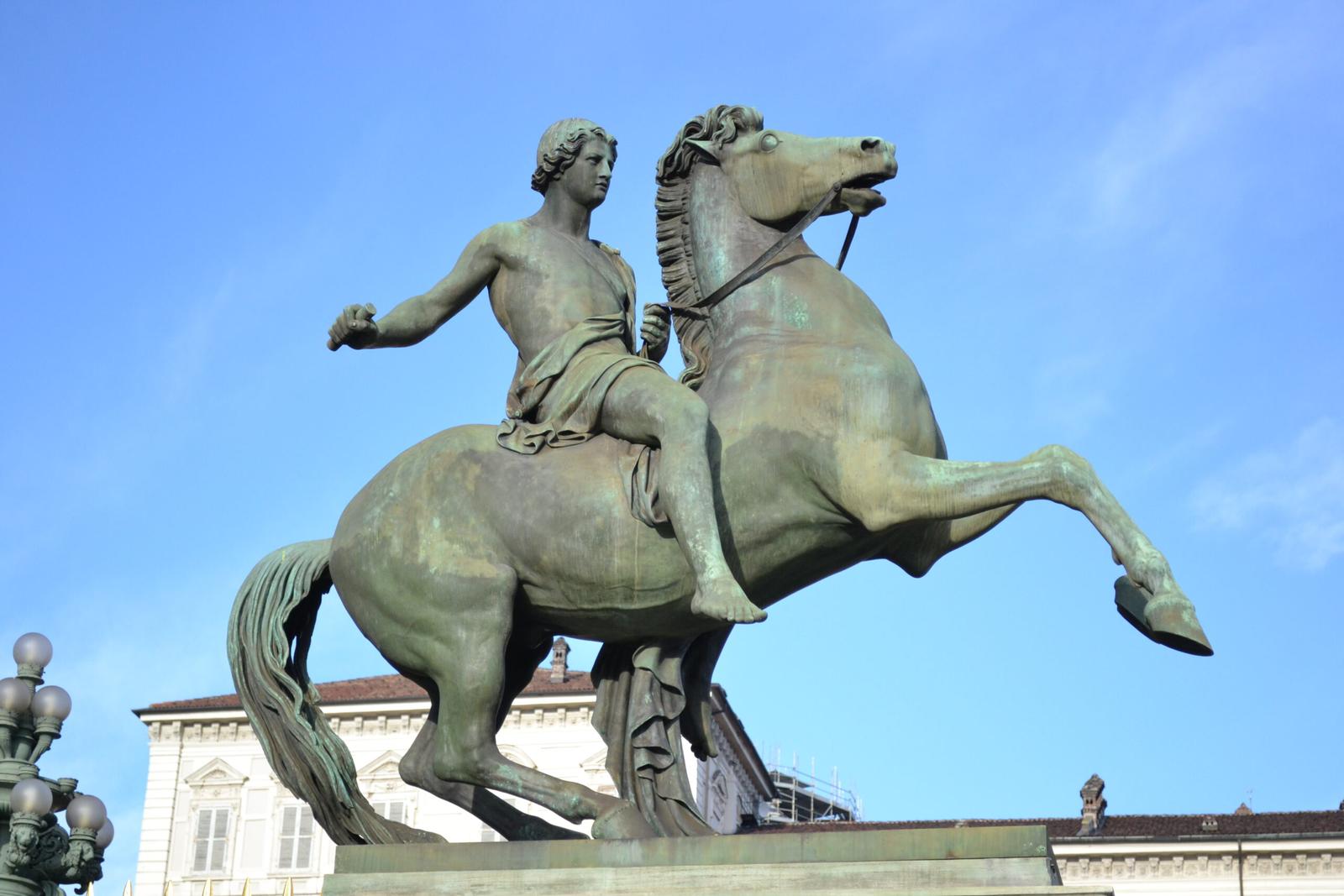 The Dioscuri
 of Palazzo Reale
Between the two equestrian statues at the entrance to the Piazzetta Reale, on the north side of piazza Castello, the esoteric tradition imagines an invisible boundary. They are Castor and Pollux, the Dioscuri of Greek mythology, twins associated with heroic values and virtues.
Read more
Abbondio Sangiorgio made the sculptures, placed in 1847 on the central pillars of the railings of Palazzo Reale. The railings, designed by Pelagio Palagi at the wish of Carlo Alberto, had a very concrete task: to separate the royal residence from the city. The esoteric reading came later and places between the statues the boundary between the white magic of piazza Castello and the black magic of piazza Statuto. From piazza Castello you can see both the statues and the railings.
-
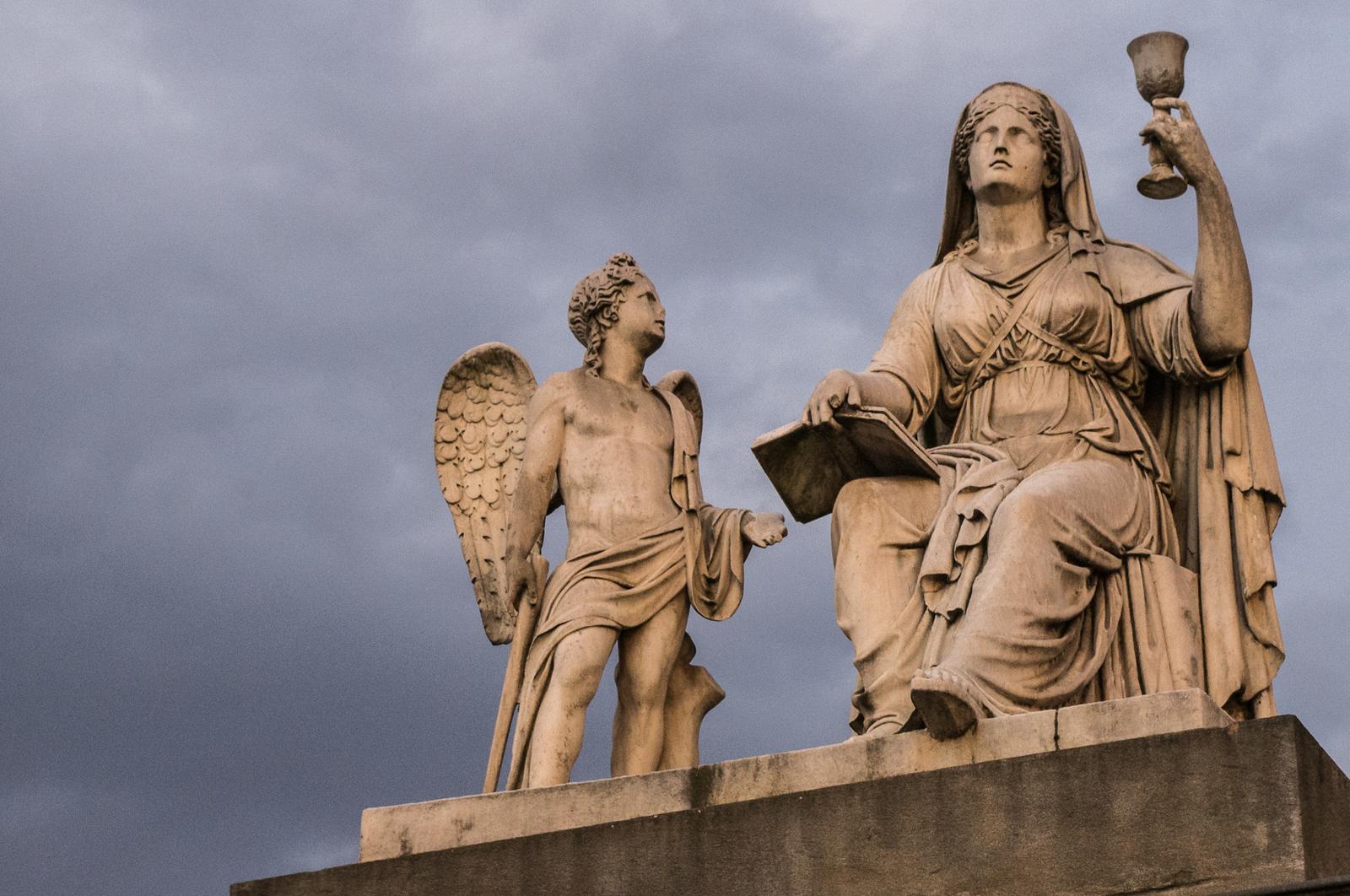 Holy Grail
The Gran Madre and the Holy Grail
At the Gran Madre di Dio, at the foot of the hill, facing the Vittorio Emanuele I bridge, the story of the Holy Grail begins with two statues on the great flight of steps. They are allegories made by Carlo Chelli in 1828: on the right Religion, with a triangle and the divine eye on her forehead; on the left Faith, with a book and a raised chalice.
Read more
The chalice has fed the legend of the Grail hidden in Turin, near the church or in a place symbolically indicated by the statues. Some versions also bring in the Mole Antonelliana. The church, designed by Ferdinando Bonsignore and inaugurated in 1831, celebrates the return of the Savoys after the Napoleonic interlude. The statues are real; of the Grail there is no historical evidence.
The route
The map loads after consent to third-party content (OpenStreetMap).
These are the essential stops, but there is much more
When you book your stay with us you receive the complete step-by-step itinerary, a practical box with directions to get there and back, tips on what to see and a final treat to round off the themed day.