From piazza Castello to the Porta Palatina, the centre of Turin changes era several times without your having to leave its streets. Among the Baroque palaces and the shopping streets there remain gates, towers, portals, terracotta windows and traces of the oldest city. This walk follows that thread: from Augusta Taurinorum, founded in the Augustan age, to medieval Turin, when Roman gates and fortifications were turned into castles, Gothic churches arose and merchants and craftsmen filled the streets with life.
From our B&B you reach piazza Castello, then cross the historic centre and the Quadrilatero Romano as far as the area of the Duomo and the Porta Palatina. The route is entirely on foot: allow about two hours to see the stops from the outside, not counting any visits to the museums.
Not everything has come down to us intact: many medieval structures have been altered, restored or absorbed into later buildings. It is precisely this interweaving that makes the walk interesting, because sometimes a window or a stretch of masonry is enough to rediscover a city that seemed to have vanished. For any visits to the interiors, check the access arrangements in advance.
On foot Walking: 3.9 km, 52 min
-
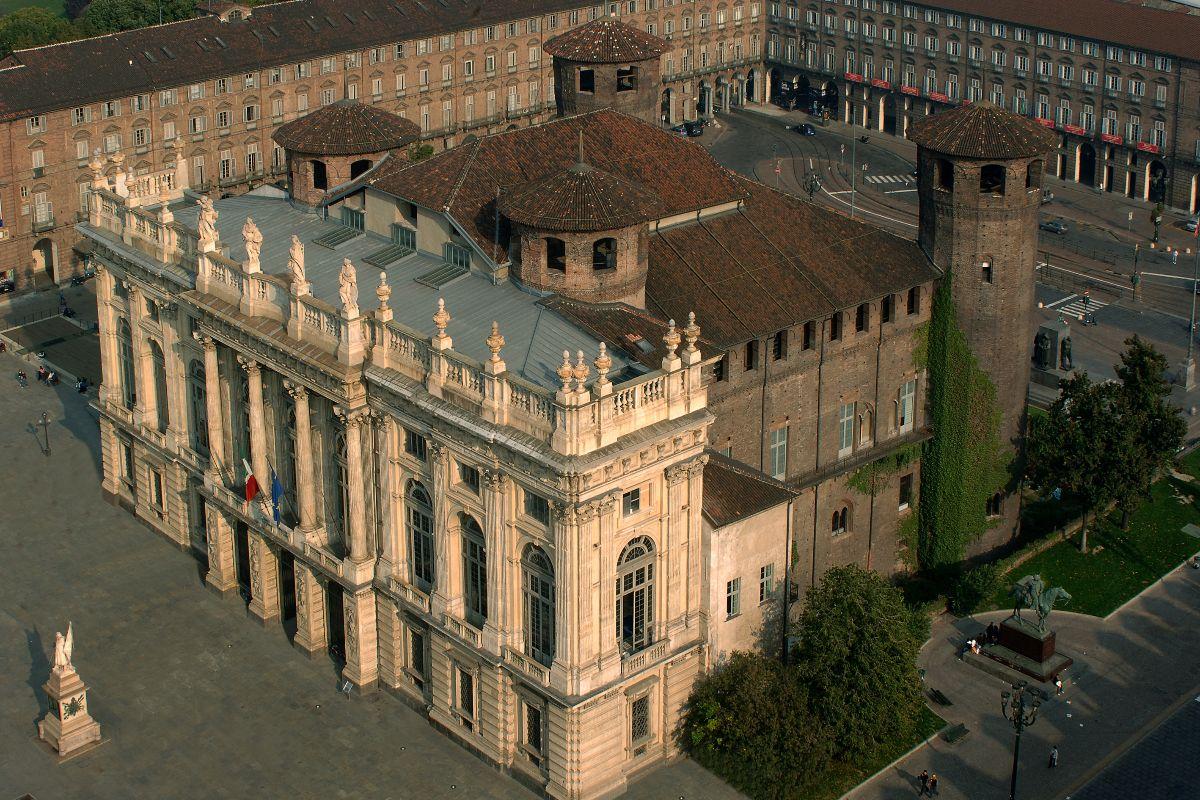 Palazzo Madama
Walk around Palazzo Madama and you will find yourself facing two buildings that seem to belong to different cities. On one side there is a medieval castle; on the other, the Baroque façade that Filippo Juvarra designed in the eighteenth century.
Read more
The story begins much earlier. The palace incorporates the remains of a gate of the Roman city, later turned into a medieval fortification. Between the twelfth and fourteenth centuries the complex gradually became a castle, linked first to the marquises of Monferrato and then to the princes of Savoy-Acaia.
In the seventeenth century it was home to the Madame Reali, Marie Christine of France and Marie Jeanne Baptiste of Savoy-Nemours. The western side bears Juvarra's signature, the eastern one retains its medieval appearance.
Today Palazzo Madama houses the Museo Civico d'Arte Antica.
On the eastern side the towers preserve the most recognisable traces of the palace's origins. Here stood a gate of the Roman city, remains of which are also visible along the museum route.
It is traditionally called Porta Decumana, but the name is not documented for the Roman period. Over the following centuries the structures were transformed and enlarged until they became a medieval castle, with towers, a moat and a drawbridge.
From the outside you mainly recognise the castle; inside you also find what came before it.
-
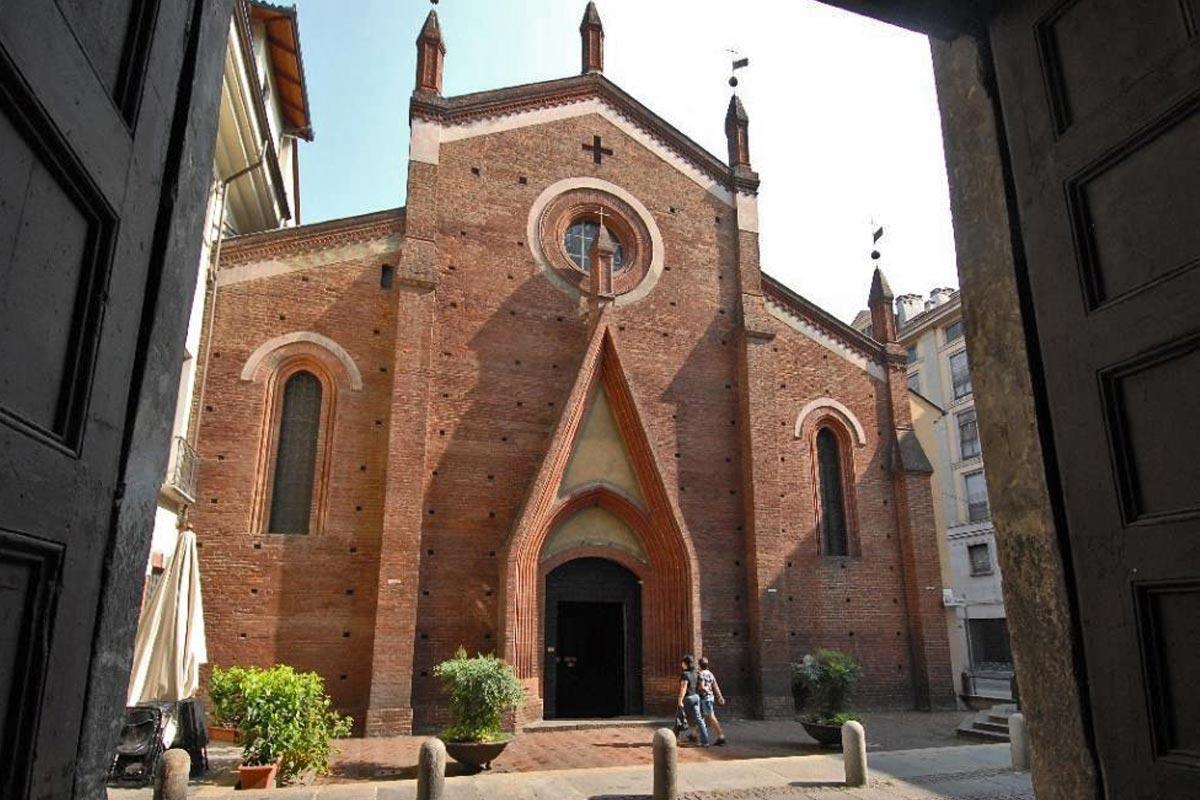 Chiesa di San Domenico
The brick façade of San Domenico, on the corner of via San Domenico and via Milano, preserves a Gothic Turin of which few traces remain. It is divided into three parts, with the rose window in the centre and the portal crowned by a gable, the triangular decoration typical of Gothic architecture.
Read more
The presence of the Dominicans in the city is documented as early as the 13th century; the present church, their main historic building in Turin, was built in the first half of the 14th century, starting in 1334-1335. Inside there are three naves with pointed cross vaults and, in the cappella delle Grazie, 14th-century frescoes. The 17th and 18th centuries transformed the church, but the restorations between the late 19th and early 20th century recovered part of its medieval and 15th-century appearance.
-
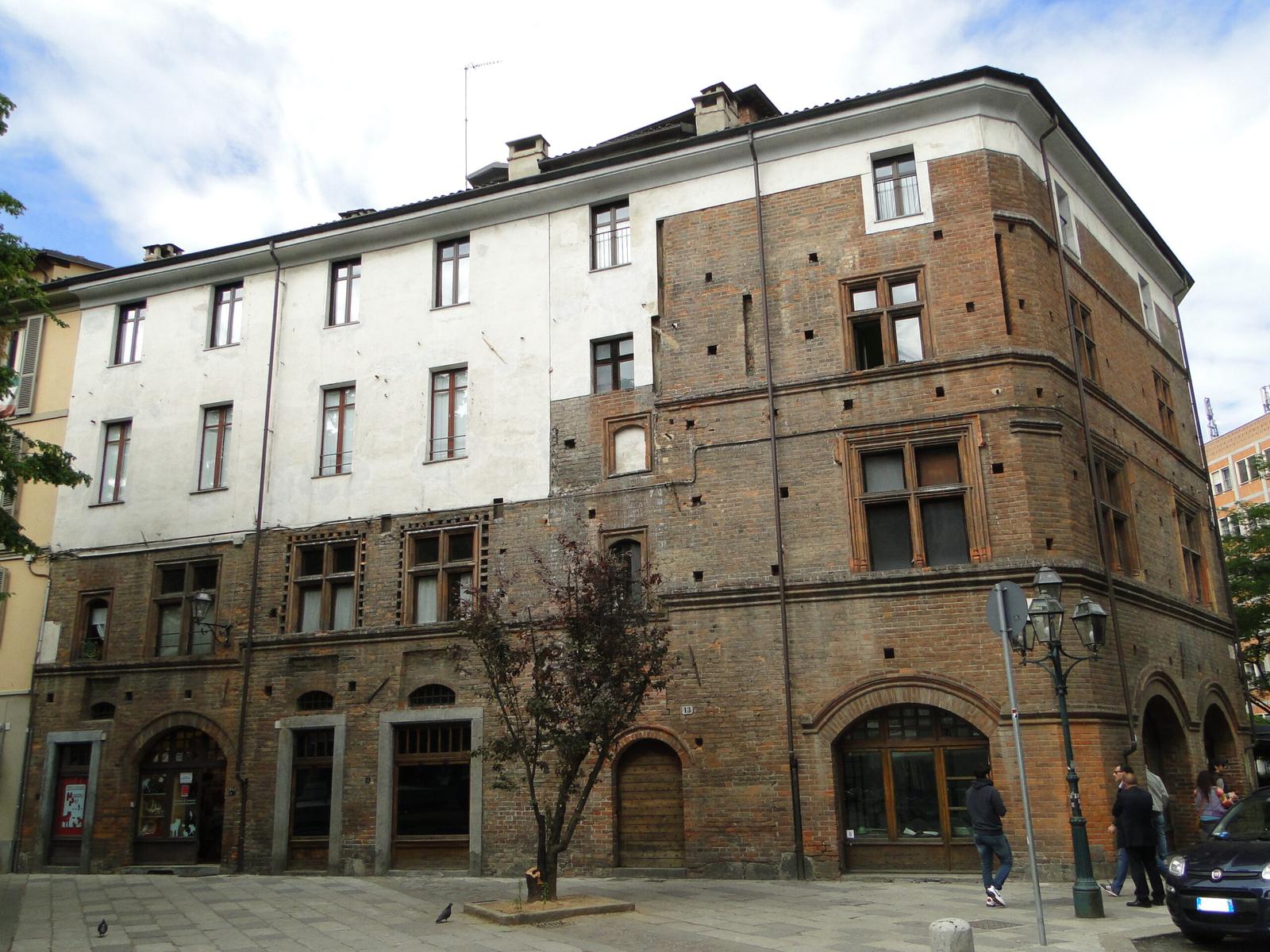 Casa Broglia
, former Albergo della Corona Grossa
The wide arcades on the ground floor of Casa Broglia were occupied by shops; higher up, the windows still have terracotta frames. This four-storey building, with a 16th-century layout but restored and transformed several times, was the Albergo della Corona Grossa: it gave travellers board and lodging, and shelter to their horses.
Read more
The earliest records date back to the 14th century. Close to the castle and to piazza delle Erbe, the inn also welcomed ambassadors and figures received at the Savoy court; city orders and proclamations were posted here. The business continued until the 19th century. The name Casa Broglia recalls the wealthy family that owned it, originally from Chieri. The upper part of the building, severely damaged by the bombings of 1943, was later rebuilt.
-
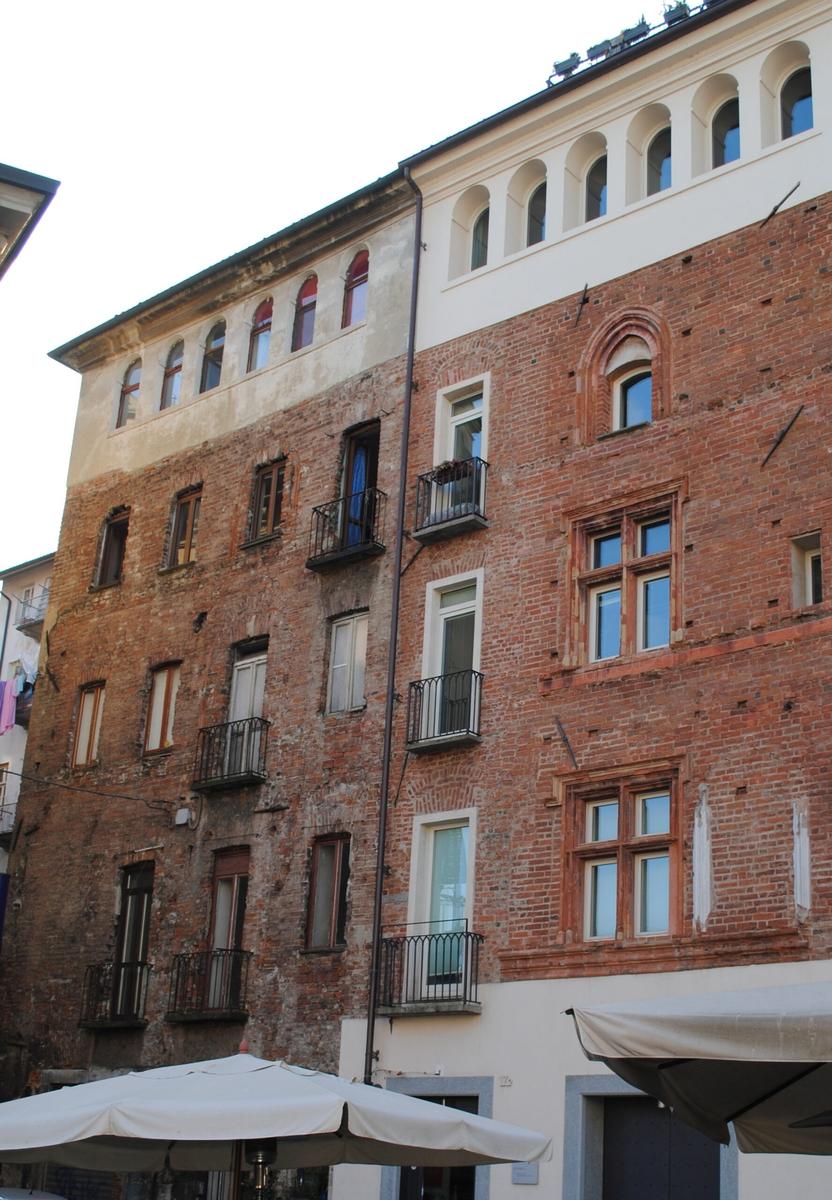 Casa del Senato
At number 17 Largo IV Marzo, the terracotta window frames are the first thing that draws your attention to the Casa del Senato. They are among the medieval elements brought back to light by Riccardo Brayda's restorations at the end of the nineteenth century.
Read more
The building preserves parts dating from the fourteenth to the sixteenth century and is one of the few remaining examples of late medieval civil architecture, albeit with later alterations and restorations. The name, however, is no certainty about its function: a hypothesis put forward in the nineteenth century links it to the city's Vicaria, an office with judicial powers. Next to the entrance you can also see stone elements from the Roman period, reused in the construction. Damaged during the Second World War, the house was partially rebuilt after the war. It is a residential building: the visit mainly concerns the exterior.
-
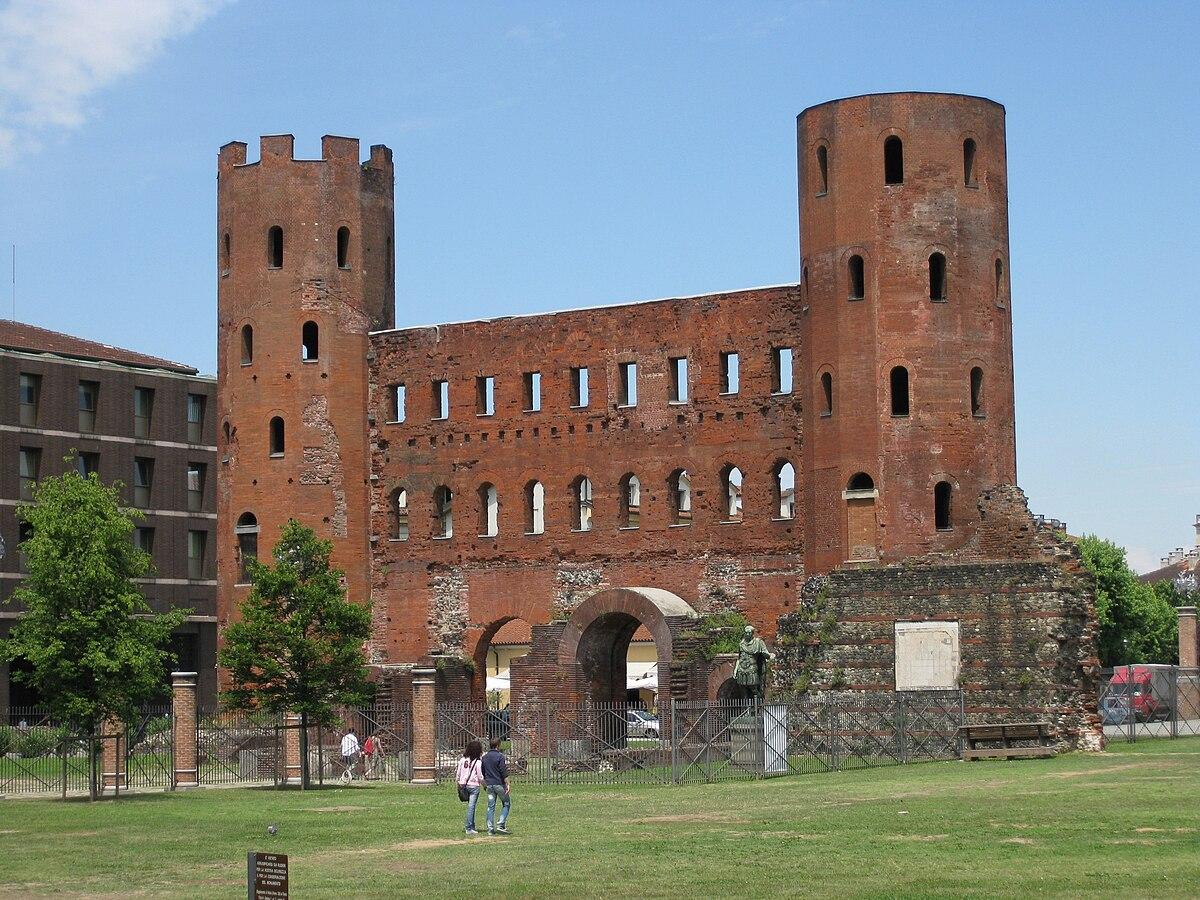 Porta Palatina
The two polygonal towers dominate the Porta Palatina, but it is the four openings that tell of its use: the two larger ones served carts, the two smaller ones pedestrians. They are joined by a central brick body that preserves a good part of the monumental structure.
Read more
Built in the early imperial age, the gate was the northern entrance to Augusta Taurinorum; originally it also included a fortified inner courtyard, where those entering the city were checked. A short distance away you find the remains of the Teatro Romano and the Museo di Antichità, part of the Musei Reali. The museum gathers archaeological finds from Turin and Piedmont and Etruscan, Greek and Roman collections, including the silverware of the Tesoro di Marengo, from the 2nd-3rd century AD, and the materials from the Etruscan tomb of the Matausni family.
-
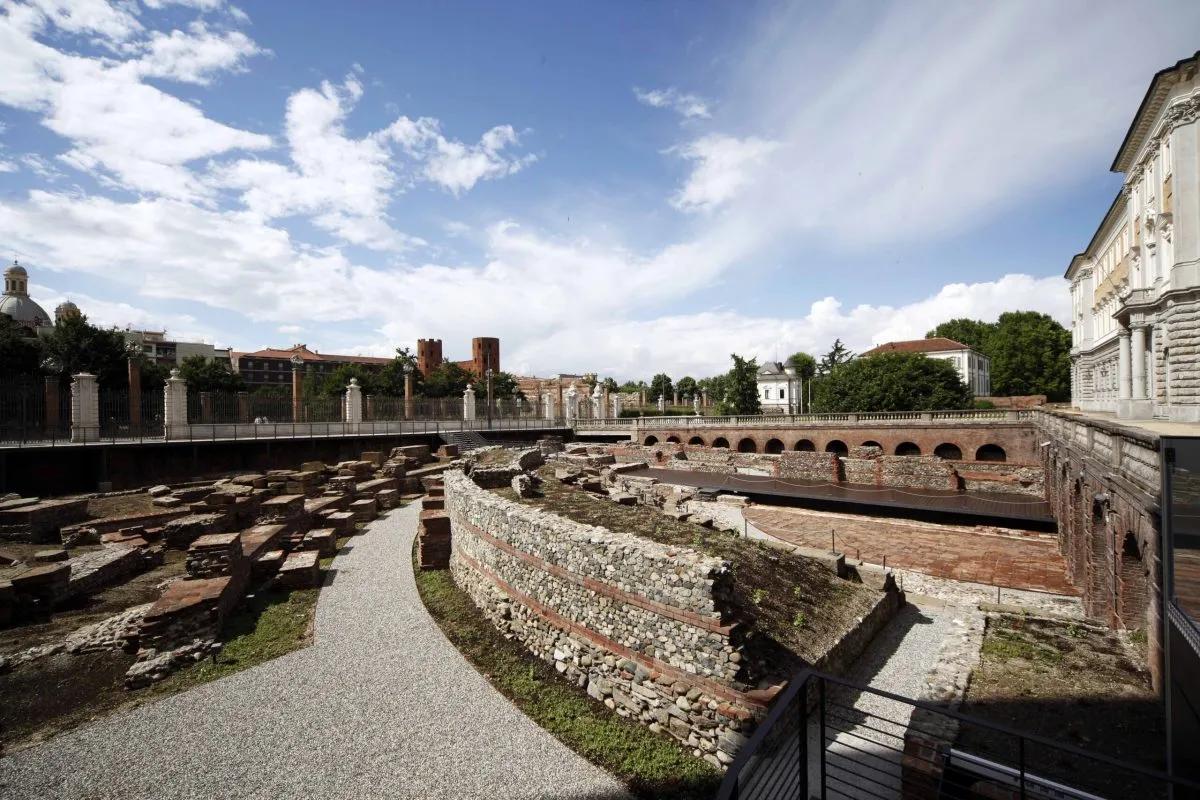 Teatro Romano
Behind the railings on via XX Settembre, not far from the Porta Palatina, you can still make out the semicircle intended for the spectators: it is part of the cavea of the Teatro Romano. Pillars, stretches of tiered seating, the floor of the orchestra and some walls also remain, while part of the theatre is incorporated into the buildings of Palazzo Reale.
Read more
Built in the Augustan age, near the walls and the northern entrance, the theatre was easily accessible even to those coming from outside the city. During the imperial age it was modified several times; in the 1st century AD the tiers and the stage structures were enlarged. The remains resurfaced in 1899, during the construction of a new wing of Palazzo Reale, and were preserved thanks to the intervention of Alfredo d'Andrade.
-
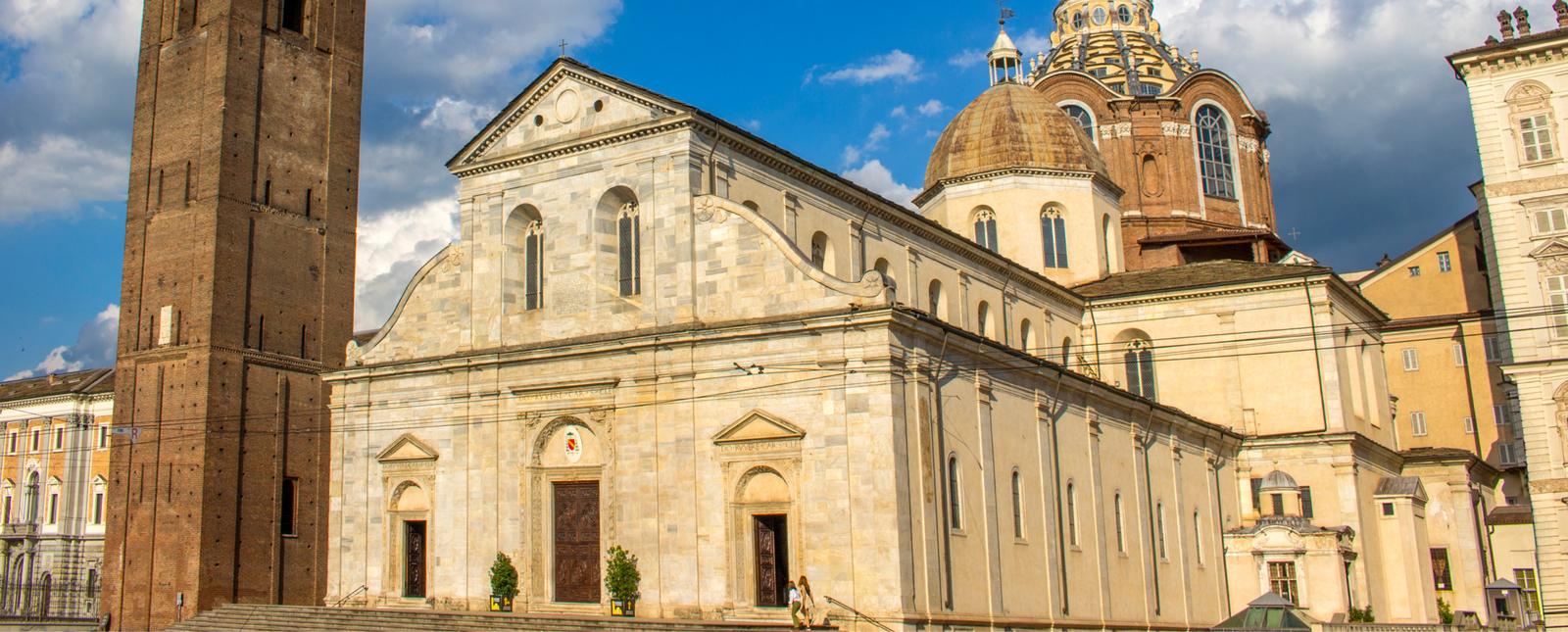 Duomo and early Christian remains
The Duomo you see today in piazza San Giovanni dates from the end of the fifteenth century and is dedicated to Saint John the Baptist. But beneath the cathedral and the square the story goes much further back: this area housed religious buildings from the very first centuries of Christianity.
Read more
In the Middle Ages three churches stood here side by side, dedicated to the Saviour, to Saint John the Baptist and to Saint Mary. The excavations beneath piazza San Giovanni and in the basements of the Duomo have brought to light remains of those ancient basilicas, together with structures from the Roman period, transformed and reused as the Christian city developed. Some of the finds and structures can be seen in the Museo Diocesano, set up in the basements of the cathedral. The archaeological area beneath the square, on the other hand, is not normally open to the public.
The route
The map loads after consent to third-party content (OpenStreetMap).
These are the essential stops, but there is much more
When you book your stay with us you receive the complete step-by-step itinerary, a practical box with directions to get there and back, tips on what to see and a final treat to round off the themed day.