In Turin there are cafés worth entering just to look around. Behind the windows you will find mirrors, wood panelling, marble counters, gilded stucco and chandeliers that tell of more than two centuries of city life. Many of the furnishings are still the original ones or keep their nineteenth-century decorations.
Aristocrats, politicians, writers and artists sat at those tables. During the Risorgimento, and then in the years when Turin was the first capital of the Kingdom of Italy, the cafés were places where people met, debated and did politics. Today you can add a few Turin specialities to your visit: a bicerin, a gianduiotto, a gianduia ice cream or a tramezzino.
The route mainly crosses the historic centre, from via Po to piazza Castello, from the Quadrilatero Romano to piazza San Carlo, ending in corso Vittorio Emanuele II. From Colazione da Augusta you can reach via Po on foot, crossing the ponte Vittorio Emanuele I and piazza Vittorio Veneto.
Allow at least half a day and choose two or three cafés where you can stop at leisure. There is no need to order something everywhere: the windows and interiors alone are worth a visit. Before setting out, check any conditions of access to the cafés.
On foot Walking: 6.1 km, 1 h 32 min
-
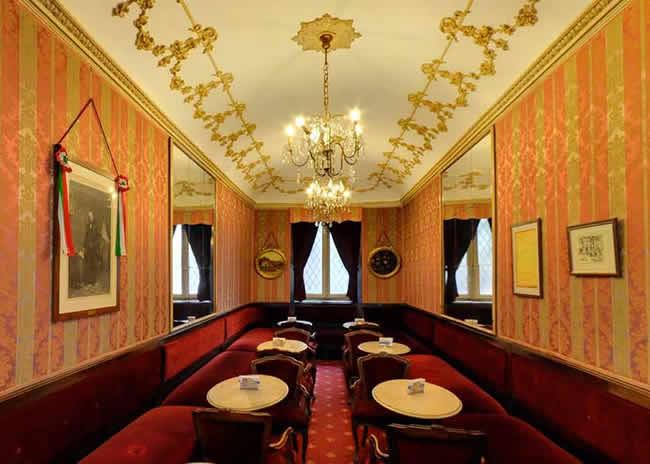 Caffè Fiorio
Under the arcades of via Po, at Fiorio you can stop at the marble counter or settle in among mirrors and velvet armchairs. The furnishings tell the story of the café, opened in 1780 and for a long time a meeting place of the Savoy nobility.
Read more
It was called the «caffè dei codini» (the pigtails café), after the hairstyles and traditional dress of its patrons, but also the «caffè dei Machiavelli», for its political discussions. Initially tied to aristocratic and conservative circles, it later became a meeting place for intellectuals and leading figures of the Risorgimento, among them Cavour, Rattazzi and Massimo d'Azeglio.
There is also a more indulgent reason to go in: the ice-cream parlour, known above all for its gianduia ice cream, a speciality of the Turin tradition.
-
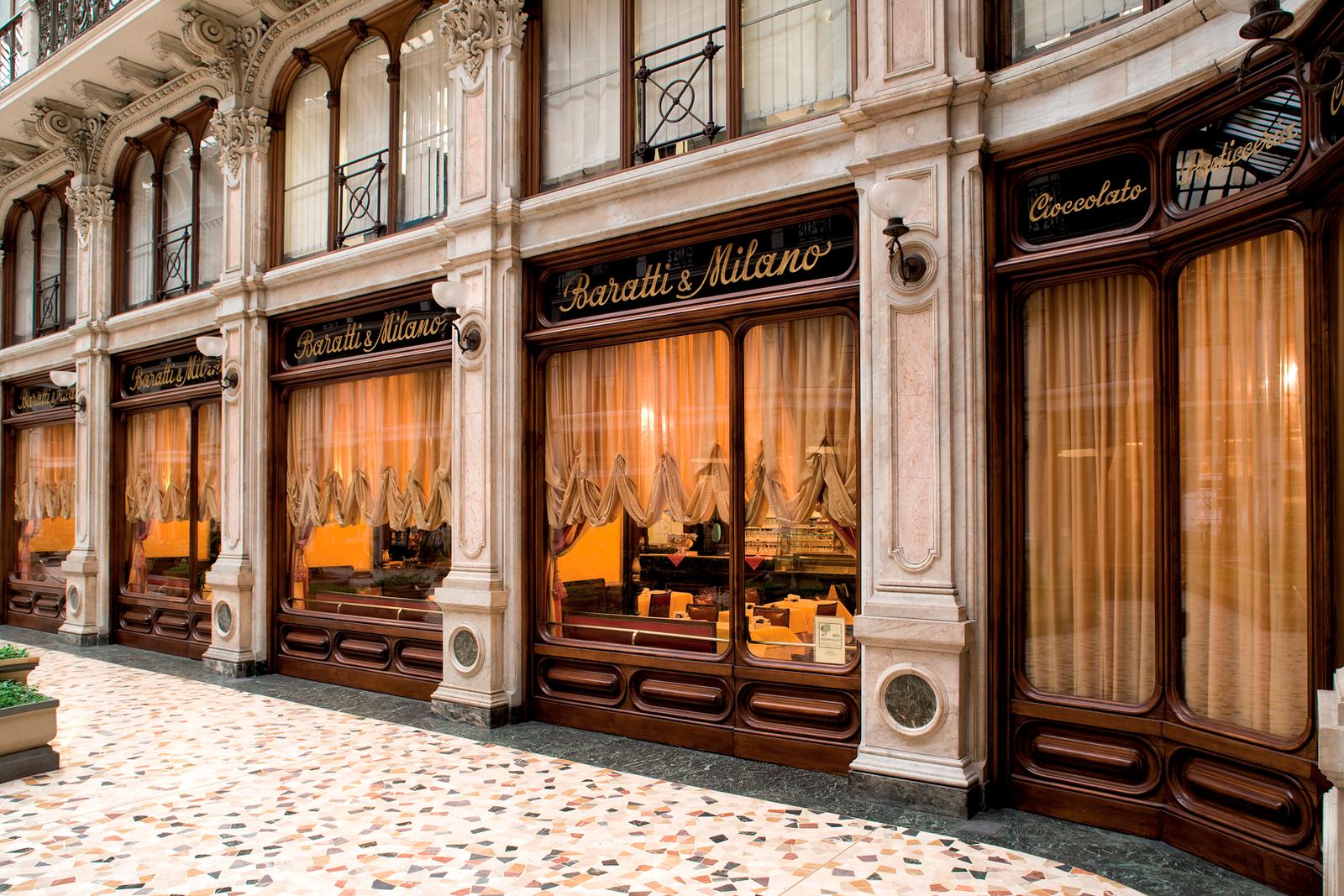 Caffè Baratti & Milano
At the entrance to the Galleria Subalpina, on the corner of piazza Castello, Baratti & Milano invites you to look around even before ordering: marble, mirrors, inlaid woods, bronzes and gilded stucco. On the façade facing the square, too, there are bronze reliefs worth a look.
Read more
Behind that name are Ferdinando Baratti and Edoardo Milano, two confectioners from the Canavese who opened the business in 1858 in via Dora Grossa, today via Garibaldi, and moved here in 1875.
The café became a supplier to the Royal Household and a meeting place for Turin society. Part of the decoration dates from the extension completed in 1911, to a design by Giulio Casanova with the collaboration of the sculptor Edoardo Rubino.
Among the regulars of Baratti & Milano, Giovanni Giolitti and Luigi Einaudi are remembered. Guido Gozzano too has a link with the café: its female patrons inspired his poem «Le golose».
Among politicians, writers and customers from Turin society, this was a place where meeting people mattered as much as what was served. And reading Gozzano's verses makes you want to imagine that café life, made not only of great discussions but also of small daily rituals.
-
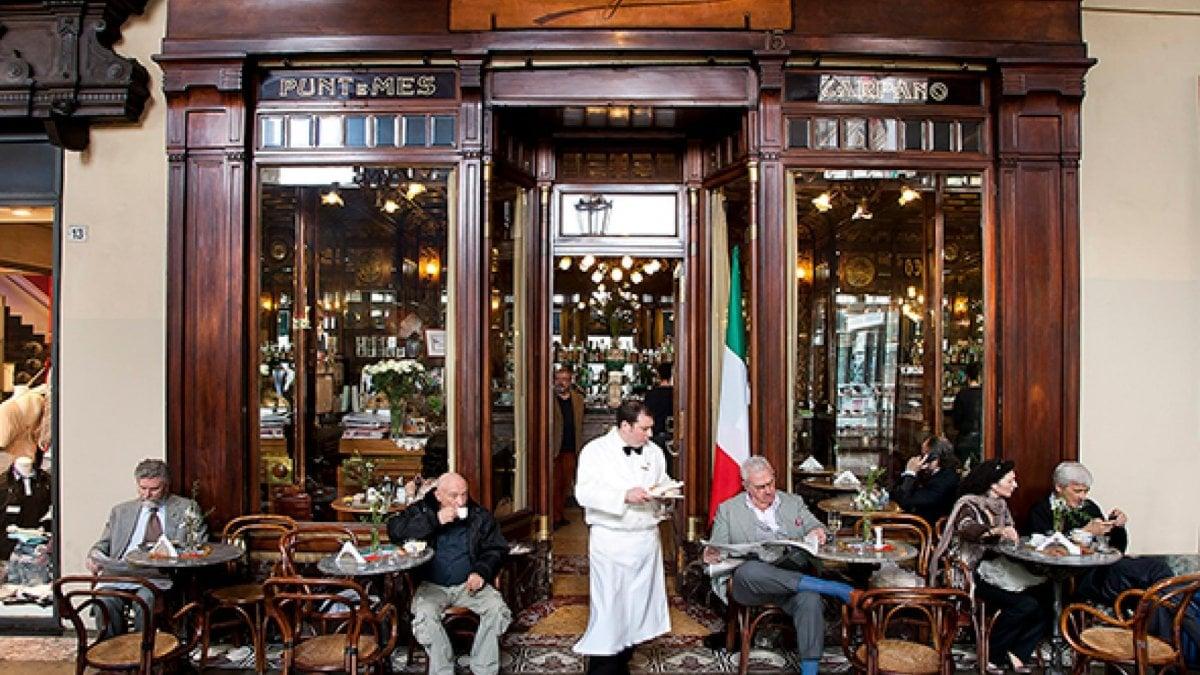 Caffè Mulassano
Mulassano is small, really small. Under the arcades of piazza Castello, among woods, mirrors and Art Nouveau details, it is surprising how much history is concentrated in so little space.
Read more
Amilcare Mulassano, owner of the Sacco distillery, known for its mint syrup, moved the business here from via Nizza in 1907. The furnishings were designed by the engineer Antonio Vandone di Cortemilia.
Around 1925 the café passed to Angela Demichelis and Onorino Nebiolo, Piedmontese who had returned from the United States with new eating habits. First they introduced toasted sandwiches, then small sandwiches of untoasted white bread with a generous filling: the tramezzini. The name is traditionally attributed to Gabriele d'Annunzio, although there is no certain documented confirmation.
-
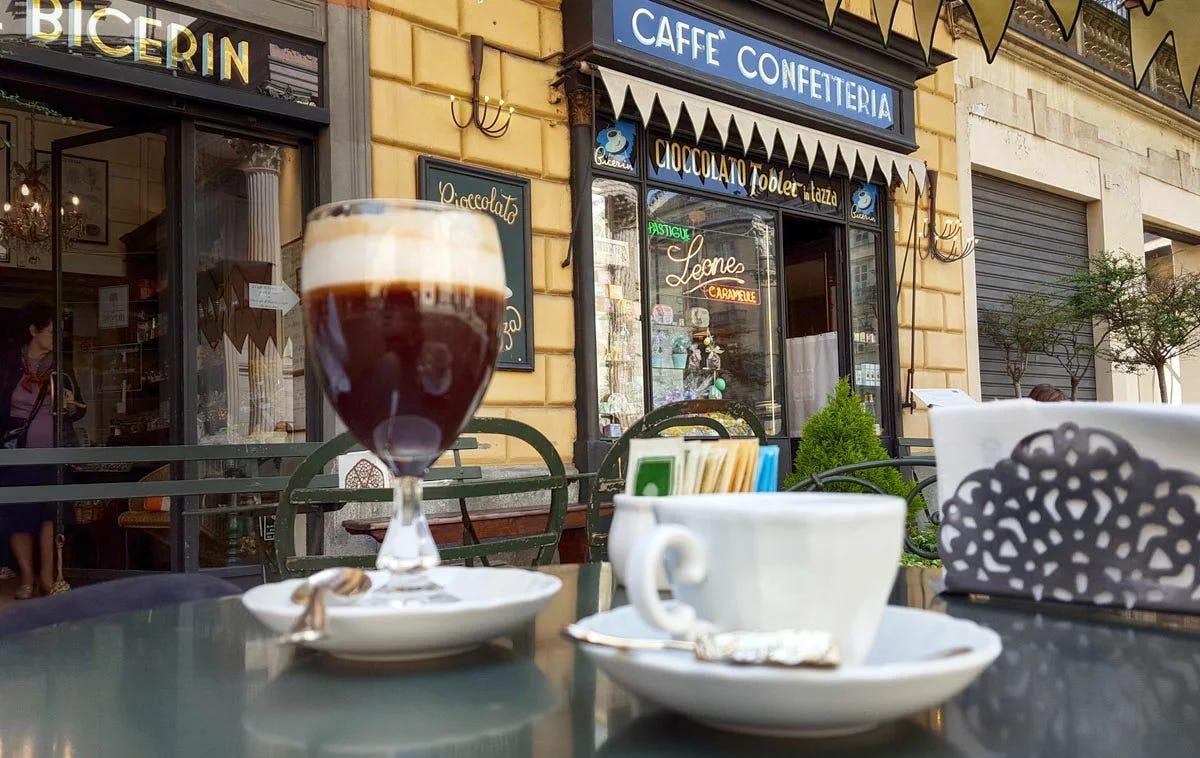 The bicerin
Caffè confetteria Al Bicerin
A small room, white marble tables, mirrors, wood and the counter: stepping into Al Bicerin feels like finding yourself in a nineteenth-century chocolate house. You are in piazza della Consolata, in front of the sanctuary, in the Quadrilatero Romano. Giuseppe Dentis opened the café here in 1763.
Read more
The name comes from «bicerin», «little glass» in Piedmontese: coffee, chocolate and milk cream in a hot, non-alcoholic drink served in transparent glasses.
The premises have kept their intimate size, and the relationship with the square and the sanctuary can be felt even from inside. The historic furnishings still make it possible to understand how the old Turin chocolate houses were organised.
Among the café's historic patrons were Camillo Benso, Count of Cavour, and the writer Alexandre Dumas père.
Ernest Hemingway is also often associated with the bicerin. According to one tradition, he is said to have included the drink among the hundred things in the world worth saving. The phrase still circulates, but no original source has been found to confirm its authenticity. So take it for what it is: an anecdote tied to the fame of the bicerin, not a certain quotation from the writer.
-
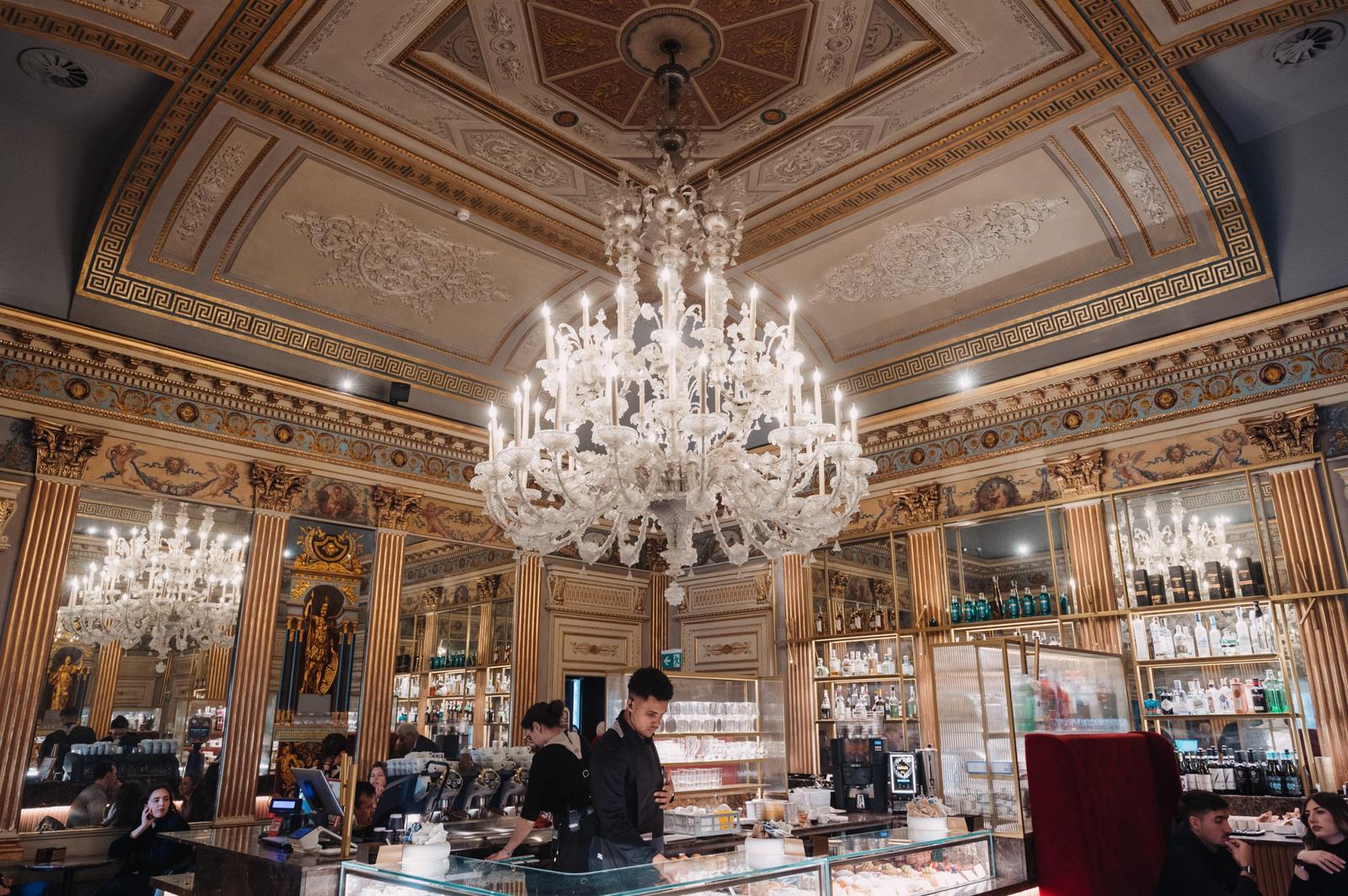 Caffè San Carlo
At Caffè San Carlo it comes naturally to look up. There are large chandeliers, gilded stuccoes, polychrome marbles, statues and, above all, columns and niches with female figures in the classical taste. Its present appearance is the result of several interventions, including the restorations after the serious damage suffered during the bombings of the Second World War.
Read more
Outside are the arcades of the seventeenth-century Palazzo Turinetti, facing piazza San Carlo. Founded in the first decades of the nineteenth century, the café became a meeting place for intellectuals and patriots of the Risorgimento, especially reformists and politicians such as Cavour and Massimo d'Azeglio, unlike the more aristocratic and conservative establishments.
Later it was also frequented by Giovanni Giolitti and Luigi Einaudi. The San Carlo is also known for its coffee blends.
-
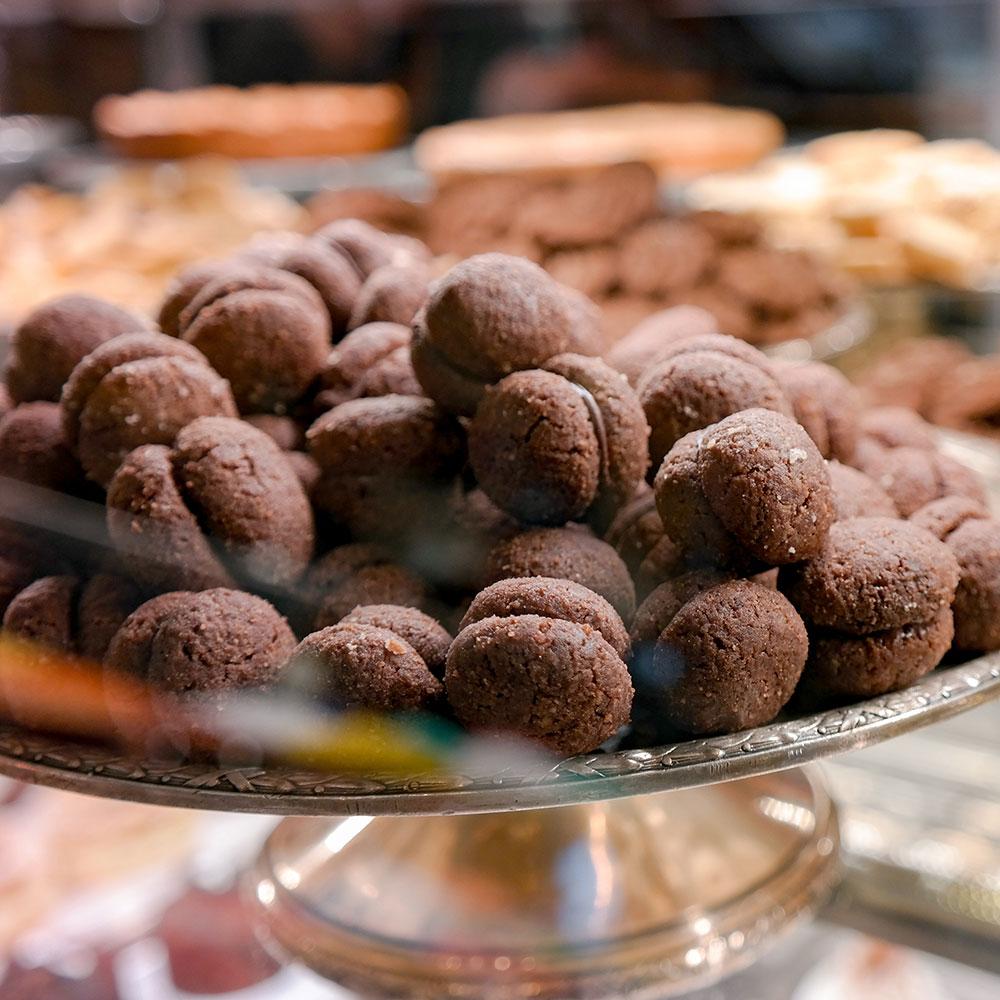 Stratta
Caffè Confetteria Stratta
Even before you step into Stratta, there is the sign with its gilded details. Then come the display windows, the carved wood, the mirrors, the stuccoes and the glass chandeliers: the taste of nineteenth-century confectioners' shops is still there.
Read more
The shop opened in piazza San Carlo in 1836, when the firm Reina e Stratta started its pastry and confectionery business. In 1858 the management passed to the Stratta brothers.
Having become a point of reference for Turin's bourgeoisie and nobility, the shop also obtained recognition as supplier to the Royal Household. Among the products you will find cakes, chocolate, sweets, sugared almonds and other specialities of the city's tradition.
In the nineteenth century, people did not come to Stratta only for the sweets. The confectioner's also offered selected wines and liqueurs, catering to the clientele of Turin society that frequented piazza San Carlo.
Still today the display windows and furnishings retain that particular care in the presentation of the products. It is a different way of experiencing a historic café, closer to the elegant shop than to the great meeting rooms. And precisely for this reason it is worth going in to take a look.
-
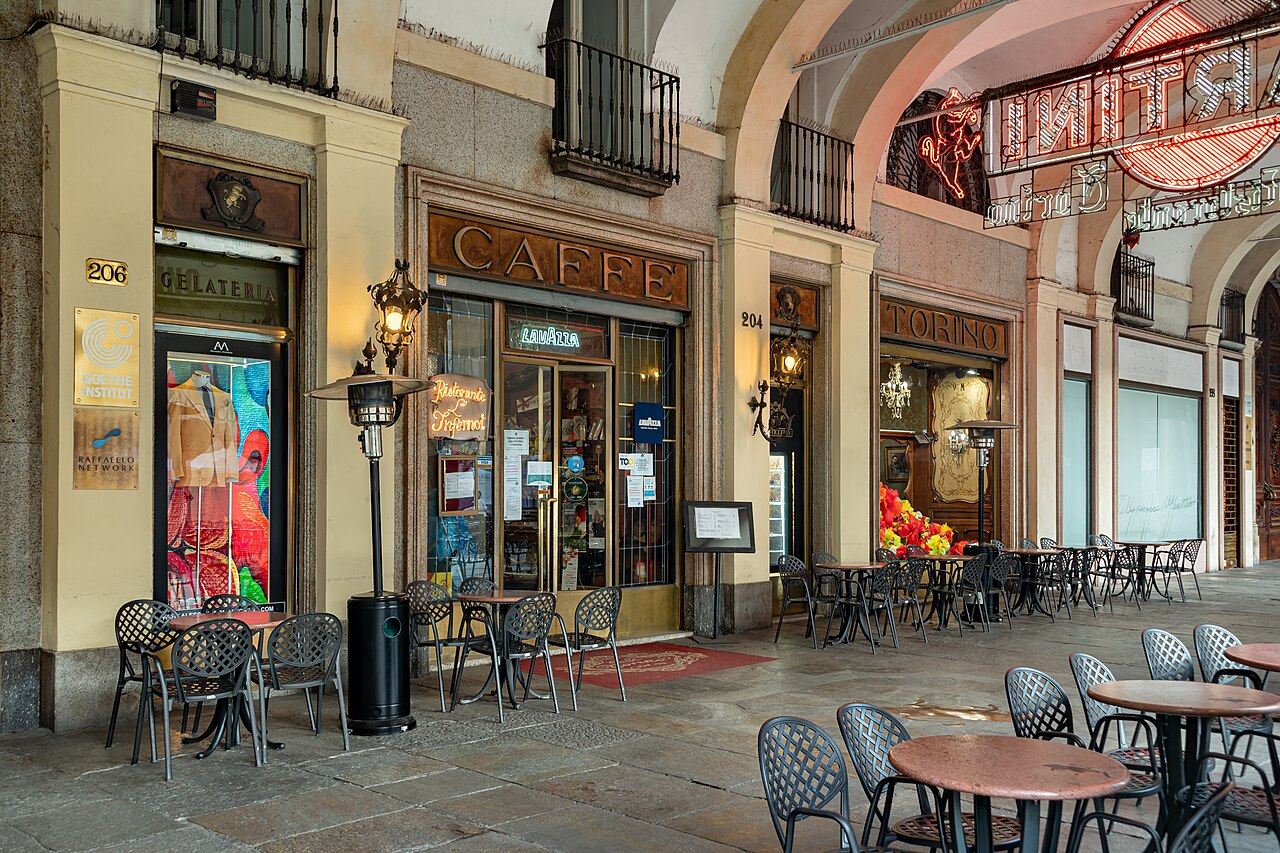 Caffè Torino
Before going into Caffè Torino, look down: in the paving in front of the café there is a small brass bull, linked to a good-luck tradition well known in the city. The shop windows and the outdoor furnishings also contribute to the café's historic character.
Read more
The Torino opened in 1903 near the church of San Carlo. In 1934, during the transformation of via Roma, it moved under these arcades of piazza San Carlo.
Inside, marbles, mirrors, fireplaces, gilded stuccoes and large chandeliers recall the taste of the Piedmontese Baroque. It is in these rooms that the café became one of the meeting places of twentieth-century Turin society.
Luigi Einaudi and Erminio Macario are among the regulars of the Torino: politics and show business shared this address.
Alongside the coffee bar and the pastry shop you will also find the tradition of Turin chocolate, with gianduiotti and other chocolates. It is a café born in the twentieth century, more recent than the eighteenth-century cafés on this route, even though its furnishings look to much older decorative models. A contrast you notice clearly as you enter the rooms.
-
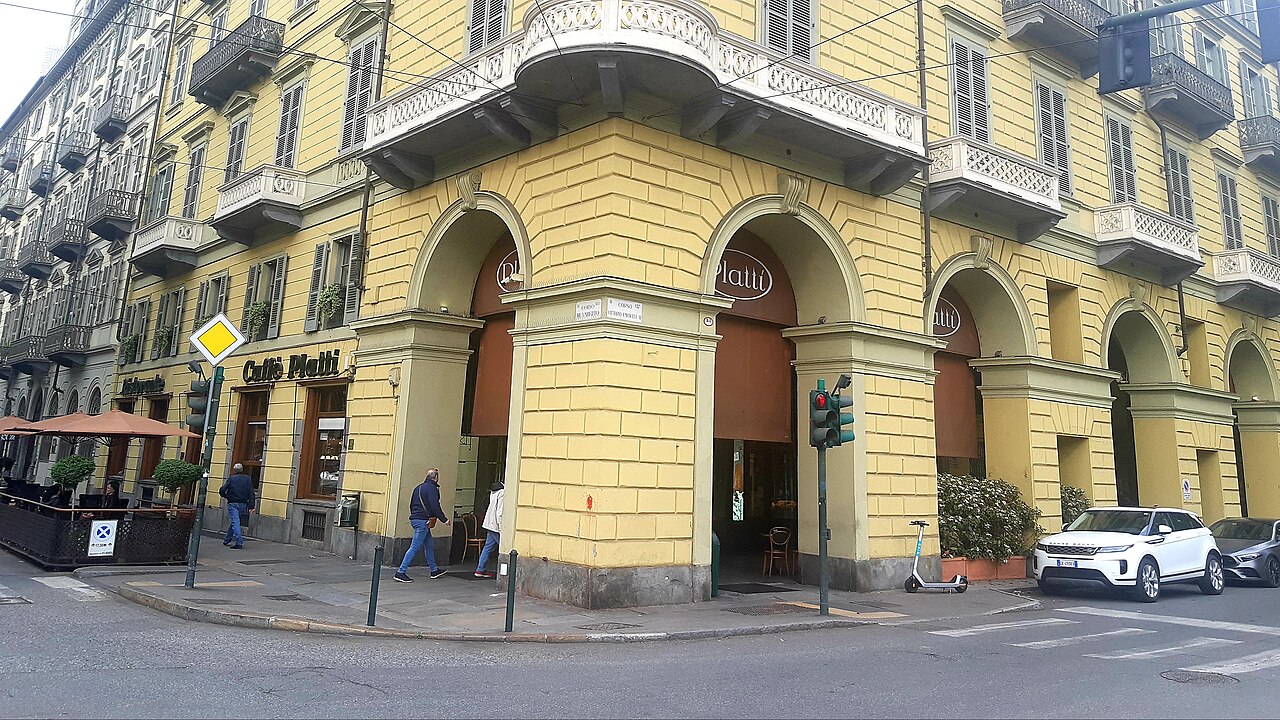 Caffè Platti
Arriving at the corner of corso Vittorio Emanuele II and corso Re Umberto, at Platti you come across different eras. In the confectionery shop, wooden furniture, display cases and decorations of nineteenth-century taste remain; in the other rooms, mirrors, stucco and ornamental details from the first decades of the twentieth century, when they were renovated.
Read more
The story began in 1870 with the Principe Umberto liqueur shop, later taken over by the brothers Ernesto and Pietro Platti. Over time the café became one of the meeting places of Turin's cultural life.
The pastry shop also has a speciality of its own: the Torta Platti chocolate cake, made to a recipe the house keeps secret.
Luigi Einaudi, Natalia Ginzburg, Mario Soldati and Erminio Macario: the names linked to Platti come from politics, culture and entertainment.
We like this mix, because the café's different rooms tell of a café life that was not reserved for a single social or professional category. You could meet people from different worlds, from literature to public life. And it is this variety of patrons, too, that makes the history of Platti interesting.
The route
The map loads after consent to third-party content (OpenStreetMap).
These are the essential stops, but there is much more
When you book your stay with us you receive the complete step-by-step itinerary, a practical box with directions to get there and back, tips on what to see and a final treat to round off the themed day.